


Project Overview
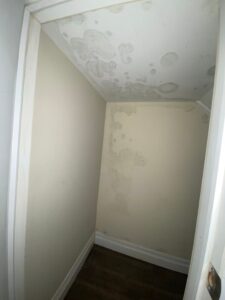
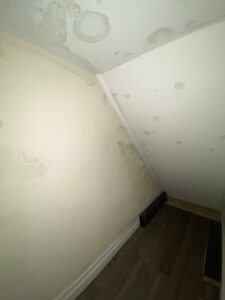
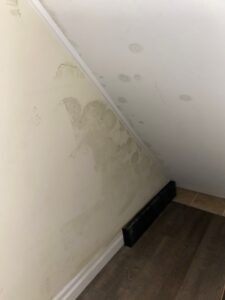
Extensive mold inside an bedroom closet was the main concern at this downtown Toronto basement property. Visible growth affected the closet walls and ceiling, while additional damage extended along the lower walls and baseboards of the adjoining basement room.
This closet mold removal case study, presented by Mold Removal Remediation, examines the documented inspection findings and recommended remediation scope. The assessment identified significant visible contamination, elevated moisture, and affected flooring requiring removal.
The proposed basement mold removal project included containment, targeted drywall and ceiling removal, affected baseboard removal, HEPA cleaning, and controlled drying. Concealed conditions and the underlying moisture source required further investigation before reconstruction.
Project Details
- Location: Downtown Toronto, Ontario.
- Affected spaces: Basement room and enclosed bedroom closet.
- Primary concern: Extensive mold on closet walls and ceiling.
- Additional findings: Mold along lower room walls and baseboards, with elevated flooring moisture.
The Problem: Mold Found in Bedroom Closet
The bedroom closet was the most significantly affected area identified during the mold inspection service. Visible contamination extended across the walls and sloped ceiling, rather than remaining confined to a small surface patch.
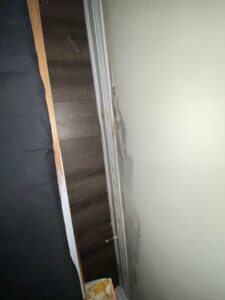
Project photographs show widespread spotting and discolouration across the closet finishes. Outside the closet, the inspection documented additional mold along the lower walls where the wall assemblies met the flooring.
These findings meant the proposed closet mold removal scope needed to address both the enclosed storage space and affected sections of the adjoining room.
Mold Inspection Findings: Wall Mold, Baseboard Damage and Damp Flooring
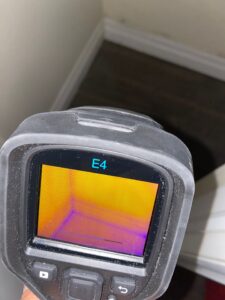
The assessment combined visual observations with moisture-meter checks.
Significant visible mold was recorded along the lower portions of the basement room walls. The photographs also show staining and deterioration around affected baseboards and lower wall finishes.
Moisture-meter readings indicated elevated moisture in the flooring and surrounding materials. Approximately 130 square feet of flooring was recommended for removal so the underlying surface could be inspected for concealed moisture and microbial growth.
The report also anticipated removal of affected wall and/or ceiling finishes across approximately half of the room. This was a preliminary scope: final removal boundaries would depend on moisture readings, visible contamination, and conditions discovered after opening the assemblies.
Recommended Closet Mold Removal and Basement Remediation
The proposed remediation plan covered the bedroom closet and connected affected basement areas.
The recommended work included:
- Establishing containment around the affected work zone.
- Protecting access routes and adjacent unaffected finishes.
- Removing or relocating belongings before demolition.
- Installing HEPA-filtered air scrubbing equipment within the controlled area.
- Removing affected closet wall and ceiling finishes.
- Removing contaminated lower wall drywall, baseboards, and trim as required.
- Removing approximately 130 square feet of affected flooring.
- Inspecting exposed framing, concealed cavities, and the underlying floor.
- HEPA vacuuming and thoroughly cleaning exposed surfaces.
- Applying an appropriate remediation cleaning product where required.
- Installing dehumidification equipment and monitoring drying progress.
- Using additional air movement where appropriate after contaminated porous materials had been removed.
- Completing detailed cleaning before assessing readiness for reconstruction.
Final quantities would be adjusted to reflect the conditions uncovered during removal.
Drying and Investigating the Moisture Source
Elevated moisture was an important finding in this basement mold remediation assessment. Removing visible contamination alone would not resolve the remaining damp conditions.
The report recommended dehumidification after affected materials were removed, with moisture monitoring to determine when retained materials had reached acceptable conditions. HEPA air filtration was recommended during remediation and cleaning for airborne particulate control.
The exact moisture source was not established during the inspection. Further investigation was recommended once the flooring and affected finishes had been removed. The source needed to be identified and corrected before reconstruction to reduce the likelihood of recurring damage.
Assessment Outcome and Next Steps
The inspection established a clear basis for targeted closet mold removal and remediation of the adjoining basement room.
The recommended scope addressed extensive closet wall and ceiling contamination, affected lower walls and baseboards, and approximately 130 square feet of damp flooring. It also identified the need to inspect concealed materials and investigate the moisture source.
The available documentation records the assessment and recommendations. It does not establish completed remediation, a drying duration, clearance testing, or finished repairs.
Reconstruction was recommended only after the exposed materials had been cleaned, dried, and checked for acceptable moisture conditions.
Closet Mold Removal Questions
Was the mold limited to the closet?
No. The bedroom closet had the most extensive visible contamination, but mold was also documented along the lower walls and baseboards of the adjoining basement room. The recommended scope included both areas.
Did the closet drywall and ceiling need to be removed?
The report recommended removing affected closet wall and ceiling finishes as necessary. This would expose concealed cavities for inspection and allow access to underlying surfaces requiring cleaning.
Why was flooring removal included in the mold remediation plan?
Moisture-meter checks identified elevated flooring moisture. Removing approximately 130 square feet of affected flooring would allow inspection of the underlying surface for additional moisture and concealed contamination.
Was toxic black mold confirmed in this closet?
The inspection report documented visible mold but did not identify a species or confirm “toxic black mold.” The remediation recommendations were based on the observed contamination, affected materials, and moisture findings.
What caused the basement closet mold?
The exact moisture source was not confirmed during the inspection. The report recommended further investigation after affected finishes were removed, with correction of the source before reconstruction.
When could drywall, flooring and baseboards be replaced?
The report recommended completing removal, cleaning, and drying first. Moisture checks would then help establish whether the remaining materials were ready for reconstruction.
Closet Mold Removal in Downtown Toronto
For property owners dealing with mold inside a basement closet, bedroom enclosure, or adjoining room, a detailed assessment can help establish the extent of visible damage and the areas requiring further investigation.
Contact Mold Removal Remediation to discuss closet mold removal and basement mold remediation in downtown Toronto.
