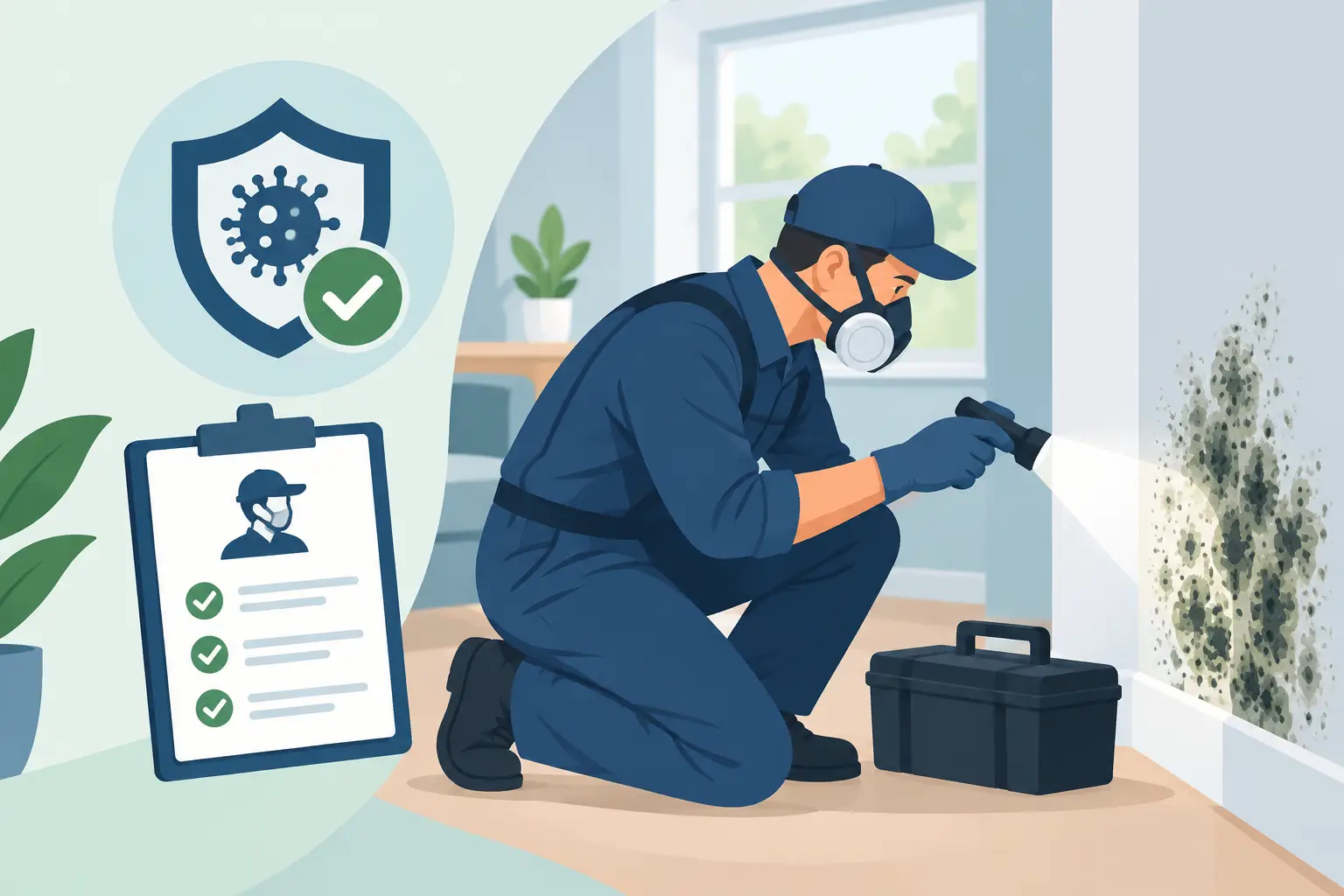



A tenant calls and says there is mold in the bathroom ceiling, a musty smell in the basement, or black spotting around a window. At that point, a tenant mold complaint what to do question becomes a health, liability, and property protection issue all at once. The worst move is to treat it like a cosmetic problem and hope it goes away.
Mold complaints need a fast, documented, and professional response. For landlords and property managers, the goal is not just to remove what is visible. It is to identify the moisture source, determine how far contamination has spread, protect occupants, and show that the issue was handled responsibly.
Why a tenant mold complaint should be taken seriously
Mold growth usually means one thing first – excess moisture. That moisture may come from a plumbing leak, roof issue, poor ventilation, foundation seepage, condensation, or a past water loss that was never fully dried. The visible staining a tenant reports is often only part of the problem.
There is also the occupant health side. Mold exposure can aggravate asthma, allergies, sinus irritation, headaches, and other respiratory symptoms in sensitive individuals. Not every mold situation creates the same level of health concern, and not every dark stain is toxic mold, but that uncertainty is exactly why proper inspection matters.
From a property management perspective, delay tends to make everything more expensive. Moisture keeps feeding growth, drywall and insulation become more heavily affected, and tenant frustration grows. A small complaint can turn into a unit turnover problem, an insurance issue, or a dispute over habitability if it is ignored.
Tenant mold complaint what to do first
Start by acknowledging the complaint quickly and professionally. Tenants want to know that the issue is being taken seriously. A delayed or dismissive response often creates more conflict than the mold itself.
Ask for specific details. Find out where the mold is visible, when it was first noticed, whether there is a musty odor, whether there was a recent leak or flood, and whether any symptoms have been reported. If the tenant can provide photos, that helps establish an initial record before anyone touches the area.
Next, document everything. Keep written notes on the date of the complaint, the location, the tenant’s description, and your response timeline. Good documentation protects everyone. It helps you track the issue, coordinate vendors, and demonstrate that the complaint was addressed in a reasonable manner.
Then arrange an inspection as soon as possible. If the area is small and clearly tied to a minor surface moisture issue, the solution may be straightforward. But if the source is unknown, the affected area is larger, there is a strong odor, or mold may be inside walls or ceilings, a certified mold inspection is the safer path.
What not to do after a mold complaint
Do not paint over it, spray air freshener, or have general cleaning staff wipe it away without understanding the source. That may hide the symptom temporarily, but it does not correct the condition that caused the growth.
Do not assume the tenant caused the problem without evidence. Sometimes occupant habits contribute to condensation, especially in bathrooms, kitchens, or poorly ventilated spaces. But many mold issues come from hidden leaks, building envelope failures, or inadequate exhaust systems. A rushed blame decision can damage the landlord-tenant relationship and leave the real moisture issue unresolved.
It is also risky to rely on a visual guess alone when contamination may be hidden. Mold behind drywall, under flooring, or above ceilings can continue spreading even if the visible area looks limited.
Inspect the source, not just the stain
A proper response starts with moisture detection. That means looking beyond the surface to identify why the area became damp in the first place. Professional inspectors may use moisture meters, thermal imaging, and other diagnostic tools to locate wet building materials and trace hidden water intrusion.
This is where experienced remediation companies add real value. A certified team does not just say, “yes, that looks like mold.” They assess the scope, identify likely sources, and determine whether containment, material removal, HEPA filtration, and post-remediation verification are needed.
For landlords, this matters because the right scope avoids two common mistakes. One is overreacting to a minor issue and paying for work that is not necessary. The other is underreacting to a hidden contamination problem that returns in weeks.
When a mold complaint becomes a remediation job
Not every complaint requires a full remediation project, but some clear signs suggest the problem is more than surface-level. If drywall is soft, paint is bubbling, baseboards are swollen, or there is a strong persistent odor, moisture has likely been present long enough to affect materials below the surface.
The same is true if mold covers a large area, returns after cleaning, or appears in HVAC-adjacent spaces, attics, crawl spaces, basements, or inside wall cavities. In those cases, professional containment becomes important. Without it, disturbing the affected materials can spread spores and debris into occupied areas.
A remediation plan typically includes isolating the work area, controlling airborne particles with HEPA filtration and negative air pressure, removing contaminated porous materials where necessary, cleaning salvageable surfaces, and correcting the underlying moisture issue. That last step is what makes the result durable.
Communicating with tenants during the process
Clear communication is part of risk control. Let the tenant know when inspection will happen, whether they need to prepare the space, and what the next steps will be once findings are confirmed. If the complaint involves a child, elderly resident, or someone with respiratory sensitivities, move with extra urgency.
Be honest about what you know and what you do not know yet. Saying “we are arranging a certified inspection to determine the source and scope” is better than making promises before the area is evaluated.
If remediation is required, explain the safety measures being used. Tenants are often more cooperative when they understand that containment, air filtration, and controlled removal are designed to protect indoor air quality, not just the walls.
Documentation can reduce liability
A mold complaint is not only a maintenance issue. It can become a legal or insurance issue depending on the severity, the response time, and whether anyone claims health impacts or property damage.
That is why records matter. Keep copies of tenant communications, photos, inspection findings, invoices, moisture source repairs, and any remediation reports. If post-remediation air quality testing or clearance testing is performed, save those results as well.
Detailed records show that the complaint was treated seriously and resolved through a professional process. That is especially important for rental properties, multifamily buildings, and commercial spaces where multiple parties may later ask what was done and when.
It depends on the cause
One of the most overlooked parts of a tenant mold complaint what to do situation is that responsibility can depend on the source. If mold stems from a roof leak, pipe failure, or failed ventilation system, the owner generally needs to correct the building condition. If the issue is tied to consistent tenant behavior, such as blocking vents or failing to report moisture for a long period, the conversation may be different.
Still, cause should be established with facts, not assumptions. Moisture mapping, inspection findings, and a documented history of leaks or condensation give you something objective to work from.
Why professional help is often the fastest route
Mold problems rarely get easier with time. What starts as a complaint about a bathroom ceiling can lead to hidden drywall damage, framing moisture, or cross-contamination in nearby rooms if handled improperly.
Professional assessment gives landlords and property managers a clear path forward. A qualified remediation company can inspect, identify the source, define the scope, contain affected areas, remove contamination safely, and verify that the space is ready for normal occupancy. That process protects the tenant, the property, and the owner.
For property owners who want a dependable response, Mold Removal Remediation approaches complaints the way they should be handled – with certified inspection methods, moisture-source detection, controlled remediation, and indoor air quality protection built into the process.
When a tenant reports mold, speed matters, but so does doing the job correctly. A calm, documented, professional response today is usually what prevents a much larger property and liability problem tomorrow.