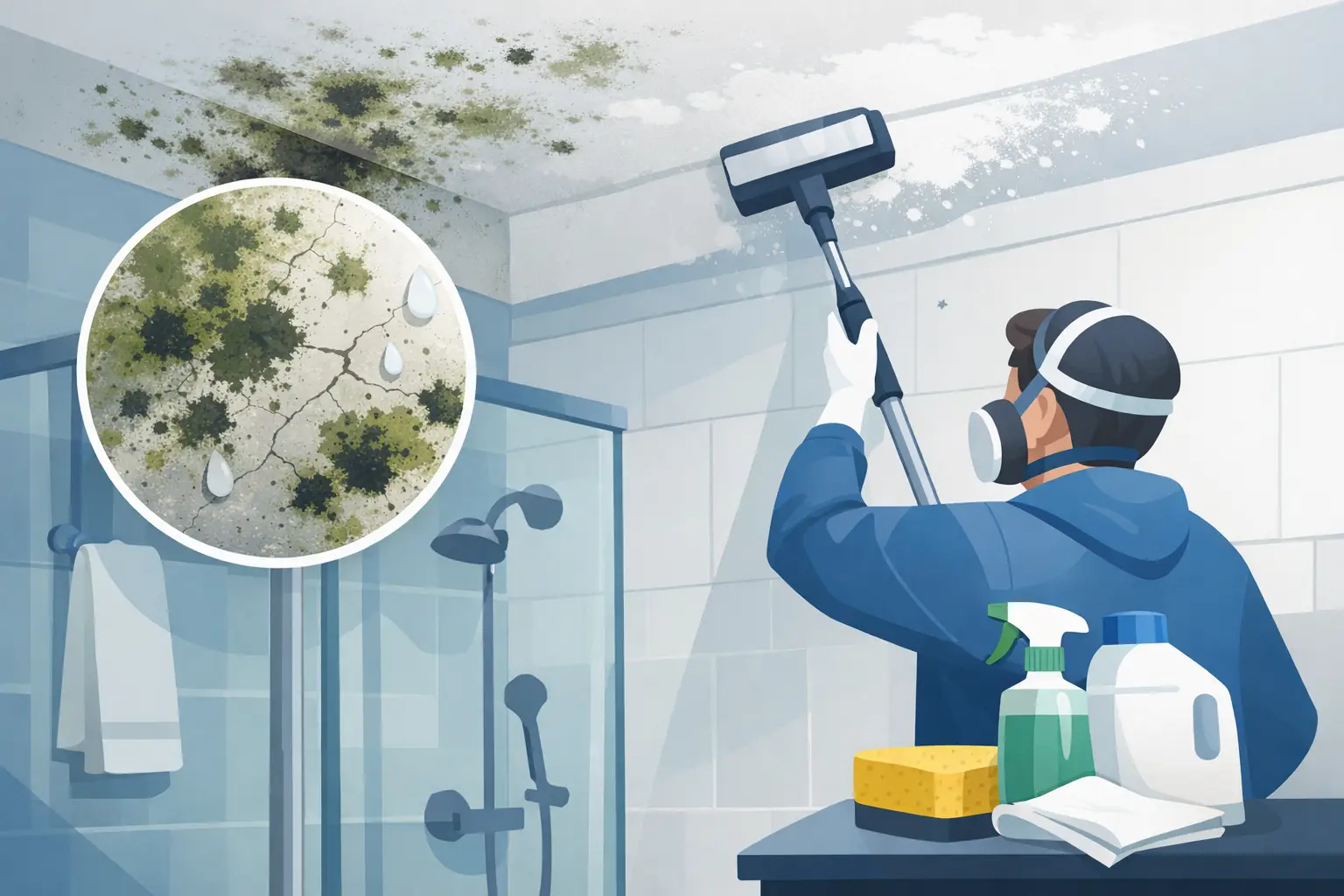



If a mold problem was serious enough to require containment, HEPA filtration, material removal, and moisture control, it should never end with a visual check alone. Post remediation verification testing is the step that confirms whether the work was actually successful and whether the area is ready to be safely occupied again.
For homeowners, landlords, property managers, and business owners, this matters for one simple reason: mold remediation is not finished just because the damaged material is gone. If elevated airborne spores remain, if hidden moisture is still feeding growth, or if dust from the remediation process was not properly controlled, the problem can return quickly. Verification testing helps separate a real fix from a temporary cleanup.
What post remediation verification testing actually means
Post remediation verification testing, often called PRV testing or clearance testing, is an independent evaluation completed after remediation work is done. Its purpose is to confirm that the affected area meets acceptable cleanliness and air quality conditions based on the original issue, the scope of work, and the conditions found during inspection.
This is not the same as taking a quick look around the room. A trained professional will typically assess whether visible mold has been removed, whether dust and debris from demolition or cleaning remain, whether containment was properly handled, and whether moisture readings suggest the underlying source has been corrected. Depending on the project, the process may also include air sampling, surface sampling, or both.
The exact testing protocol depends on the property and the severity of contamination. A small isolated issue in a bathroom may not require the same level of verification as a multi-unit building with widespread water damage. That is why credible testing is never one-size-fits-all.
Why post remediation verification testing matters
The biggest reason is health and safety. Mold spores are microscopic, and contamination is not always visible after a cleanup. People may still smell musty odors, report irritation, or notice symptoms even when surfaces look clean. Verification testing helps determine whether those concerns are connected to remaining contamination, ongoing moisture, or a different indoor air quality issue.
It also protects the property itself. If remediation ends without confirming the source of moisture was resolved, the same materials can become contaminated again. In homes, that can mean repeat damage behind drywall, under flooring, or inside attics and crawlspaces. In commercial settings, it can lead to tenant complaints, employee concerns, and unnecessary repair costs.
There is also a documentation benefit. For landlords, property managers, and business owners, formal clearance records can support lease issues, insurance discussions, maintenance files, and compliance-related communication. When occupants want proof that the space was properly restored, post-remediation verification provides a much stronger answer than verbal reassurance.
What happens during post remediation verification testing
A proper verification process starts with a visual inspection. The inspector reviews the remediated area to confirm there is no visible dust, debris, or fungal growth. Surfaces should appear clean, containment materials should be removed correctly if the area is ready for clearance, and there should be no obvious signs that damaged materials were left behind.
Moisture assessment is another critical part of the process. Using tools such as moisture meters and, in some cases, thermal imaging, the inspector checks whether building materials still show elevated moisture levels. If the original water source was not fixed, air samples alone may not tell the full story. A room can pass on one day and fail again later if moisture remains active.
Air sampling is often used when the project involved significant contamination or when there are concerns about indoor air quality after cleanup. Samples are usually collected inside the remediated area and compared with an outdoor control or another appropriate reference point. The goal is not simply to chase a zero reading. Mold exists naturally in the environment. What matters is whether the indoor spore types and concentrations are consistent with a normal, clean indoor condition.
Surface sampling may also be used in certain cases, especially when there is concern about settled dust or suspicious staining. However, surface samples are more limited in what they can prove. They can help identify what is on a material, but they do not always reflect what occupants are breathing. That is why interpretation matters as much as collection.
When verification testing should be done
Timing is important. Post remediation verification testing should only happen after the remediation contractor has completed the work and after the area has been thoroughly cleaned. If debris is still present or drying is incomplete, testing can give misleading results.
In many cases, the HVAC system, if affected, should also be considered before clearance. If contaminated dust remains in ducts or if negative air controls spread debris into adjacent spaces during removal, testing one room without evaluating the larger system may create false confidence.
It is also best to test before reconstruction closes up walls, ceilings, or flooring. Once fresh materials are installed, it becomes harder to determine whether the underlying area was actually clean and dry. Testing at the right stage gives property owners a clearer picture and reduces the risk of paying for rebuild work over an unresolved problem.
What a pass or fail result really means
A passed verification result means the remediated area meets the project criteria for cleanliness and acceptable environmental condition at the time of testing. It does not mean the building can never have mold again. Any property can develop mold if water intrusion returns.
A failed result does not always mean the remediation was poorly done from start to finish. Sometimes the issue is incomplete cleaning, a missed moisture source, cross-contamination from adjacent areas, or air movement that disturbed settled spores before sampling. In other cases, the remediation scope may have been too narrow for the actual extent of contamination.
That is why experienced interpretation matters. The answer is not always to repeat the entire project. Sometimes the fix is targeted recleaning, additional drying, revised containment, or expansion of the work area based on what the verification findings show.
Should the same company do the remediation and the testing?
It depends on the situation, but independence is often the better choice, especially for larger or higher-risk projects. When a separate qualified professional performs post remediation verification testing, the results carry more credibility because the party evaluating the work does not benefit from declaring it complete.
For a homeowner handling a limited issue, the decision may come down to budget and urgency. For commercial properties, rental units, health-sensitive occupants, or disputes involving tenants or insurers, independent clearance testing is usually the stronger option.
That said, the quality of the testing matters more than the label. A poor inspection with generic sampling is not useful just because it came from a third party. The inspector should understand mold behavior, moisture dynamics, building conditions, and how to interpret results in context.
Common mistakes property owners make
One common mistake is assuming odor alone tells the whole story. A musty smell can suggest ongoing contamination, but odor can also linger temporarily after work. The reverse is also true. A room may smell normal and still have an unresolved issue.
Another mistake is relying on DIY test kits after professional remediation. These kits often create more confusion than clarity because they do not account for outdoor baselines, building conditions, or proper interpretation. They may detect mold that is naturally present in the environment and lead owners to think the remediation failed when it did not.
Property owners also run into trouble when they rebuild too quickly. Covering a space with new drywall or flooring before proper verification can turn a correctable issue into a much larger repair later.
What to expect from a qualified remediation and verification process
A professional process should be clear from the start. First, the contamination and moisture source are identified. Then the affected area is contained, damaged materials are removed when necessary, and specialized cleaning is completed using HEPA filtration and other appropriate methods. Only after that should post remediation verification testing be considered.
Certified companies that work in mold remediation understand that cleanup alone is not the final benchmark. The real goal is to return the area to a safe, normal condition with documentation that supports the result. That is the standard responsible property owners should expect.
For clients dealing with mold in Toronto and the GTA, Mold Removal Remediation approaches this process with that full-cycle mindset: inspect the source, remediate correctly, and verify the outcome with professional testing when needed. That reduces guesswork and helps prevent repeat contamination.
If you are facing mold cleanup in a home, rental unit, office, or commercial facility, do not treat verification as an optional extra. It is the step that tells you whether the problem was actually solved or simply made less visible. A clean-looking room is reassuring, but a properly tested one gives you something better – confidence to move forward safely.