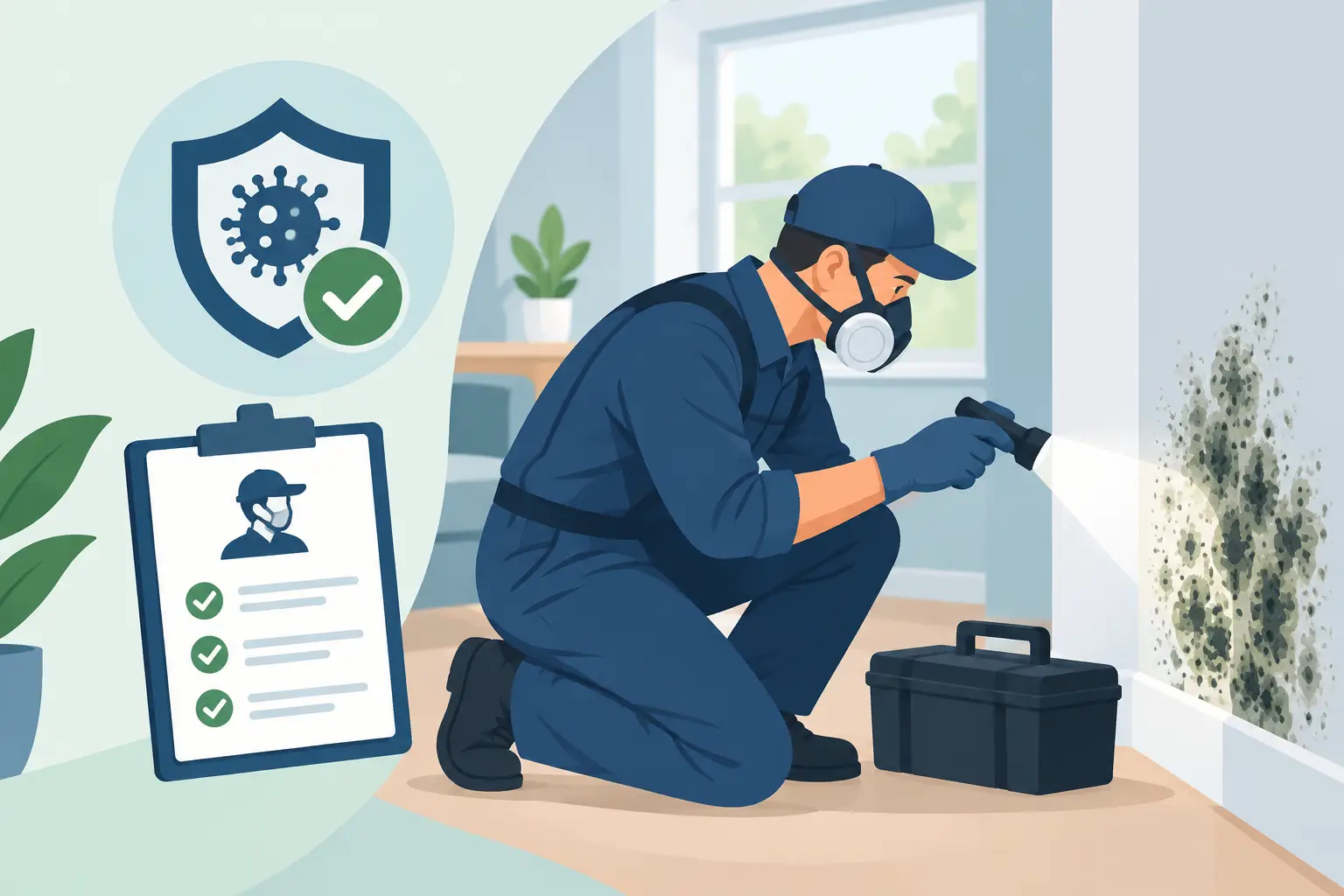



A musty smell in a basement, a stain spreading across a ceiling, or recurring spots around a window all point to the same concern: moisture is feeding mold somewhere. Knowing how to find mold source means looking beyond the visible growth. The patch you can see may be small, while the leak, humidity problem, or hidden wet material behind it is much larger.
For homeowners, landlords, property managers, and business owners, fast investigation matters. Mold will continue to return after surface cleaning if the underlying water source remains active. A thorough inspection identifies where water is entering, where materials are staying damp, and whether contamination has moved into concealed spaces.
Start With the Area Where Mold Is Visible
Visible mold is a clue, not necessarily the origin. Look closely at what surrounds it. Mold on a bathroom ceiling often relates to prolonged humidity or poor exhaust ventilation. Mold at the bottom of a wall can indicate a plumbing leak, foundation seepage, or water that traveled behind baseboards after a flood. Growth around windows can result from condensation, failed seals, or rainwater intrusion.
Pay attention to the pattern. A circular ceiling stain beneath a bathroom, kitchen, or roofline may suggest a slow leak above. Mold that follows the lower portion of an exterior wall can point to moisture entering from outdoors. If growth appears only on cold corners, behind furniture, or in closets on outside walls, condensation and inadequate air circulation may be contributing factors.
Do not rely on color to determine the seriousness of the issue. Mold can be black, green, gray, white, or nearly invisible. More useful indicators are the size of the affected area, how long moisture has been present, the materials involved, and whether the growth keeps returning.
How to Find Mold Source Using Moisture Clues
Mold needs moisture to grow. Finding the source usually means tracing evidence of water, humidity, or condensation back to its point of entry. Begin with a careful visual and odor check, then investigate the building systems and spaces closest to the affected area.
A persistent earthy or musty odor can be especially valuable when no mold is visible. This smell may come from damp drywall, insulation, carpeting, subflooring, or framing hidden inside a wall or ceiling cavity. Strong odors in a closed room, under a sink, near an HVAC vent, or in a basement should not be ignored simply because surfaces look clean.
Look for these moisture clues throughout the property:
- Peeling paint, bubbling drywall, warped baseboards, or cracked caulking
- Water stains on ceilings, walls, cabinets, or around window frames
- Condensation on windows, cold-water pipes, ducts, or metal surfaces
- Soft flooring, loose tiles, damp carpet edges, or swollen wood
- Rust on plumbing fixtures, appliances, or fasteners near damp areas
- A sump pump that runs constantly, a wet crawl space, or damp basement walls
These signs do not always reveal the exact source on their own. Water can travel along framing, pipes, wiring, and floor assemblies before becoming visible. A ceiling stain may be several feet away from the actual plumbing leak, and basement mold may result from exterior drainage problems rather than a crack directly behind the affected wall.
Check Common Water Sources Room by Room
In kitchens and bathrooms, inspect under sinks, around toilet bases, behind dishwashers and refrigerators, and near tubs and showers. Slow supply-line leaks are easy to miss because they may wet cabinets or wall cavities gradually. Failed grout and caulking around showers can also allow water into drywall and framing over time.
In basements, focus on foundation walls, floor-wall joints, utility penetrations, window wells, sump pits, and stored belongings placed against concrete. High humidity can create condensation on cool basement surfaces even when there is no obvious leak. Wet materials after a storm are a strong sign that exterior drainage, grading, gutters, downspouts, or foundation waterproofing needs attention.
In attics and upper floors, check for roof leaks, damaged flashing, blocked vents, bathroom exhaust ducts that discharge into the attic, and condensation on roof decking. A minor roof leak may only show itself after wind-driven rain or snow melt. HVAC systems also deserve attention, particularly condensate lines, drain pans, ducts, and filters. Poorly maintained equipment can distribute moisture and odors through occupied areas.
Use the Right Tools for Hidden Moisture
A flashlight and careful observation are useful first steps, but hidden mold requires more than a surface-level check. Certified inspectors use moisture meters to identify elevated moisture inside building materials, thermal imaging cameras to locate temperature differences associated with wet areas, and hygrometers to measure relative humidity.
Thermal imaging is valuable because damp materials often cool differently than dry materials. However, a thermal image is not proof of mold or a leak by itself. Cold areas can also result from missing insulation, air leaks, or outdoor temperatures. A qualified inspector confirms suspicious readings with moisture testing and visual evidence before recommending removal.
When the source remains unclear, limited investigative openings may be necessary. This can involve checking behind baseboards, inside a wall cavity, below flooring, or above a suspended ceiling. The goal is to access the smallest area needed to determine the extent of moisture and contamination. Opening materials carelessly can spread spores, especially if a significant mold reservoir is present.
Separate a Small Surface Issue From a Hidden Problem
Some minor mold on a nonporous bathroom surface may be manageable after the humidity issue is corrected. But porous materials such as drywall, carpet, ceiling tiles, insulation, particleboard, and upholstered furnishings can hold moisture and mold below the surface. Cleaning what is visible may leave contaminated material behind.
Professional assessment is strongly recommended when mold covers more than a small area, returns after cleaning, follows a water event, produces a persistent odor, or appears near HVAC equipment. It is also appropriate when occupants report unexplained irritation, coughing, headaches, or worsening respiratory symptoms while indoors. Those symptoms can have many causes, so they should not be used as a mold test, but they do justify investigating indoor air conditions promptly.
For rental and commercial properties, documented inspection and remediation can also help clarify maintenance responsibilities, protect occupants, and support a safe return to use. The correct scope depends on the building, moisture history, affected materials, and whether contamination is contained or has spread through multiple rooms.
Stop the Water Before Mold Removal Begins
Removing mold without correcting the moisture problem is a temporary cosmetic fix. Before remediation, repair the plumbing leak, roof defect, drainage issue, appliance failure, ventilation problem, or humidity condition that caused the damage. Then dry the affected area thoroughly. Materials that cannot be fully dried or safely cleaned may need controlled removal.
For larger or concealed contamination, professional remediation typically includes containment barriers, negative air pressure, HEPA air filtration, removal of unsalvageable materials, detailed cleaning, and moisture verification. This process is designed to prevent spores and debris from spreading into clean parts of the property while work is underway.
Post-remediation verification can add confidence when the work involves substantial contamination, sensitive occupants, commercial operations, or a history of recurring mold. Visual clearance, moisture measurements, and indoor air quality testing may be used depending on the situation. Testing is most meaningful after the source has been corrected and remediation is complete.
When to Call a Certified Mold Inspector
Call a qualified professional promptly if you cannot identify why an area is damp, if you suspect mold behind walls or beneath flooring, or if water damage affected multiple rooms. A certified inspection is also the safer route after sewage backup, extensive flooding, long-term leaks, or contamination around ventilation systems.
Mold Removal Remediation uses professional moisture detection and containment practices to identify the source, address affected materials, and help restore safer indoor conditions. For properties in Toronto and the GTA, a timely inspection can prevent a hidden moisture issue from becoming a larger restoration project.
The most useful next step is not to mask the odor or repaint the stain. Keep the area dry, document what you observe, and investigate the moisture path before mold has more time to spread.