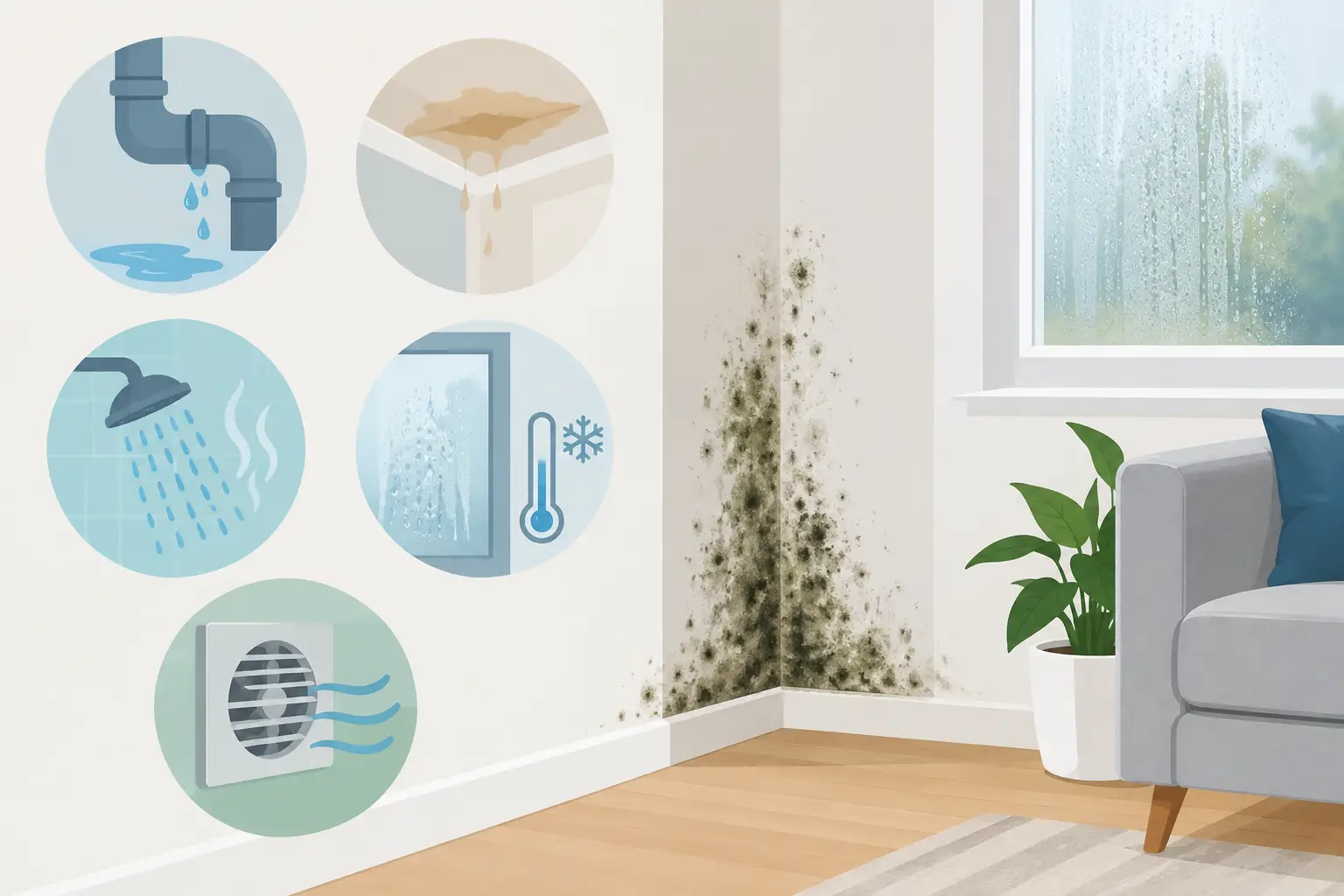



A musty smell behind a finished basement wall or beneath a kitchen sink is not a minor housekeeping issue. It is often the first sign that moisture has been trapped where it should not be. The best mold prevention tips all come back to one principle: control water quickly, consistently, and at the source.
Mold needs moisture, a food source such as drywall or wood, and time. Homes and commercial buildings provide plenty of materials mold can grow on, especially after leaks, flooding, condensation, or high indoor humidity. Prevention is not about making a property sterile. It is about keeping building materials dry and identifying hidden moisture before contamination spreads.
Best Mold Prevention Tips Start With Moisture Control
1. Fix leaks before they become hidden damage
A dripping supply line, loose roof flashing, failed window seal, or slow plumbing leak can wet drywall and insulation long before there is visible staining. Check beneath sinks, around toilets, near water heaters, and inside utility rooms regularly. Pay close attention to areas that are rarely used or hidden by furniture.
Do not rely on a dry surface alone. Water can travel behind baseboards, under flooring, and through wall cavities. If a leak has soaked porous material, repairing the plumbing is only half the job. The wet materials must also be properly dried, and sometimes removed, to prevent mold from taking hold.
2. Keep indoor humidity in a safe range
High humidity creates condensation on windows, exterior walls, pipes, and inside closets. That moisture can feed mold without a major leak ever occurring. Aim to keep indoor relative humidity generally between 30% and 50%, particularly during humid weather or in below-grade spaces.
A hygrometer gives you a simple way to monitor humidity. If levels remain high, use a properly sized dehumidifier, improve ventilation, and investigate the cause. A dehumidifier can reduce moisture in the air, but it will not solve water entering through a foundation crack or a poorly drained exterior wall.
3. Vent bathrooms, kitchens, and laundry areas outdoors
Steam from showers, cooking, and laundry is a daily source of moisture. Run the bathroom exhaust fan during a shower and for at least 20 to 30 minutes afterward. Kitchen range hoods should vent outdoors whenever possible, rather than recirculating humid air back into the room.
Dryer vents also need regular attention. A disconnected, crushed, or clogged dryer vent can release warm, damp air into a laundry room and create a concealed mold risk. Confirm that the vent duct is intact, clean, and exhausting directly outside.
4. Dry water damage within 24 to 48 hours
Fast drying is one of the strongest defenses against mold after a plumbing failure, roof leak, appliance overflow, or flood. Remove standing water immediately, move wet contents away from affected areas, and use air movement and dehumidification to begin drying.
The right response depends on the amount and type of water involved. A small, clean-water spill on tile may be manageable with prompt drying. Water that has entered drywall, carpet padding, insulation, subflooring, or multiple rooms requires a more careful assessment. Sewage backups and floodwater present additional contamination concerns and should be handled by trained restoration professionals.
5. Direct rainwater away from the building
Many recurring basement mold problems begin outside. Gutters that overflow, downspouts that discharge beside the foundation, clogged drains, and soil that slopes toward the building all increase the chance of moisture intrusion.
Clean gutters regularly and extend downspouts so water drains well away from the structure. Keep exterior drainage routes clear, and look for ponding water after heavy rain. If a basement repeatedly feels damp, smells musty, or shows peeling paint, the property may need a professional evaluation of drainage, foundation conditions, and hidden moisture.
6. Prevent condensation on cold surfaces
Condensation often develops where warm indoor air meets cold surfaces, including windows, metal pipes, exterior corners, and poorly insulated walls. It is common in winter, but it should not be ignored when it becomes frequent or persistent.
Insulate cold water pipes, maintain even indoor temperatures, and avoid blocking supply vents with large furniture. In closets along exterior walls, leave some space between stored items and the wall to allow air to circulate. If condensation continues despite normal humidity levels, it may point to an insulation, air-sealing, or ventilation issue.
7. Keep basements, crawl spaces, and attics on your inspection list
These areas are often out of sight until mold is well established. Basements can be affected by foundation seepage, sump pump failures, and humidity. Crawl spaces may hold damp soil, plumbing leaks, or inadequate ventilation. Attics can develop mold from roof leaks or warm, humid air escaping from the living space below.
Inspect these spaces seasonally and after major storms. Look for staining, warped wood, damp insulation, rusted fasteners, visible growth, or a persistent earthy odor. Do not paint over stains or use fragrance to cover an odor. Those actions may hide the warning sign while the moisture problem continues.
8. Clean small surface mold carefully, but know the limits
Small spots of mold on a hard, nonporous surface can sometimes be cleaned using appropriate protective equipment and a suitable cleaning method. The surface must then be dried completely. Avoid dry brushing or aggressive scraping, which can spread particles into the air.
Cleaning is not enough when mold covers a large area, keeps returning, affects drywall or insulation, follows water damage, or appears near HVAC equipment. Porous materials can hold contamination below the surface. In those cases, a certified inspection helps determine the moisture source, the extent of growth, and whether containment and professional removal are needed.
Mold Prevention Tips for HVAC and Indoor Air Quality
Your heating and cooling system can either help manage moisture or distribute it. Change HVAC filters on schedule, keep condensate drain lines clear, and have equipment serviced when you notice poor airflow, water around the unit, or unusual odors. A blocked condensate line can create water damage inside walls, ceilings, or mechanical rooms.
Do not close off every vent in an attempt to save energy. Reduced airflow can contribute to cold spots and condensation. If occupants experience recurring musty odors or unexplained respiratory irritation, indoor air quality testing and moisture diagnostics can help identify whether the concern is mold, humidity, ventilation, or another indoor contaminant.
9. Protect vacant units and rarely used spaces
Empty homes, rental units between tenants, storage rooms, and seasonal properties can develop mold because leaks go unnoticed and humidity is not monitored. Keep climate control operating at a reasonable setting, inspect the property routinely, and make sure someone can respond quickly after a storm or plumbing issue.
For landlords and property managers, documenting inspections and repair requests also matters. A prompt response to tenant reports of leaks, odors, or staining protects the building and helps prevent a small maintenance issue from becoming a larger remediation project.
10. Use moisture-resistant materials in high-risk areas
When renovating bathrooms, basements, laundry rooms, or commercial wash areas, material choices can reduce future risk. Moisture-resistant drywall, proper tile backer boards, sealed grout, and correctly installed vapor barriers can be worthwhile in the right application.
There is a trade-off: moisture-resistant materials do not make a room waterproof. They still need proper installation, ventilation, and drainage. If water is routinely entering a space, address the building condition first rather than relying on a finish material to hide it.
11. Watch for early warning signs
Mold is not always black, fuzzy, or obvious. A stale odor, recurring condensation, bubbling paint, soft drywall, warped trim, or discolored caulking can all indicate excess moisture. Treat these signs as a reason to investigate, not as a cosmetic problem to cover up.
Professional inspectors use tools such as moisture meters and thermal imaging to locate moisture that may not be visible. When necessary, air quality testing and targeted sampling can provide additional information about indoor conditions and support a remediation plan based on evidence.
12. Get professional help when the source is unclear
The most frustrating mold cases are the ones that return after repeated cleaning. That usually means the underlying moisture source was missed, or contamination is present behind a finished surface. A qualified remediation team should inspect, identify the source, contain affected areas, remove damaged materials safely, clean using HEPA filtration where needed, and verify that the space is dry and safe to restore.
For larger contamination, water-damaged porous materials, or concerns involving tenants, employees, children, older adults, or people with respiratory conditions, professional assessment is the cautious choice. Certified remediation is designed to protect occupants and prevent cross-contamination during removal.
Mold prevention works best as an ongoing property habit: notice moisture early, dry it thoroughly, and investigate anything that does not make sense. A prompt inspection can turn a hidden problem into a manageable repair before it affects indoor air, building materials, or the people who rely on the space.