

A room does not have to look dirty or damaged to have a mold problem. In many Toronto and GTA properties, the first sign is not black spotting on a wall – it is a persistent musty odor, a tenant complaint, or respiratory irritation that seems worse indoors. If you are trying to understand how to detect hidden mold, the key is knowing where mold grows, what conditions feed it, and which warning signs usually show up before it becomes visible.
Hidden mold is rarely random. It grows where moisture stays trapped long enough for spores to settle and spread. That means the real issue is often behind drywall, under flooring, inside insulation, around plumbing lines, above ceiling tiles, or inside HVAC systems. By the time mold appears on a painted surface, the contamination may already extend beyond what you can see.
How to detect hidden mold before it spreads
The most reliable way to detect hidden mold is to follow the moisture. Mold needs water, organic material, and time. In homes and commercial buildings, that combination often comes from slow leaks, past flooding, roof failures, condensation, poor ventilation, or humidity that stays elevated for long periods.
Start by thinking about the building’s history. If a bathroom fan vents poorly, a basement has had seepage, a dishwasher leaked months ago, or a roof issue was patched but never fully dried, those areas deserve attention. Mold can remain active long after the original water event seems resolved.
Odor is often the earliest clue. A musty or earthy smell that returns even after cleaning usually points to concealed microbial growth. Air fresheners and surface cleaners may mask the smell for a short time, but they do not remove the source. If one room, closet, or section of a lower level smells noticeably different from the rest of the property, that is worth investigating.
Another sign is staining that does not make sense. Peeling paint, bubbling drywall, warped baseboards, discolored ceiling patches, and recurring water marks suggest moisture is still present or was trapped in the assembly. Mold may be active behind the surface even if the visible material looks only slightly affected.
Health patterns can also provide useful context, although they should never be the only basis for diagnosis. If occupants notice more coughing, congestion, headaches, sinus irritation, or asthma flare-ups in one part of the property, indoor air quality may be part of the problem. This does not prove mold by itself, but when those symptoms appear alongside odor or moisture evidence, the concern becomes more serious.
Where hidden mold is most commonly found
Some areas are more likely than others to conceal mold because they collect moisture and are difficult to inspect casually. Bathrooms are a leading example, especially behind tiled shower walls, under tubs, around toilet seals, and inside vanity cabinets where plumbing connections drip slowly.
Basements are another common trouble zone. Foundation walls can wick moisture inward, especially after heavy rain or snowmelt. Finished basements are particularly risky because drywall, framing, and insulation can trap dampness for weeks without obvious visible growth.
Kitchens frequently hide mold under sinks, behind dishwashers, behind refrigerator water lines, and inside wall cavities affected by small plumbing leaks. In multi-unit buildings and commercial spaces, shared plumbing chases can allow hidden moisture problems to affect more than one area at once.
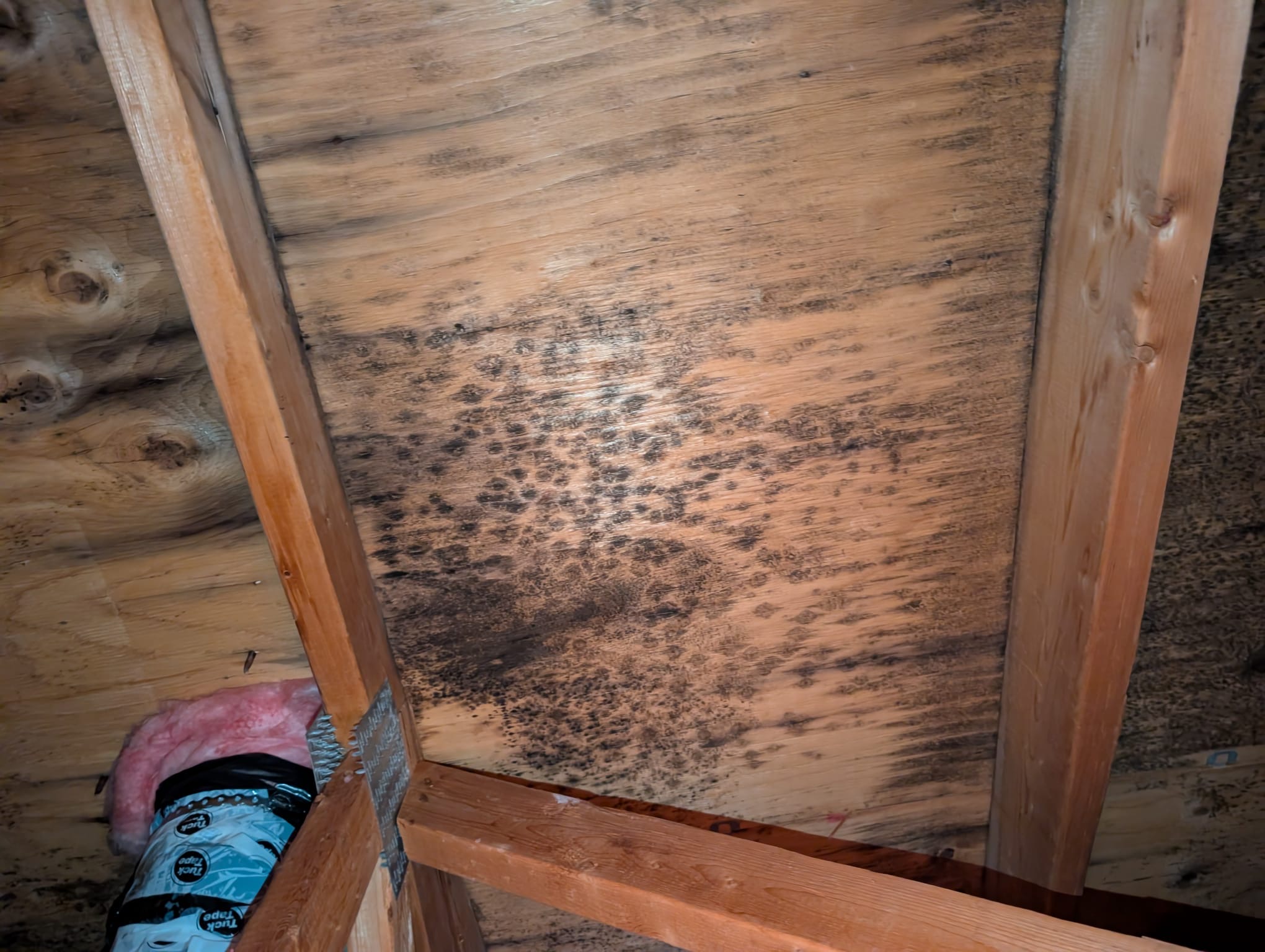
Attics often get overlooked. Poor ventilation, roof leaks, and condensation from bathroom exhaust fans can create mold growth on sheathing and framing. Because attics are less frequently used, contamination can expand significantly before anyone notices.
HVAC systems can also spread concerns beyond one room. If mold develops near coils, drain pans, duct insulation, or other damp components, spores can circulate through the building. When occupants report a musty smell that intensifies when the system starts, the mechanical system should be evaluated.
What you can check yourself
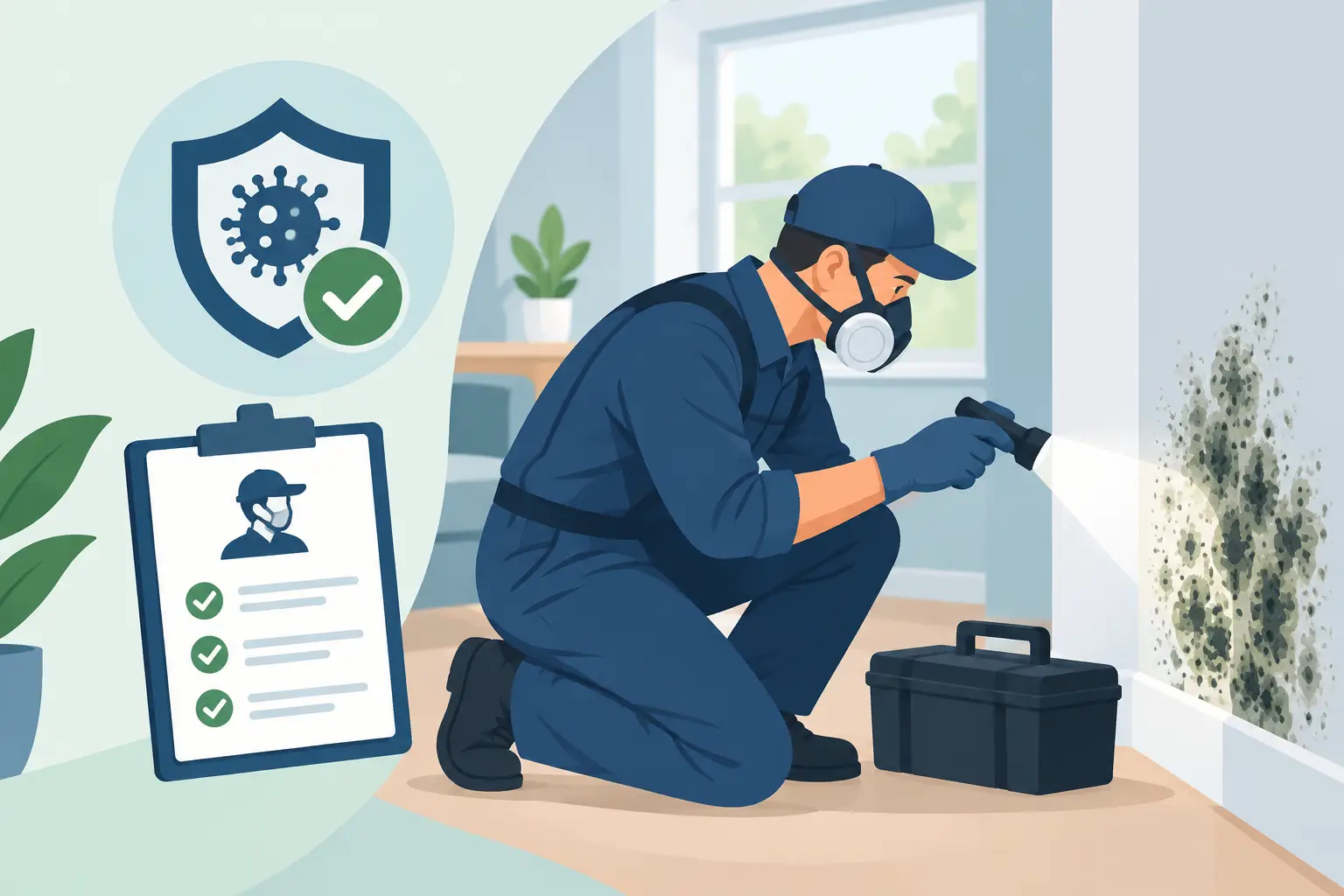
You do not need specialized training to notice warning signs, but you do need to be realistic about the limits of a visual check. A flashlight, careful observation, and attention to odor can help you identify suspicious conditions, but they cannot confirm the full extent of contamination inside closed cavities.
Look under sinks, around shutoff valves, behind stored items in closets, around window frames, and along basement corners. Press lightly on drywall near stains or discoloration. If it feels soft, swollen, or crumbly, moisture damage may be active. Check whether caulking, grout, or paint keeps failing in the same area. Repeated cosmetic repair often points to an unresolved moisture source.
Pay attention to condensation too. If windows, pipes, or HVAC lines are regularly wet, that persistent moisture can support hidden growth nearby. In some buildings, the issue is not a leak but humidity imbalance. This is common in bathrooms without proper exhaust, laundry areas, and lower levels with poor air circulation.
Still, there is a point where do-it-yourself inspection stops being useful. Lifting materials, opening walls, or disturbing contaminated areas without containment can spread spores and increase cleanup costs. If the signs are consistent but the source is unclear, professional inspection is the safer path.
Tools professionals use to detect hidden mold
Certified mold inspectors and remediation specialists use equipment that helps locate moisture and contamination without relying on guesswork. A moisture meter can identify elevated moisture levels inside building materials even when the surface appears dry. This is one of the fastest ways to narrow down where hidden mold may be active.
Thermal imaging is also useful, especially for finding temperature differences caused by wet insulation, concealed leaks, or trapped moisture behind walls and ceilings. It does not see mold directly, but it helps identify abnormal areas that need closer testing.
Air quality testing can be valuable when there is a strong suspicion of hidden mold but no visible growth. Spore sampling compares indoor and outdoor air and can reveal whether mold levels inside a property are elevated or unusual. Surface sampling may also be used when visible discoloration needs identification.
The trade-off is that testing only matters when it is interpreted properly. A number on a report does not fix the problem. Accurate diagnosis depends on combining inspection findings, moisture mapping, building history, and, when appropriate, laboratory analysis. That is why certification and remediation experience matter.
At Mold Removal Remediation, this is where a thorough process makes the difference. Professional inspection should not stop at pointing out a stain. It should identify the moisture source, determine whether contamination is localized or widespread, and outline the safest path to containment, removal, and post-remediation validation.
When hidden mold is more than a minor issue
Not every mold issue becomes a major project, but some warning signs should move quickly. If the property has had flooding, sewage backup, a roof leak that went unnoticed, or long-term plumbing failure, hidden contamination may be extensive. The same is true when multiple rooms have odor, when drywall is deteriorating, or when tenants or staff are reporting ongoing symptoms.
Commercial and rental properties carry additional pressure. Delays can lead to tenant complaints, business disruption, larger repair scopes, and possible compliance concerns. In those cases, early detection is not just about cleanup – it is about controlling liability and protecting indoor air quality before the problem escalates.
It also matters who is in the building. Children, older adults, people with asthma, and anyone with compromised respiratory health may react more strongly to contaminated indoor environments. If those occupants are affected, a wait-and-see approach is rarely the right one.
What to do if you suspect hidden mold
If you suspect mold behind walls, under flooring, or in another concealed area, avoid spraying, painting, or tearing into the area as a first response. That can hide the evidence, spread spores, or turn a manageable issue into a larger remediation job.
Instead, document what you notice. Note when odors appear, where staining is located, whether symptoms improve outside the building, and whether there has been any recent or past water intrusion. Then arrange for a professional inspection that includes moisture detection and, if needed, air quality testing.
The goal is not simply to confirm whether mold exists. The goal is to find the source, define the affected area, and solve the problem in a way that protects the property long term. Surface cleaning alone is rarely enough when contamination is hidden inside building materials.
If something in your property smells off, feels damp, or keeps showing signs of water damage, trust that pattern. Hidden mold tends to get more expensive and more disruptive the longer it stays out of sight.