

Tearing into an older wall, ceiling, or floor without knowing what is inside can turn a routine remodel into a serious health hazard. Asbestos testing before renovation is one of the most important steps in any pre-construction plan, especially in homes and commercial buildings built before modern material restrictions took hold.
Many property owners assume asbestos is only found in obvious industrial materials or very old insulation. In reality, it can be present in floor tile, mastic, drywall compound, textured ceilings, pipe wrap, roofing materials, and siding. Once these materials are cut, drilled, sanded, or demolished, asbestos fibers can become airborne and spread through the property.
Why asbestos testing before renovation is not optional
Renovation changes the risk. A material that seems stable when left alone can become dangerous the moment a contractor opens it up. That is why asbestos concerns often surface right before a bathroom update, basement finishing project, kitchen remodel, or commercial tenant improvement.
The main issue is exposure. Asbestos fibers are microscopic and easy to inhale. Once airborne, they can stay suspended for hours and settle into other areas of the building. This creates a problem not only for workers, but also for occupants, tenants, customers, and anyone who enters the space during or after the project.
There is also a legal and financial side. If asbestos-containing materials are disturbed without proper identification and handling, the project may be shut down, the site may require containment, and cleanup costs can rise quickly. For landlords, property managers, and business owners, that can also mean liability, complaints, and compliance problems.
Where asbestos is commonly found before a remodel
Asbestos was used in a wide range of building products because it resisted heat, moisture, and wear. That means it may be hidden in places many owners do not expect. Common suspect materials include popcorn ceilings, plaster and drywall joint compound, vinyl floor tiles, sheet flooring backing, pipe insulation, boiler insulation, cement board, roofing felt, and textured wall finishes.
Age matters, but it is not the only factor. Buildings from the mid-1900s are higher risk, yet some materials manufactured later may still contain asbestos depending on the product and installation date. That is why visual guesswork is not enough. Two materials can look identical while only one contains asbestos.
A trained inspector will focus on the renovation scope, not just the age of the building. If you are replacing flooring, opening walls, removing a ceiling, upgrading HVAC components, or demolishing mechanical room materials, those work areas should be assessed carefully.
What asbestos testing before renovation actually involves
This process is more than a quick walk-through. A proper inspection begins with identifying the areas and materials that may be disturbed during the planned work. The inspector looks at construction type, material condition, accessibility, and the extent of demolition or renovation.
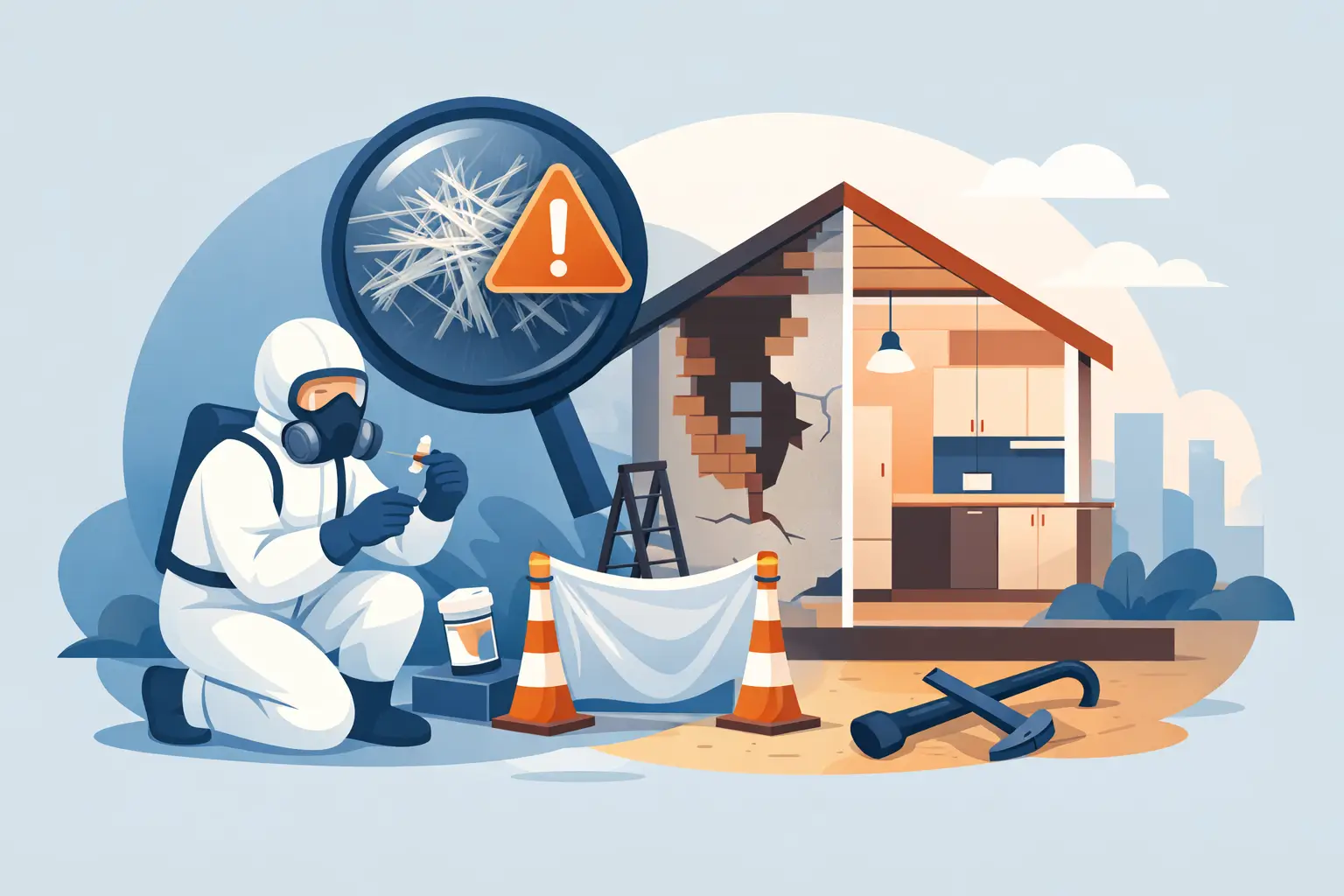
If suspect materials are present, small samples are collected using controlled procedures. The goal is to obtain representative samples without creating unnecessary fiber release. Those samples are then sent to an accredited laboratory for analysis.
The results confirm whether asbestos is present and, if so, in which materials. From there, the next step depends on the scope of work and the condition of the material. Sometimes the material can remain in place if it will not be disturbed. In renovation settings, however, removal or abatement is often required before construction can safely begin.
Why DIY testing is a risky shortcut
Some property owners consider mail-in kits or self-sampling to save time and money. On paper, that can sound practical. In real conditions, it often creates avoidable risk.
The first problem is sampling error. If the wrong area is sampled, if the material is not representative, or if contamination is spread during collection, the result may be misleading. The second problem is exposure. Breaking into suspect material without containment or proper protective equipment can release fibers into occupied space.
Professional testing reduces those risks. Certified environmental specialists understand where asbestos is likely to be hiding, how to collect samples safely, and how to interpret results in the context of the renovation plan. That matters because the real question is not only whether asbestos exists, but whether your planned work will disturb it.
What happens if asbestos is found
A positive result does not mean the project has to stop permanently. It means the job needs a controlled plan. The right response depends on the material type, condition, location, and the extent of renovation.
If asbestos-containing material is in the work area, abatement is usually the safest path before demolition or remodeling begins. That may include containment barriers, negative air pressure, HEPA filtration, controlled removal methods, and proper waste handling. After removal, clearance steps may be recommended to confirm the area is safe for re-entry and construction.
This is where experience matters. A qualified remediation contractor does not treat asbestos as a side issue. The work should be approached with the same precision used in high-risk indoor environmental projects – inspect thoroughly, isolate the hazard, remove it correctly, and verify conditions before the next trade enters the space.
Timing matters more than most owners realize
One of the most common mistakes is waiting until the contractor is ready to start demolition. At that point, a positive asbestos result can stall labor, reschedule subcontractors, and push material deliveries off track. For commercial properties, delays can affect tenant turnover and opening dates. For homeowners, it can mean living in a partial construction zone longer than expected.
Testing should happen early, before bids are finalized and before any destructive work begins. That gives you time to understand the findings, price any required abatement, and build the work into the project timeline.
It also helps avoid rushed decisions. When owners are under pressure to keep a renovation moving, they are more likely to accept shortcuts. Hazardous material issues should never be handled that way.
Who should schedule testing
Homeowners planning older home upgrades should schedule testing if walls, ceilings, flooring, insulation, or textured finishes will be disturbed. Landlords should do the same before unit turnover work, especially in aging multifamily properties where repeated repairs may expose hidden materials.
Property managers and commercial owners should think even more broadly. Office remodels, retail fit-outs, mechanical upgrades, and partial demolitions can all disturb asbestos-containing materials. In occupied buildings, the stakes are higher because exposure can affect employees, tenants, customers, and maintenance staff.
If there is any uncertainty about the material or the building history, testing is the safe decision. The cost of inspection is minor compared with the cost of uncontrolled contamination, emergency cleanup, project shutdowns, or health claims.
Choosing the right asbestos professional
Not all inspection services offer the same level of care. You want a company that understands hazardous material protocols, follows a clear sampling process, and can connect test results to practical next steps. Certifications, field experience, and specialized equipment matter because asbestos issues rarely exist in isolation. Older buildings may also have moisture damage, hidden mold, poor ventilation, or contaminated dust that complicates the work area.
A qualified contractor should explain the process clearly, document findings, and help you understand whether removal is necessary before renovation starts. For Toronto and GTA property owners, a company like Mold Removal Remediation brings value because the team works across asbestos, mold, indoor air quality, and containment-based remediation. That broader environmental experience helps when projects involve more than one hidden hazard.
The safest renovation is the one that starts with answers
Renovation should improve a property, not create a preventable exposure event. Asbestos is manageable when it is identified early and handled correctly. It becomes dangerous when people assume, guess, or move too fast.
Before the first cut, open the wall on paper, not with a saw. A professional inspection gives you clarity on what is in the building, what needs to happen next, and how to protect everyone involved. That is how smart renovation starts – with facts, not surprises.