

A musty odor in an office hallway, stains spreading across a ceiling tile, or recurring tenant complaints about air quality usually point to a bigger problem than surface discoloration. Commercial mold remediation services are designed to address that bigger problem at its source – not just wipe away visible growth, but identify hidden contamination, stop moisture intrusion, and restore a safe indoor environment for employees, tenants, customers, and visitors.
For commercial property owners and managers, mold is rarely just a maintenance issue. It can disrupt operations, affect occupant health, damage materials, trigger lease disputes, and create liability concerns if it is handled improperly. That is why professional remediation matters. In a commercial setting, the right response has to be fast, controlled, and documented.
What commercial mold remediation services actually include
Many people assume mold removal means spraying a product on the wall and repainting the area. In commercial buildings, that approach usually fails. Mold growth is a symptom of moisture, and unless both the contamination and the moisture source are addressed, the problem tends to return.
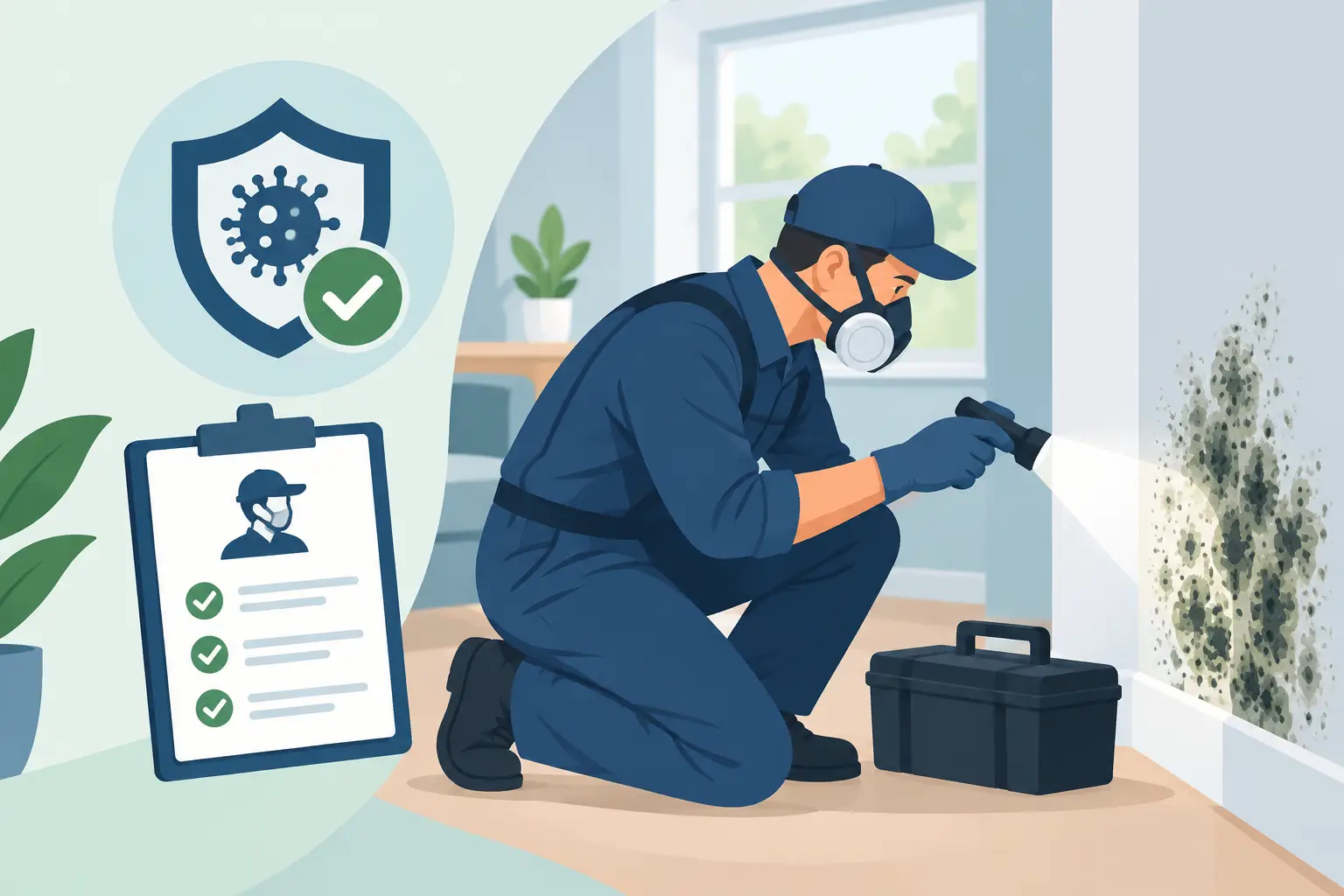
Professional commercial mold remediation services typically start with a site assessment. This includes a visual inspection, moisture mapping, and in many cases the use of thermal imaging and moisture meters to identify water intrusion behind walls, under flooring, above ceilings, or inside mechanical spaces. If air quality concerns are present, testing may also be used to help measure spore levels and confirm the extent of contamination.
Once the affected areas are identified, containment becomes a priority. This is especially important in offices, retail spaces, apartment common areas, schools, medical facilities, and industrial properties where foot traffic and HVAC systems can spread spores quickly. Technicians isolate the work area with physical barriers and negative air pressure systems so contamination does not move into occupied parts of the building.
From there, remediation involves removing contaminated porous materials when needed, cleaning salvageable structural surfaces, HEPA vacuuming, air scrubbing, and detailed decontamination. The final step is clearance or post-remediation verification, which may include moisture confirmation and air quality testing to show that the area is dry, clean, and ready for repairs or re-occupancy.
Why commercial properties need a different approach
Commercial mold problems are not handled the same way as a small residential issue under a sink. The scale is different, the risk is different, and the consequences of shortcuts are higher.
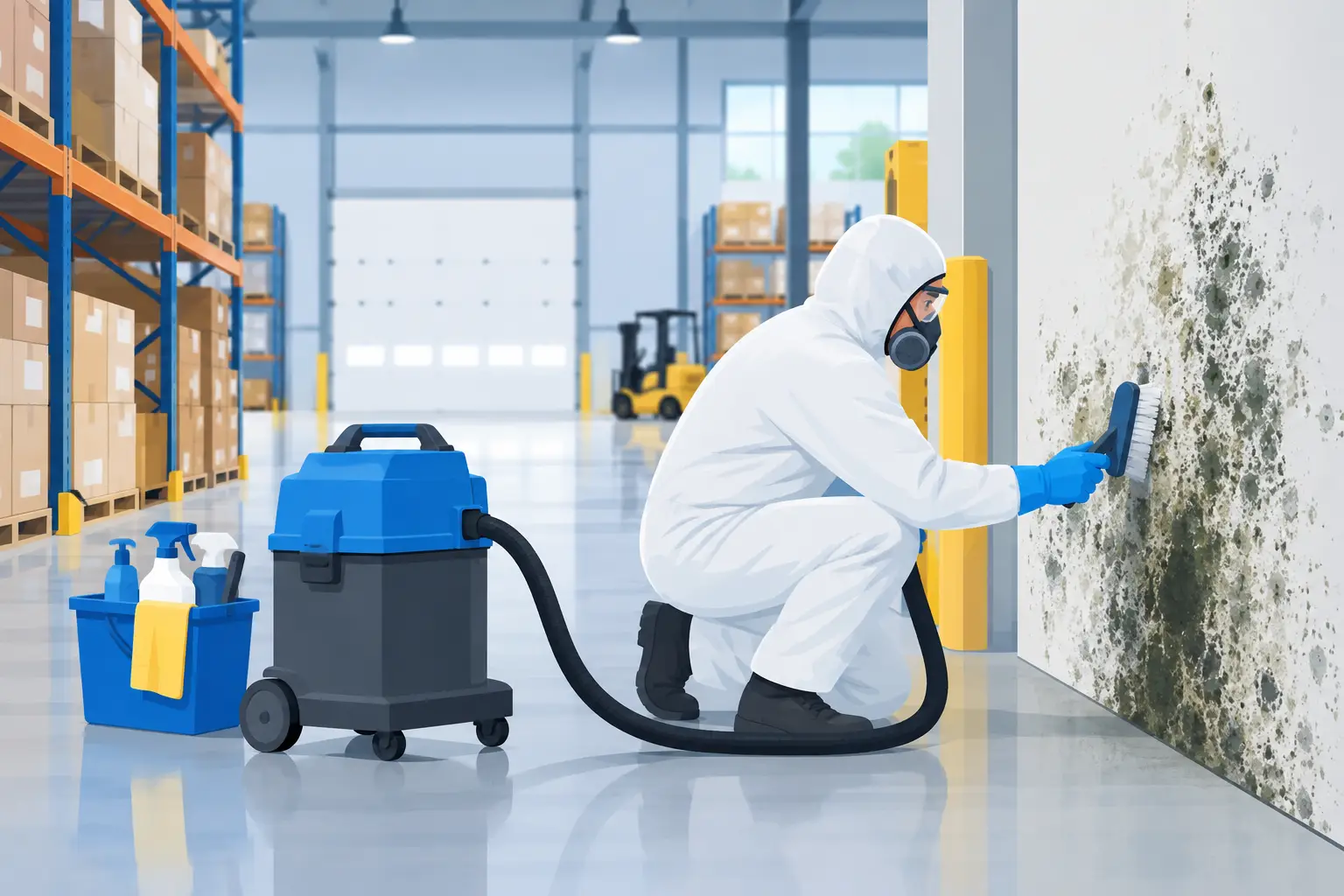
A commercial building often contains more complex HVAC systems, larger concealed spaces, higher occupancy, and stricter operational demands. Mold in one tenant suite may affect neighboring units through shared walls, ceilings, ductwork, or utility penetrations. In warehouses and industrial buildings, high humidity and limited ventilation can create ongoing exposure conditions. In multi-unit properties, one unresolved leak can become a multi-floor remediation project.
There is also the question of downtime. A business owner may need work completed after hours to reduce disruption. A property manager may need documentation for tenants, insurers, or internal records. A school, clinic, or office may require extra engineering controls to protect sensitive occupants. This is where certified remediation teams bring value. They do not just clean mold – they build a controlled work plan around safety, building use, and continuity.
Signs a building may need commercial mold remediation services
Visible mold is the obvious warning sign, but it is not the only one. In commercial properties, hidden mold is common because it can grow inside wall cavities, above suspended ceilings, below carpets, around plumbing penetrations, or within poorly ventilated utility areas.
Property owners and managers should pay attention to persistent musty odors, bubbling paint, warped drywall, stained ceiling tiles, repeated leaks, condensation on windows or pipes, and occupant complaints about headaches, coughing, or irritated eyes that seem worse inside the building. These signs do not confirm mold on their own, but they do justify a professional inspection.
The timing matters. Mold growth can begin quickly after water intrusion, and delaying action usually increases both the affected area and the cost of repairs. Early intervention often means more materials can be saved and fewer occupants are impacted.
The remediation process, step by step
Inspection and moisture source identification
A reliable remediation project starts with diagnosis. Technicians inspect the visible damage, but they also look for the reason it happened. Roof leaks, plumbing failures, window leaks, basement seepage, poor drainage, condensation, and HVAC issues are common sources in commercial spaces.
If the moisture source is not corrected, remediation is incomplete. This is one of the biggest differences between certified remediation and superficial cleaning.
Containment and engineering controls
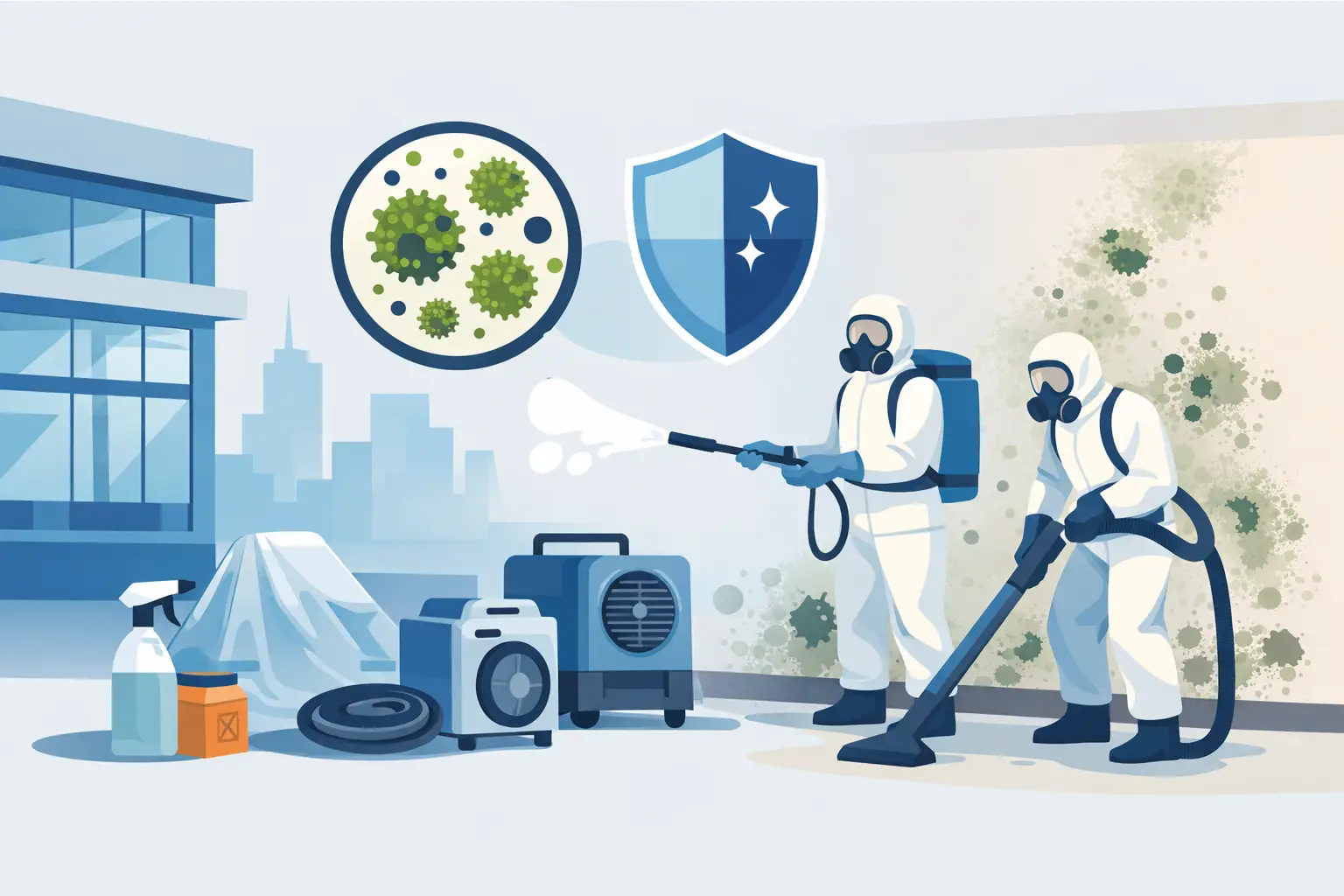
Once mold is confirmed or strongly suspected, the affected area is isolated. Poly barriers, sealed access points, HEPA-filtered air scrubbers, and negative pressure help prevent cross-contamination. In active commercial environments, containment protects both people and unaffected parts of the property.
This step can feel excessive to someone seeing only a patch of mold on a wall, but hidden contamination often extends beyond the visible area. Containment is what keeps a localized problem from becoming a building-wide one.
Safe removal and cleaning
Porous materials such as drywall, insulation, ceiling tiles, and some carpeting may need to be removed if they are contaminated. Semi-porous and non-porous materials may be cleaned if they are structurally sound and remediation standards allow it.
HEPA vacuuming, damp wiping, and detailed surface cleaning are used to capture settled spores and debris. Depending on the site, contents cleaning may also be part of the project. The exact approach depends on the type of material, the extent of growth, and whether the area is occupied during the work.
Drying and verification
After contaminated materials are removed and surfaces are cleaned, the area must be fully dried. Moisture readings help confirm that the environment is no longer supporting mold growth. In many commercial projects, post-remediation verification or air testing provides added confidence that the work has been completed properly.
For owners, managers, and tenants, that final verification can be just as important as the removal itself. It provides a clear endpoint and supports safe re-occupancy.
Why certification and equipment matter
Not every contractor is qualified to perform mold remediation in a commercial building. General cleaning crews and handymen may offer fast fixes, but without proper containment, filtration, and moisture diagnostics, they can make the situation worse.
Commercial projects should be handled by trained professionals with recognized certifications and the right equipment for the job. Moisture meters and thermal imaging help locate hidden water issues. HEPA filtration captures microscopic particulates. Negative air machines maintain controlled airflow. Documented procedures support safety, quality, and consistency.
For commercial clients, credentials are not just marketing. They are part of risk management. A certified team is more likely to follow accepted remediation standards, protect indoor air quality, and provide the level of documentation expected in professional property operations.
Cost, downtime, and the trade-offs owners should understand
One of the first questions clients ask is what commercial mold remediation services cost. The honest answer is that it depends on the size of the affected area, the cause of the moisture, the type of materials involved, the accessibility of the damage, and whether the building can stay partially occupied during the work.
A small contained issue in a vacant office suite is very different from widespread mold behind occupied tenant walls or in a large basement mechanical room. After-hours scheduling, specialized containment, contents protection, and post-remediation testing may add cost, but they can also reduce business interruption and liability.
Trying to cut the scope too aggressively often creates a false economy. A cheaper project that ignores hidden moisture or skips containment may lead to recurring mold, tenant complaints, and a second round of remediation. The better question is not just what the job costs today, but what it prevents tomorrow.
Choosing a commercial remediation provider
Commercial clients should look for a company that can inspect, explain, contain, remediate, and verify results with a clear process. Fast response matters, but so does technical discipline. You want a provider that can explain what is happening in plain language, document conditions properly, and tailor the work plan to your building type and occupancy needs.
In Toronto and the GTA, Mold Removal Remediation approaches commercial projects with that full-service mindset – inspection, moisture detection, certified remediation, and air quality validation when needed. That kind of end-to-end process is what helps commercial properties move from uncertainty to control.
If you are dealing with persistent odors, water damage, visible growth, or complaints from occupants, the safest next step is a professional assessment. Mold problems in commercial buildings rarely stay small for long, and the right response protects more than the structure. It protects the people who depend on that space every day.