

If you have visible mold on drywall, a musty smell in the basement, or tenants reporting respiratory irritation, the question is not just who can clean it. The real issue is mold removal vs remediation, and that difference affects your health, your building, and whether the problem comes back in a few weeks.
Many property owners use the terms interchangeably. In practice, they are not the same. Mold removal usually refers to taking mold off a surface or getting rid of damaged material. Mold remediation is the broader, professional process of finding the source, containing the affected area, removing contaminated materials safely, cleaning the air and surfaces, and confirming the space is safe to use again.
Mold removal vs remediation: the core difference
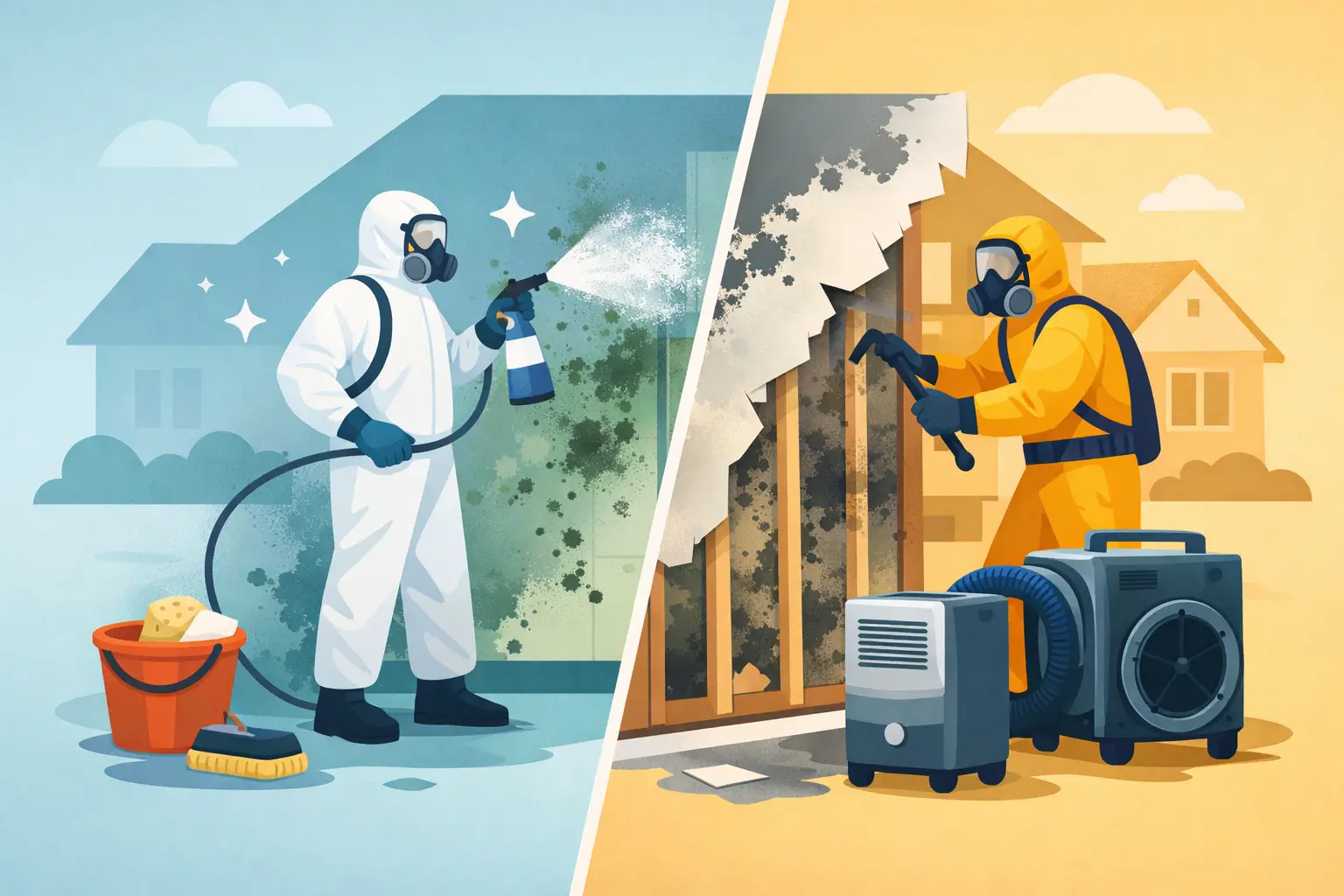
Mold removal is a task. Remediation is a system.
If mold is growing on a bathroom ceiling because of daily humidity, a basic cleaning approach may remove what you can see. But if mold is spreading behind drywall after a roof leak or hidden inside a commercial unit after plumbing damage, surface cleaning alone does not solve the problem. It may improve appearance for a short time while contamination remains active inside wall cavities, insulation, or subflooring.
Professional remediation starts with a different mindset. Instead of asking, “How do we wipe this away?” the right question is, “Why is mold growing here, where else has it spread, and how do we stop exposure during cleanup?” That is why certified remediation companies use moisture meters, thermal imaging, HEPA filtration, and negative air pressure systems. The goal is not cosmetic improvement. The goal is controlled, documented recovery.
Why simple mold removal often falls short
The problem with the phrase “mold removal” is that it sounds final. It suggests the issue can be erased like dirt on a countertop. Mold does not behave that way.
Mold grows when moisture and organic material meet. Drywall, wood, ceiling tile, carpet backing, and dust can all support growth. If the moisture source remains, mold returns. If contaminated material is disturbed without containment, spores can spread to adjacent rooms or HVAC pathways. If cleanup is incomplete, the odor may persist even when the stain looks gone.
This is where many DIY efforts and low-cost cleaning services fail. Bleach, sprays, and paint may hide symptoms, but they do not address wet materials, hidden growth, or airborne particulate. In some cases, aggressive scrubbing can make exposure worse by dispersing spores during the cleaning process.
That does not mean every mold issue requires a major restoration project. Small, isolated growth on a non-porous surface may be manageable if the moisture issue is minor and fully corrected. But once mold affects porous materials, multiple rooms, HVAC systems, or occupied commercial space, remediation is the safer and more dependable path.
What professional mold remediation includes
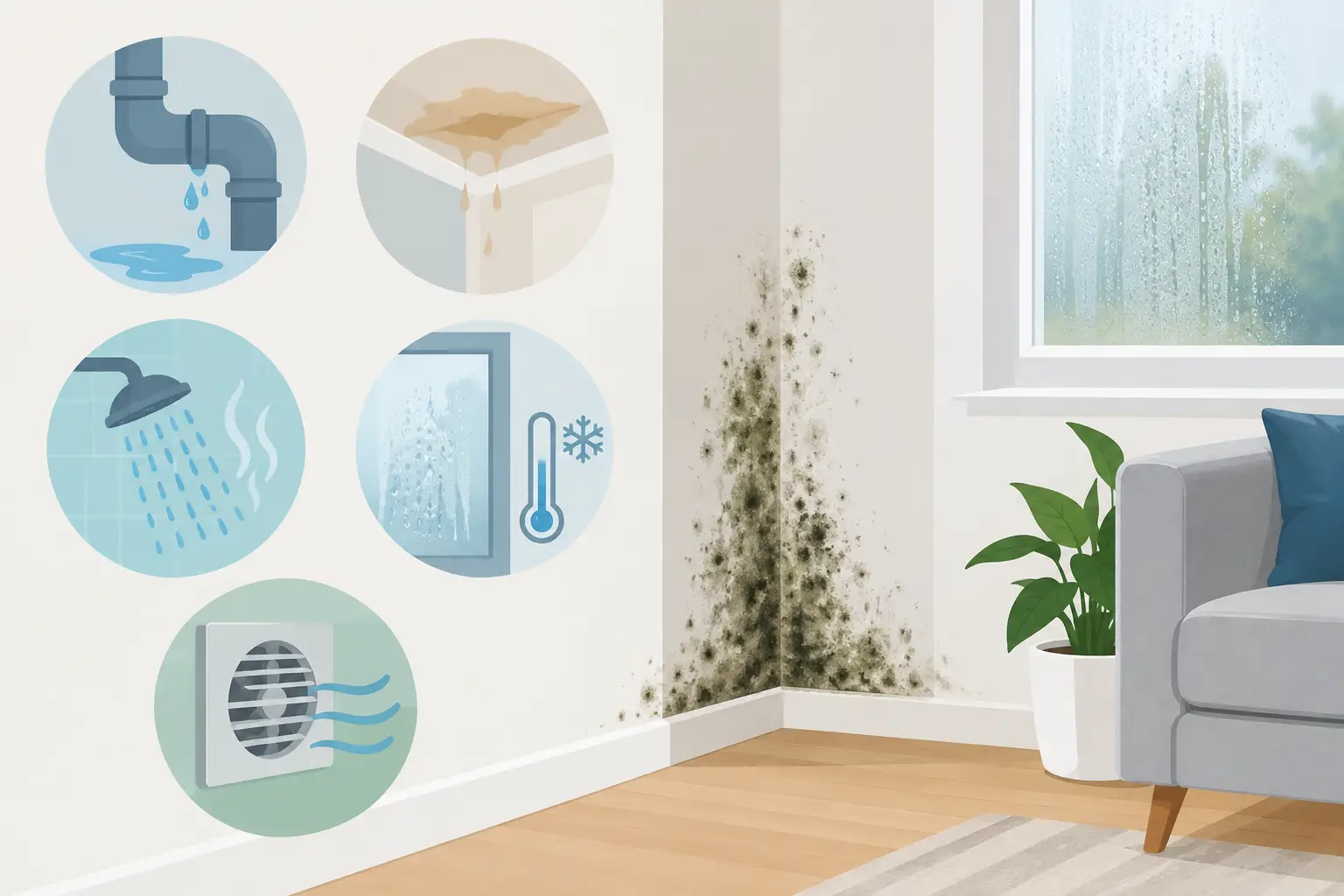
A proper remediation process is built around control, not guesswork. First comes inspection. Technicians assess visible damage, look for hidden moisture, and identify likely causes such as leaks, condensation, poor ventilation, or past water intrusion. In many cases, what appears to be a small patch is only the visible edge of a larger problem.
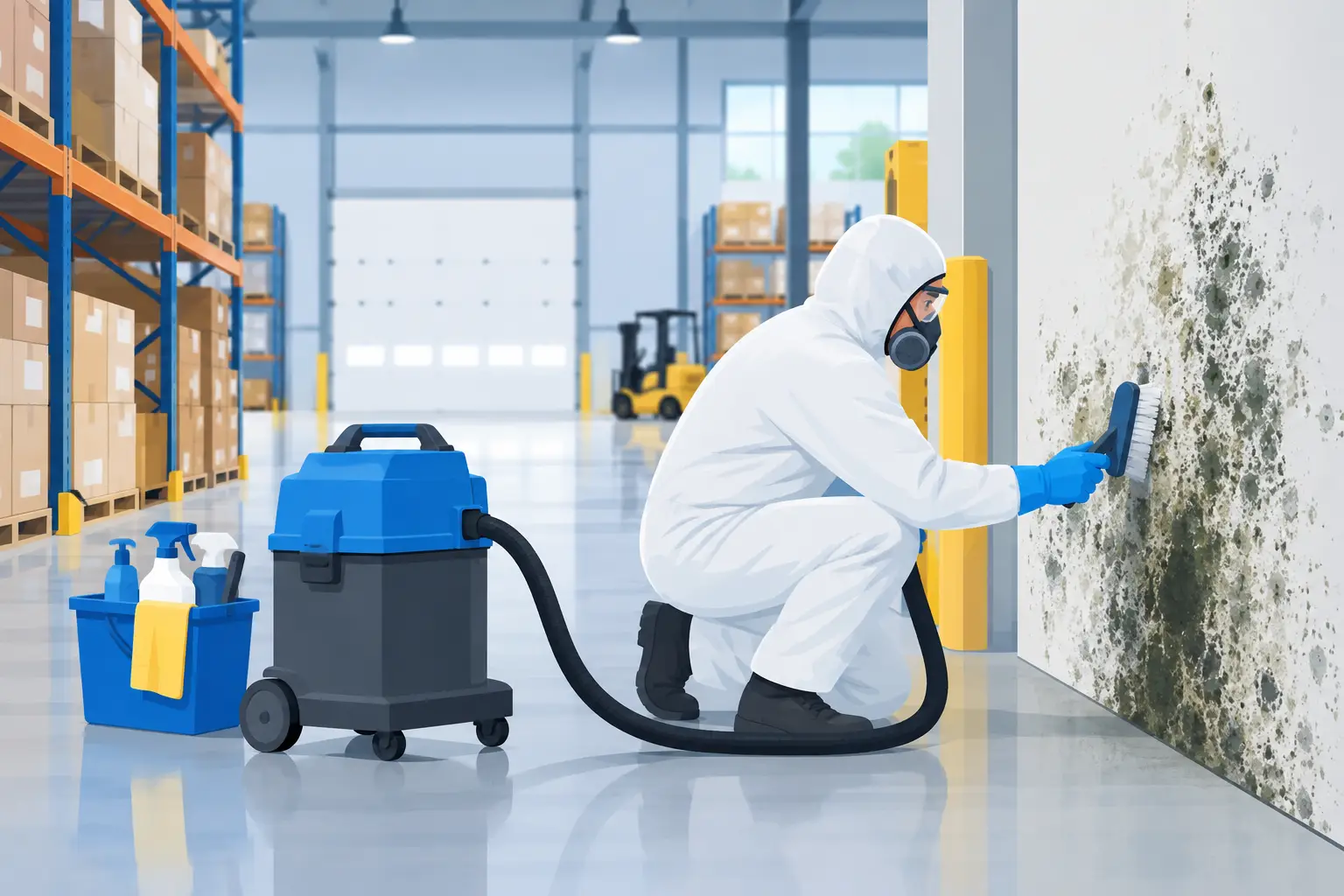
Next comes containment. This step matters more than most property owners realize. Without isolating the work area, mold spores can move during demolition or cleaning and settle in unaffected parts of the building. Certified teams typically use containment barriers and negative air pressure to keep contaminants from spreading.
Then comes removal of affected materials and cleaning of salvageable surfaces. Porous materials that cannot be reliably restored, such as mold-damaged drywall or insulation, are removed and disposed of properly. Remaining structural elements are cleaned using professional methods and HEPA-filtered equipment.
Air cleaning is another major difference between removal and remediation. Mold is not only a surface problem. Disturbed spores and particulates can remain airborne, especially during active cleanup. HEPA air scrubbers help reduce contamination in the work zone and support a safer return to occupancy.
The final stage is verification. Depending on the project, this may include moisture confirmation, visual clearance, and indoor air quality testing. That post-remediation check is what gives owners, tenants, managers, and insurers greater confidence that the problem has been addressed correctly.
Why moisture control is non-negotiable
No mold contractor can promise long-term results if the underlying moisture source is ignored. That is one of the clearest dividing lines in mold removal vs remediation.
If a basement wall keeps taking on water, if an attic has ventilation failure, or if a bathroom exhaust fan is undersized, mold will likely return no matter how thoroughly surfaces are cleaned. Remediation addresses mold and the conditions that allow it to grow. Sometimes that means coordinating repairs, improving ventilation, correcting drainage issues, or replacing damaged building components.
For landlords and property managers, this is especially important. Repeated mold complaints often point to an unresolved building condition, not a housekeeping issue. A fast wipe-down may satisfy appearance concerns for a short period, but it rarely stands up to recurring tenant exposure, liability concerns, or inspection scrutiny.
When removal may be enough and when remediation is necessary
There are limited situations where basic mold removal may be appropriate. If growth is very small, confined to a non-porous surface, and caused by a clearly resolved moisture issue, targeted cleaning may be enough. A common example is light surface mold on tile from temporary humidity buildup.
Remediation becomes necessary when mold affects drywall, insulation, wood framing, ceiling cavities, crawlspaces, attics, or HVAC-connected areas. It is also the better choice when there is a strong musty odor without obvious visible growth, when occupants report health symptoms, when water damage has gone unnoticed for days, or when a commercial or rental property needs documented corrective action.
The trade-off is straightforward. Removal may cost less upfront when the issue is minor and truly limited. Remediation is more comprehensive and can involve testing, containment, demolition, cleaning, and clearance steps. But for significant contamination, it reduces the risk of repeat damage, occupant exposure, and future repair costs.
Health, liability, and occupancy concerns
Mold affects people differently. Some occupants experience irritation, coughing, headaches, sinus symptoms, or worsened asthma. Others may notice little at first. That unpredictability is exactly why casual cleanup can be risky in occupied homes, offices, retail spaces, and multi-unit buildings.
Business owners also have operational concerns. A mold issue in a clinic, office, restaurant, or tenant space is not only a maintenance problem. It can affect staff confidence, customer experience, and business continuity. For landlords, poor documentation and incomplete cleanup can create disputes over habitability and repeated service calls.
Certified remediation helps manage these risks because the process is designed for safety and accountability. Proper containment, protective equipment, air filtration, and post-work verification all support a more defensible result than surface cleaning alone.
How to choose the right contractor
When comparing providers, ask whether they perform true remediation or only basic mold removal. That answer tells you a great deal.
A qualified company should be able to explain how it will inspect for hidden moisture, isolate the affected area, protect adjacent spaces, remove contaminated materials, clean the air, and verify the outcome. Certifications matter here because mold work is not just janitorial cleaning. It involves environmental controls, building science, and health-focused procedures.
You should also expect clarity about scope. A trustworthy contractor will tell you when a problem is small and when it is more extensive than it appears. It depends on the type of material affected, how long moisture has been present, whether occupants are sensitive, and whether the contamination has spread beyond what is visible.
For property owners in Toronto and the GTA, this is where a certified specialist such as Mold Removal Remediation provides real value. The difference is not just equipment or credentials. It is the ability to move from inspection to controlled cleanup to post-remediation confirmation without leaving major gaps in the process.
If you are deciding between mold removal and remediation, think beyond what you can see. A clean-looking surface does not always mean a safe indoor environment. The right approach is the one that finds the moisture, controls the spread, removes contamination properly, and gives you confidence that the space is ready for normal use again.