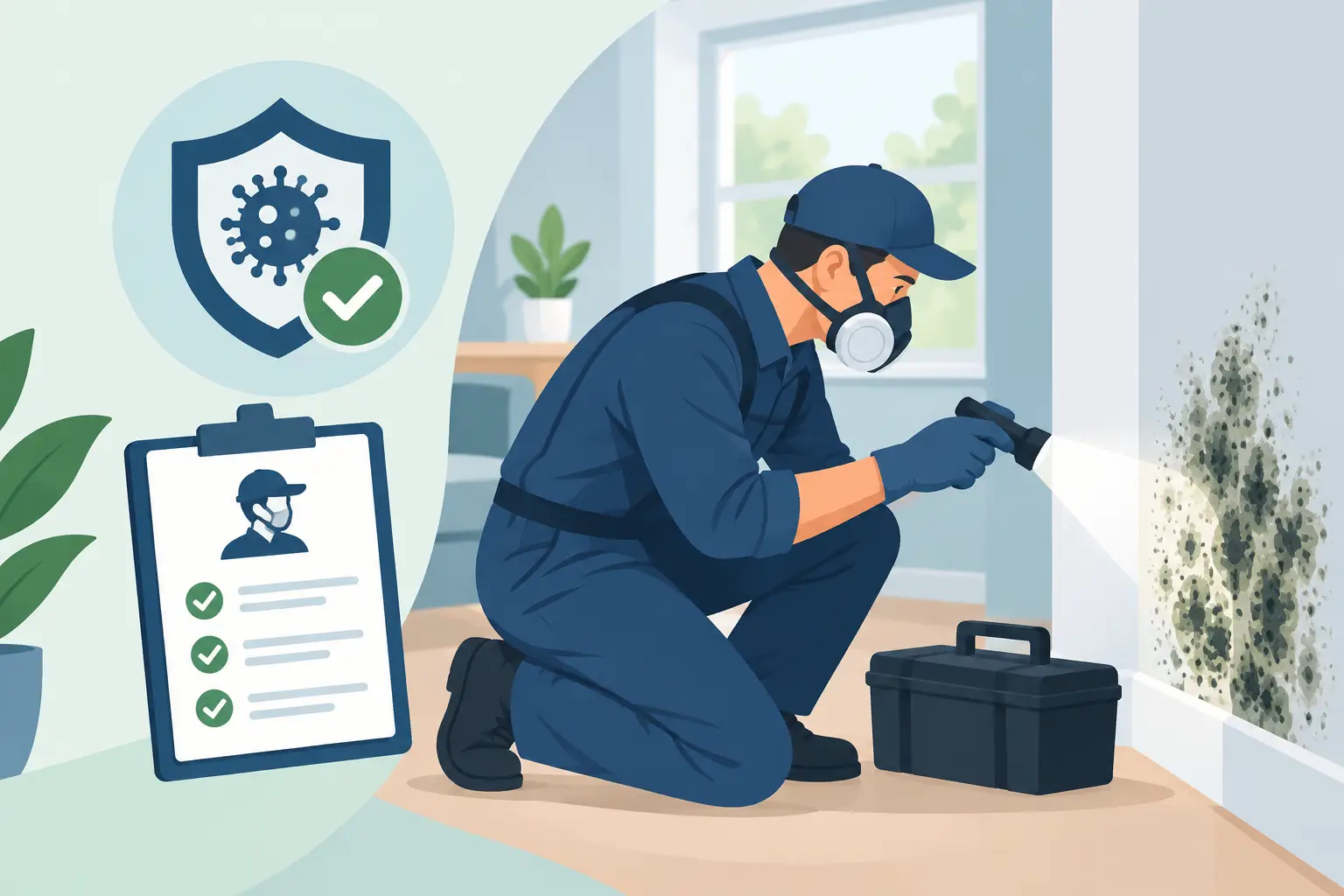



A wall can look perfectly dry, freshly painted, and structurally sound while mold grows on the paper backing of the drywall behind it. That is what makes hidden mold so concerning for homeowners, landlords, property managers, and business owners. Can mold grow behind drywall? Yes – and a small plumbing leak, roof leak, wet basement wall, or condensation problem can provide the moisture it needs.
Drywall is especially vulnerable because its paper facing contains organic material that mold can use as a food source. Once moisture becomes trapped inside a wall cavity, contamination may spread beyond the original leak area without creating an obvious surface stain. The right response is not to paint over the wall or spray a fragrance. It is to identify the moisture source, determine how far the damage extends, and remove affected materials safely when necessary.
Why Mold Grows Behind Drywall
Mold needs three basic conditions: moisture, a food source, and a suitable temperature. Indoor wall cavities often provide all three. The paper coating on drywall, wood framing, dust, insulation debris, and adhesives can support growth when they stay damp long enough.
Water does not need to pour through a ceiling to create this problem. A slow leak from a supply line, a poorly sealed shower, condensation around cold pipes, wind-driven rain at a window, or high humidity in a basement can wet drywall from the back. Because air movement is limited inside the wall, damp materials may take much longer to dry than visible surfaces in the room.
In many properties, mold develops after water damage that seemed minor at the time. A dishwasher leak may be cleaned up quickly, but water can still travel below flooring or behind baseboards. A roof leak may only occur during heavy rain, allowing insulation and drywall to become wet repeatedly. Each event adds moisture, and the wall cavity never gets a real chance to dry.
Signs Mold May Be Hidden Behind Drywall
Visible mold is a clear warning, but hidden contamination often announces itself more subtly. A persistent musty odor is one of the most common signs, especially if it becomes stronger near a particular wall, closet, basement room, bathroom, or HVAC area.
You may also notice paint that bubbles or peels, drywall that feels soft, swollen baseboards, dark staining, warped trim, or a wall that looks slightly bowed. These conditions do not automatically confirm mold, but they do point to moisture damage that deserves professional assessment.
Unexplained indoor air concerns can be another reason to investigate. Some occupants report irritation of the eyes, nose, or throat, coughing, congestion, or worsening allergy-like symptoms when they spend time in a certain area. Those symptoms can have many causes, so they should not be used as a mold test. However, when they occur alongside water damage or musty odors, inspection is a sensible next step.
For landlords and commercial property managers, recurring tenant complaints should not be handled with a quick coat of paint. Repeated odors, staining, or complaints in the same unit can indicate an ongoing plumbing, ventilation, exterior-envelope, or humidity issue affecting concealed building materials.
Can Mold Grow Behind Drywall Without Being Visible?
Yes. Mold can grow behind drywall without visible evidence on the finished side of the wall. The surface may stay clean because the moisture is coming from the back, such as from a leaking pipe, foundation wall, shower enclosure, or exterior wall.
The location of the moisture matters. If a pipe leaks inside the cavity, mold may spread across the back of the drywall and into insulation or wood framing before a stain appears. If moisture enters from outside, the outer-facing side of the wall may be affected first. This is why a visual inspection alone can miss the full extent of damage.
Professional inspectors use moisture meters, thermal imaging, and targeted inspection methods to locate suspicious areas without opening every wall. Thermal imaging can identify temperature patterns associated with moisture, while moisture readings help confirm whether materials are still wet. When evidence supports it, a controlled opening may be necessary to inspect the cavity directly.
Why Painting Over the Problem Does Not Work
Paint, stain blocker, and household mold sprays may improve the appearance of a wall, but they do not correct a wet cavity or remove contamination from porous materials. If mold has grown into drywall paper or insulation, the affected material often needs to be removed under proper containment.
Covering damage can also delay detection of a leak. During that delay, mold may spread farther, drywall can weaken, and repair costs may increase. The trade-off is straightforward: opening a small, targeted section of wall can feel disruptive, but it is usually less disruptive than waiting until damage affects a larger area, flooring, cabinetry, or adjacent rooms.
Avoid cutting into suspect drywall without a plan. Disturbing mold-contaminated materials can release spores and dust into occupied spaces. In older properties, some wall or ceiling materials may also require asbestos testing before demolition. A qualified inspection helps determine what needs to be sampled, contained, removed, or preserved.
What a Safe Hidden Mold Assessment Looks Like
A thorough assessment begins with the water story. When did the odor or staining start? Has there been a plumbing backup, appliance leak, roof issue, flood, or recurring condensation? Understanding the source helps distinguish a one-time event from an active problem.
The inspection should then evaluate moisture conditions, affected building materials, and possible pathways for spread. This can include checking baseboards, plumbing walls, bathrooms, exterior walls, crawl spaces, attics, and areas below known leaks. Air quality testing may be useful in certain cases, particularly when there are widespread concerns or a need to evaluate conditions after remediation, but it is not a substitute for finding the moisture source.
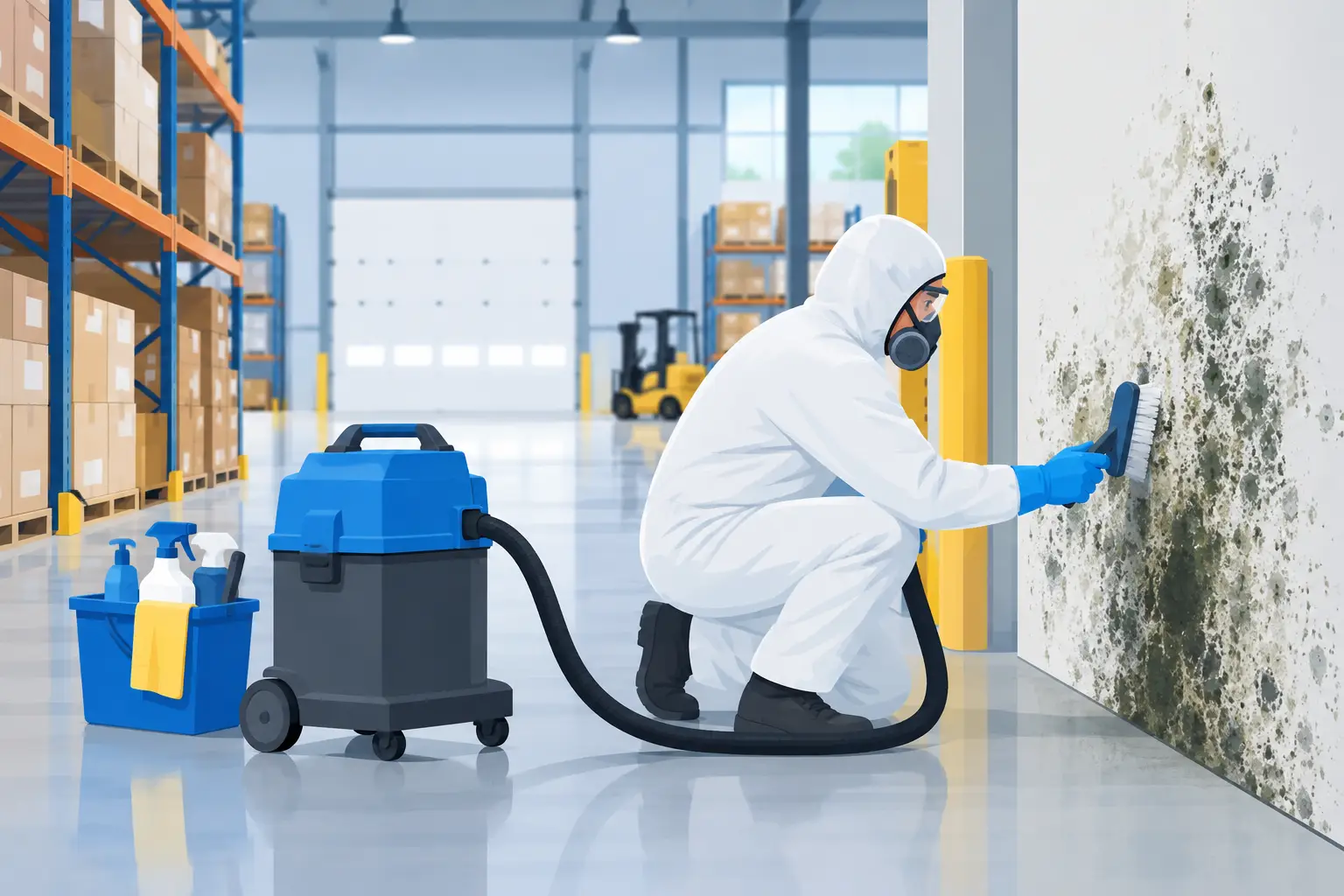
If removal is required, professional remediation typically involves isolating the work area with containment barriers, using negative air pressure and HEPA filtration, carefully removing damaged porous materials, cleaning remaining structural surfaces, and addressing the source of water. Drying and verification are essential. Mold removal without moisture correction is only a temporary fix.
When to Call a Mold Remediation Professional
A small amount of surface growth on a nonporous item may sometimes be cleaned safely if the moisture issue is fully resolved. Hidden wall mold is different. Call a qualified remediation professional when there is a musty odor with no visible cause, drywall is wet or deteriorating, a leak has affected a wall cavity, mold returns after cleaning, or the affected area is more than a minor, isolated spot.
Prompt help is also wise when the property houses children, older adults, people with asthma or immune concerns, tenants, customers, or employees. The goal is not to create alarm. It is to prevent an uncertain indoor condition from becoming a larger health, property, or liability issue.
Certified mold professionals can provide a clear scope of work based on evidence rather than guesswork. That includes locating the moisture source, protecting unaffected rooms, removing contaminated materials when needed, and documenting the condition of the area after the work is complete.
A musty wall is not something to ignore while waiting for a visible patch to appear. If moisture has reached the inside of the wall, early inspection gives you the best chance to limit damage, protect indoor air, and restore the space with confidence.