

A mold air test report can look deceptively simple: a few mold names, a spore count, and a comparison between rooms. Knowing how to read mold air test results correctly means looking beyond the highest number. The real question is whether the samples point to an active indoor moisture problem, hidden mold growth, or a normal amount of outdoor spores entering the building.
For homeowners, landlords, and property managers, the report should guide the next decision: investigate further, correct a moisture source, begin professional remediation, or document that an affected area has been cleaned successfully. It is not a pass-or-fail scorecard, and there is no single spore count that makes every property safe or unsafe.
Start With the Type of Mold Air Test
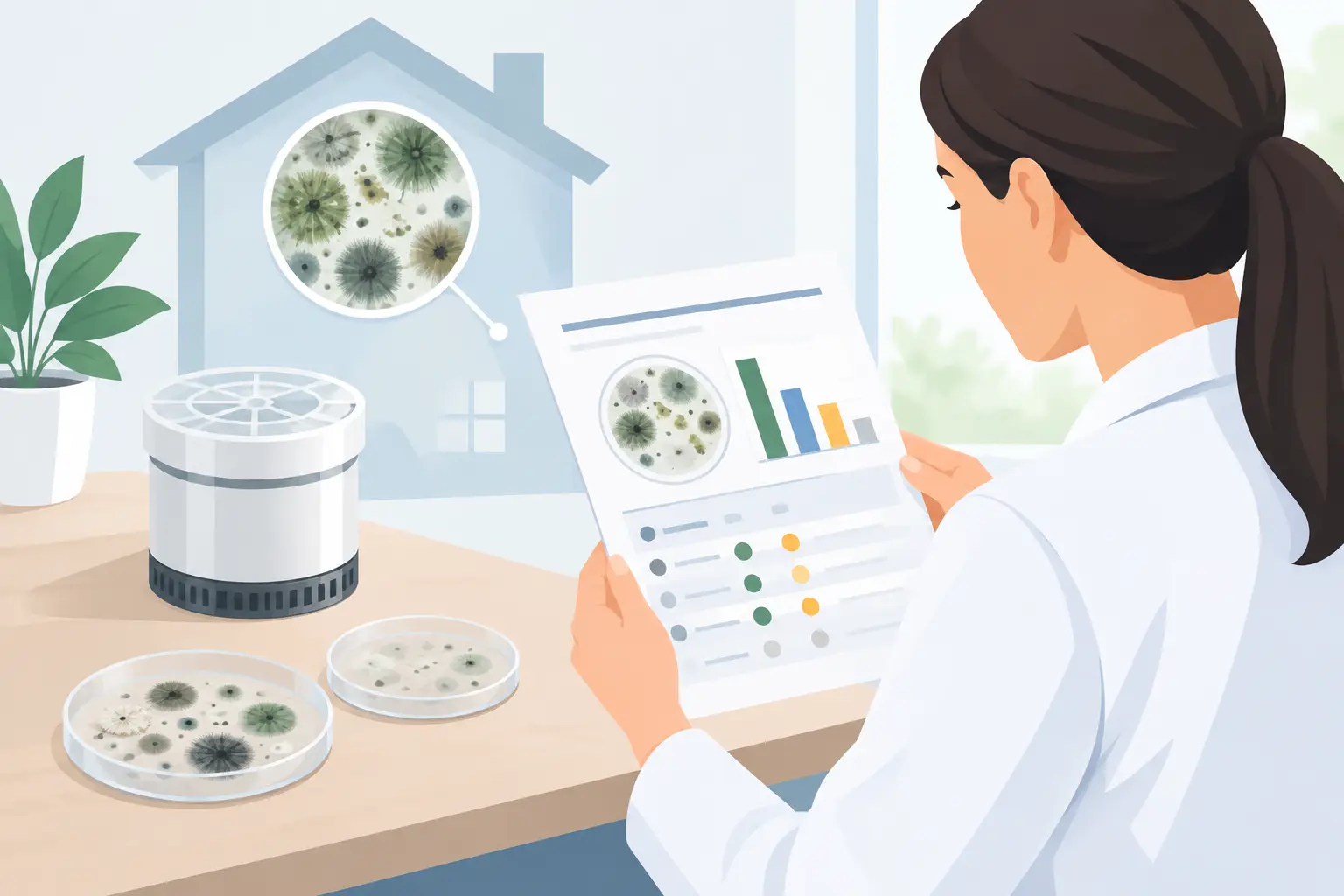
Most air test reports are based on spore-trap sampling. A calibrated pump draws a measured volume of air through a collection cassette, and a laboratory identifies visible fungal structures under a microscope. Results are commonly reported as spores per cubic meter of air, often written as spores/m³.
This method provides a useful snapshot of airborne particles at the time of sampling. It can identify common fungal groups such as Cladosporium, Aspergillus/Penicillium-type spores, Chaetomium, Stachybotrys, and others. However, a spore-trap test does not prove whether spores are alive, identify every species with certainty, or locate the exact source behind a result.
Some reports use culture-based testing instead. In that method, collected material is grown in a laboratory, and results may be shown as colony-forming units per cubic meter, or CFU/m³. Culture testing can offer additional detail about viable organisms, but it may miss spores that do not grow well under laboratory conditions. The sampling method matters, so results from a culture test should not be compared directly with spore-trap numbers.
How to Read Mold Air Test Numbers in Context
A high number alone does not automatically mean there is a serious mold problem. Outdoor air naturally contains mold spores, especially during wet weather, landscaping work, seasonal changes, or windy conditions. Indoor levels can also rise temporarily after doors and windows are open.
The strongest interpretation compares indoor samples with an outdoor control sample collected at roughly the same time. In a building without an indoor mold source, the indoor fungal profile is often lower than outdoors and generally similar in composition. That does not mean every indoor number must be lower. It means the pattern should make sense for the building, weather conditions, ventilation, and occupancy at the time of testing.
For example, an outdoor sample may show high Cladosporium counts, while indoor samples show lower Cladosporium levels with no unusual water-damage indicator molds. That pattern may be consistent with normal outdoor air entering the property.
A different pattern deserves attention: a basement sample has a much higher total spore count than the outdoor control, with elevated Aspergillus/Penicillium-type spores or Chaetomium not found outdoors. Combined with a musty odor, past water intrusion, or elevated moisture readings, this can indicate hidden amplification inside the building.
Focus on the Mold Types, Not Just the Total Count
The total spore count is only one part of the report. A lower total count can still be concerning if it includes molds associated with chronic moisture damage in a location where they should not be present.
Chaetomium, Stachybotrys, and certain Aspergillus/Penicillium-type spores can be associated with water-damaged building materials. Their presence does not establish health effects on its own, and the report should not be used to diagnose illness. But these findings can support a closer inspection, particularly when there has been a leak, flood, plumbing failure, roof issue, or long-term humidity problem.
Some categories are broad because several molds have spores that look alike under standard microscopy. “Aspergillus/Penicillium” is a common example. A report may group these molds together rather than identify a specific species. This is one reason a qualified inspector must interpret the findings alongside the physical condition of the property.
Compare Each Room, Not Only Indoor to Outdoor
When several indoor samples are collected, compare rooms with one another. A clean living room may provide a useful baseline for a suspicious basement, bathroom, utility room, attic, classroom, office, or tenant unit.
Pay attention when one enclosed area has a distinctly different fungal profile or substantially higher counts than other interior spaces. A single elevated room can point toward a localized concern behind drywall, beneath flooring, above a dropped ceiling, around HVAC equipment, or near a plumbing line.
It depends on the layout, though. A room near an open exterior door may reasonably resemble outdoor air. A poorly ventilated basement with damp contents may have a different profile for legitimate reasons that still need correction. The report becomes more meaningful when paired with observations from the inspection.
Know What Can Affect Air Sampling Results
Air sampling is useful, but it has limitations. Mold spores are not released at the same rate every hour of the day. A quiet, closed room can test differently from the same room after a fan runs, furniture is moved, or someone opens a wall cavity.
Recent cleaning, HEPA filtration, open windows, HVAC operation, rain, and construction activity can all influence a sample. A negative test also does not rule out mold hidden inside a wall or beneath flooring. If suspected material is sealed behind finished surfaces and is not actively releasing spores, air results may appear normal.
That is why professional mold investigation should combine air testing with a visual assessment, moisture meter readings, thermal imaging when appropriate, building history, and targeted material sampling where justified. Testing without an inspection can create false reassurance or unnecessary alarm.
What Results May Signal a Need for Remediation
An air test is most actionable when its findings match the evidence on site. Professional remediation may be warranted when elevated or unusual indoor spores are combined with visible growth, wet or deteriorated materials, persistent musty odors, moisture readings above normal conditions, or a documented water event.
The priority is not simply to remove spores from the air. The source of moisture must be identified and corrected. A basement that repeatedly takes on water, a bathroom fan that vents into an attic, or a slow pipe leak behind a wall will continue to create risk until the underlying issue is resolved.
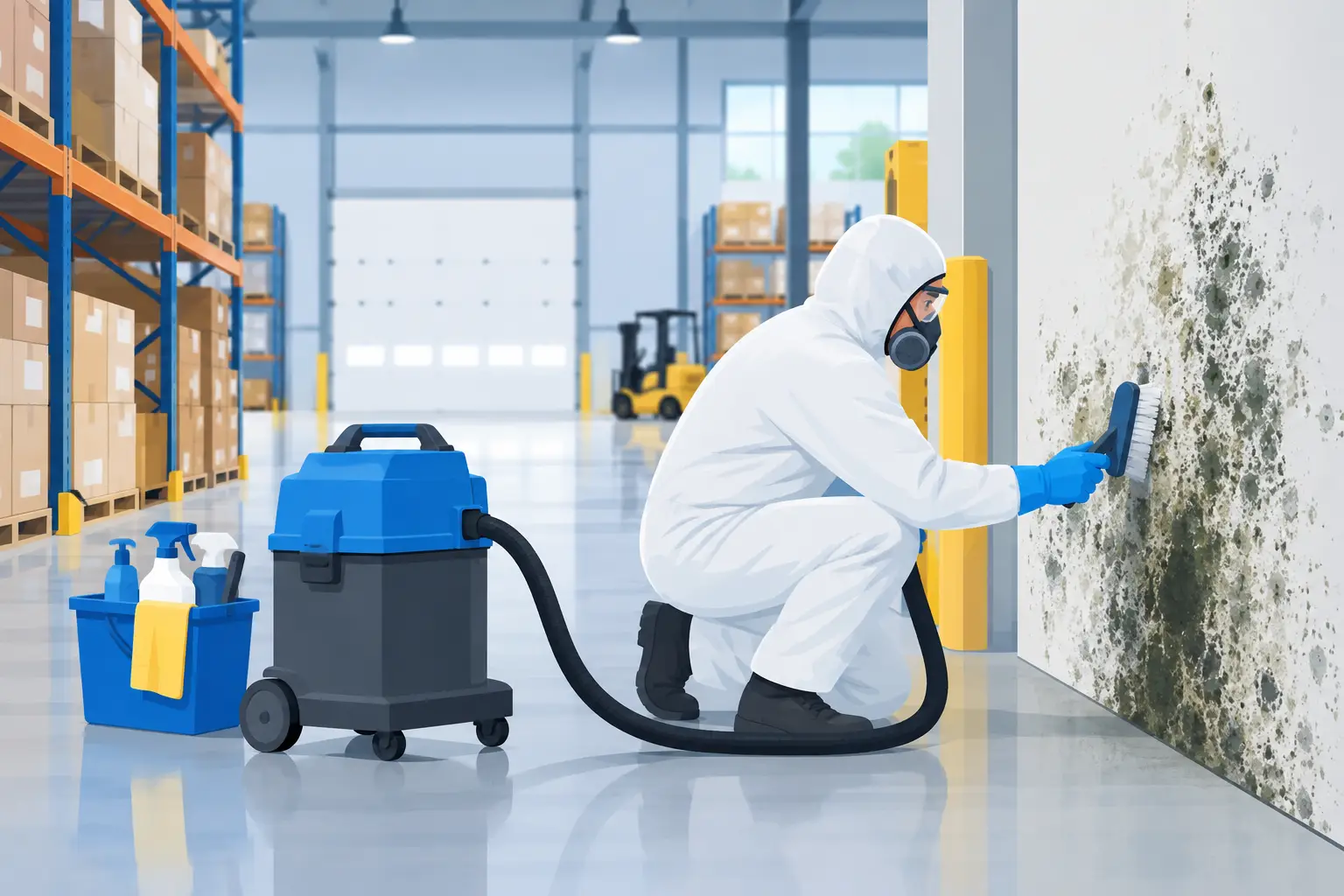
Proper remediation typically includes containment of the affected work area, controlled removal of damaged porous materials when necessary, HEPA air filtration, detailed cleaning, and correction of the moisture source. Spraying a surface or painting over staining is not a reliable long-term solution when contamination has entered drywall, insulation, carpet backing, or structural cavities.
Reading Clearance Test Results After Mold Removal
Post-remediation air testing, often called clearance testing or verification testing, serves a different purpose from an initial diagnostic test. It helps determine whether the work area has been cleaned effectively after remediation and before containment is removed or the space is returned to normal use.
A satisfactory clearance result should show that the remediated area is visually clean and dry, free of dust and debris associated with the project, and consistent with acceptable indoor conditions when compared with outdoor and unaffected-area samples. The remediated area should not show an unusual elevation of fungal spores or a water-damage-related profile that suggests remaining contamination.
Air results alone should not clear a project if visible dust, wet materials, or damaged building components remain. Conversely, a slightly higher indoor count is not automatically a failure if the fungal profile reflects normal outdoor air and site conditions. Professional judgment matters because clearance is based on the whole condition of the area, not one number.
When to Ask for a Professional Interpretation
Request a qualified interpretation if the report identifies water-damage indicator molds, shows a major difference between rooms, has indoor levels exceeding the outdoor control, or conflicts with what you smell or see in the building. You should also seek help after flooding, sewage backups, roof leaks, long-term condensation, or recurring tenant complaints about musty odors and respiratory irritation.
Mold Removal Remediation approaches air test interpretation as part of a complete inspection process. Certified specialists can connect laboratory findings with moisture mapping, thermal imaging, containment needs, and the condition of affected materials so that corrective work addresses the cause rather than only the symptoms.
If a report raises concern, avoid disturbing suspicious materials until the area has been evaluated. The most helpful next step is a careful inspection that turns confusing lab data into a clear plan to dry, clean, repair, and protect the property.