


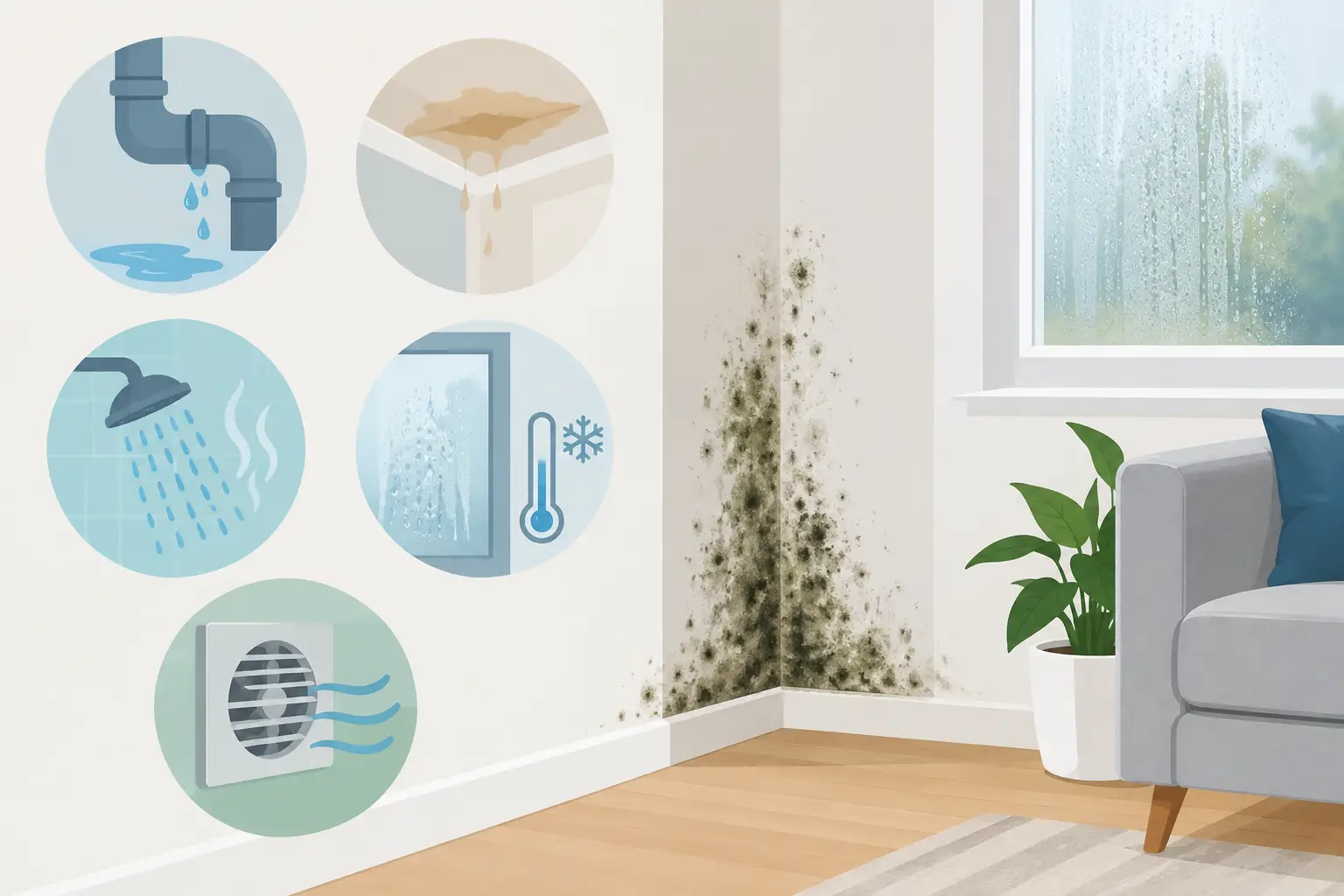
A dark patch on a basement wall or a musty smell after rain rarely begins as a surface-cleaning problem. The top causes of indoor mold are almost always moisture problems hiding behind finishes, under flooring, inside ductwork, or in poorly ventilated rooms. Addressing the visible growth without finding that moisture source can allow contamination to return and spread.
Mold needs three basic conditions to grow: moisture, a food source, and enough time. Drywall paper, wood framing, dust, carpet backing, insulation, and fabrics can all provide a food source. The practical question for homeowners, landlords, and property managers is not whether a building has materials mold can grow on. It is where water or humid air is reaching those materials and staying there.
The Top Causes of Indoor Mold in Homes and Buildings
Plumbing leaks behind walls and under fixtures
Slow plumbing leaks are among the most common and damaging mold triggers because they often remain hidden. A loose supply line beneath a sink, a pinhole leak in a pipe, a failing toilet seal, or a leaking shower valve can wet drywall and subflooring for weeks before anyone notices a stain.
The area may feel dry by the time you inspect it, but hidden materials can still hold elevated moisture. Watch for peeling paint, swollen baseboards, soft flooring around toilets, staining on ceilings below bathrooms, or a persistent musty odor. A moisture meter and thermal imaging can help identify damp building materials without opening every wall unnecessarily.
Roof leaks and exterior water intrusion
Water entering from outside can create mold far from the original entry point. Damaged shingles, flashing failures around chimneys, deteriorated window seals, cracked masonry, and gaps around exterior penetrations can send rainwater into wall cavities, attic insulation, and ceiling assemblies.
These leaks are not always obvious during dry weather. In Toronto and the GTA, freeze-thaw cycles, wind-driven rain, and heavy seasonal storms can worsen small exterior defects quickly. Brown ceiling marks, damp attic insulation, bubbling paint near windows, and mold around window frames all warrant prompt investigation.
A repaired roof does not automatically mean the interior is dry or mold-free. Wet insulation, drywall, or wood may require controlled drying, removal, and post-remediation verification depending on the extent and duration of the damage.
High indoor humidity
Humidity can cause mold even when there is no single leak. When warm, moisture-heavy air contacts a cold surface, it condenses into water. This is common on basement walls, windows, exterior corners, cold-water pipes, and areas behind furniture placed tightly against outside walls.
Indoor relative humidity should generally remain below 60%, with many properties benefiting from levels closer to 30% to 50%, depending on the season and building conditions. Humidity may rise because of showers, cooking, drying clothes indoors, overcrowding, unvented appliances, or a basement that lacks proper dehumidification.
Condensation can look minor, especially on windows, but repeated moisture is enough to support growth on surrounding frames, drywall, and finishes. A properly sized dehumidifier can help in some cases, but it will not correct a foundation leak, inadequate ventilation, or an oversized moisture load.
Poor bathroom, kitchen, and laundry ventilation
Bathrooms and kitchens generate significant moisture in a short time. Without effective exhaust ventilation, steam settles on walls and ceilings, enters cavities through gaps, and keeps surfaces damp long after use. A fan that runs loudly is not necessarily working properly. It must actually exhaust air outdoors and move enough air to reduce humidity.
Laundry rooms present a similar concern. Dryer vents that are disconnected, crushed, blocked with lint, or vented into an indoor space release warm, humid air directly into the building. This can lead to mold in nearby drywall, framing, and insulation while also creating a fire safety concern.
Use exhaust fans during moisture-producing activities and let them run afterward until the room has cleared. If condensation, peeling paint, or recurring mold appears despite regular cleaning, the ventilation system and hidden materials should be assessed.
Flooding and water damage that was not dried fast enough
Burst pipes, appliance overflows, sewer backups, foundation flooding, and storm-related water entry can lead to rapid mold growth. Under favorable conditions, mold can begin developing within 24 to 48 hours after materials become wet.
The response after a water event matters. Removing standing water is only the first step. Water can migrate under flooring, behind baseboards, into wall cavities, and beneath cabinets. Fans alone may dry the room surface while leaving the concealed structure wet.
Clean water from a small, quickly handled overflow may sometimes be dried successfully. Contaminated water, sewage, extensive flooding, or water that has remained in place for more than a day requires greater caution. Porous materials may need removal, and affected areas may need containment to prevent spores and contaminated dust from spreading during cleanup.
Basement moisture and foundation problems
Basements are naturally more vulnerable to mold because they are below grade, cooler, and often less ventilated than upper floors. Water can enter through foundation cracks, floor-wall joints, window wells, failed drainage, or poor grading that directs rainwater toward the home.
Sometimes the issue is not active water entry but chronic dampness. Concrete can transmit moisture vapor, and finished basement walls can conceal mold growth on the backside of drywall or insulation. Carpeting over a damp concrete slab is another common risk, particularly after a flood or during humid weather.
A dehumidifier may reduce symptoms, but long-term protection often depends on correcting drainage, waterproofing, insulation, or air-sealing issues. The right solution depends on whether the moisture is from groundwater, rain intrusion, indoor humidity, plumbing, or a combination of factors.
HVAC condensation and contaminated ductwork
Heating and cooling systems can contribute to mold when condensation is not draining correctly or when equipment is poorly maintained. A clogged condensate line, overflowing drain pan, poorly insulated duct, or dirty air handler can create moisture in places that are difficult to inspect.
Ductwork does not create mold by itself. However, dust and debris inside a damp HVAC system can provide a surface for growth, while airflow may distribute odors and particles to occupied areas. Musty smells when the system turns on, visible moisture around equipment, or repeated water near an air handler should be examined promptly.
Professional inspection can distinguish between ordinary dust and a moisture-related contamination issue. That distinction matters before spending money on duct cleaning or assuming the entire system needs replacement.
Damp belongings and restricted airflow
Mold often develops where air cannot circulate. Closets on exterior walls, storage rooms, furniture pressed against cold walls, boxed belongings in damp basements, and wet carpets are frequent trouble spots. Even a small amount of condensation can remain trapped long enough to support growth.
This is especially common in vacant units and seasonal properties where heating, ventilation, and humidity control are inconsistent. Check stored items regularly, leave some space between furniture and exterior walls, and avoid storing cardboard, textiles, or paper directly on basement floors.
Why Visible Mold Is Not the Whole Problem
Visible growth can be the smallest part of a larger condition. Mold may be present behind baseboards, beneath laminate flooring, inside wall cavities, or above suspended ceilings. A musty odor, recurring stains, unexplained humidity, or residents reporting eye, throat, or respiratory irritation can justify a closer inspection even when no major patch is visible.
The health impact varies by individual and exposure level. People with asthma, allergies, respiratory conditions, or weakened immune systems may be more sensitive. For landlords and business owners, moisture and mold complaints also raise habitability, employee comfort, property damage, and potential compliance concerns.
Small areas of surface mold caused by a known, short-term condensation issue may be manageable with careful cleaning and improved moisture control. Larger areas, recurring growth, sewage-related water damage, hidden contamination, or mold affecting HVAC components should not be treated as a simple cleaning task. Disturbing contaminated materials without containment can spread spores and debris into clean areas.
How to Stop Mold Before It Spreads
Fast action is the most reliable prevention strategy. Repair leaks promptly, dry wet materials thoroughly, maintain safe indoor humidity, and confirm that bathroom, kitchen, and dryer vents discharge outdoors. After a water event, inspect nearby rooms and lower levels because water often travels beyond the first visible damage.
When the source is unclear, certified mold professionals can assess moisture patterns, inspect concealed risk areas, and determine whether targeted removal is needed. A complete remediation plan addresses the cause, isolates affected zones with containment and negative air pressure when appropriate, removes contaminated materials safely, cleans remaining surfaces with HEPA filtration, and verifies that the space is suitable for reoccupancy.
If you smell mold, see repeated staining, or have had recent water damage, treat it as an early warning rather than a cosmetic issue. Finding the moisture source now can protect the building, the people inside it, and the cost of repairs later.