


A basement can feel dry underfoot while holding enough moisture in the air and behind finished walls to support mold growth. This guide to basement humidity control helps homeowners, landlords, and property managers identify the source of dampness before musty odors, damaged materials, or tenant complaints become a larger remediation problem.
Humidity control is not just about running a dehumidifier. A lasting solution starts with understanding whether moisture is entering through the foundation, condensing on cold surfaces, rising from an unsealed slab, or being added by everyday activities and poorly managed ventilation.
Why basement humidity becomes a mold risk
Basements are naturally vulnerable because they sit below grade, where soil holds moisture against foundation walls. They are also cooler than the rest of a building. When warm, humid air meets a cold concrete wall, pipe, or floor, condensation can form even when there is no obvious leak.
Relative humidity is the key measurement. For most basements, a target range of about 30% to 50% relative humidity is appropriate. Sustained readings above 60% create conditions where mold can grow on drywall paper, wood framing, carpeting, stored boxes, and dust settled on concrete surfaces. A single high reading after a storm is less concerning than a basement that remains humid for days or weeks.
Mold does not need a major flood to become established. Slow plumbing drips, wet foundation cracks, condensation behind insulation, and damp carpet padding can supply enough moisture. That is why a visible patch of mold is often a symptom, not the complete problem.
Guide to basement humidity control: find the moisture source first
Before purchasing equipment or sealing walls, inspect the basement methodically. Look for water staining, peeling paint, rust on furnace components, warped baseboards, damp insulation, white mineral deposits on concrete, and a persistent earthy or musty smell. Check corners, utility rooms, storage areas, behind furniture, and around windows carefully.
A basic hygrometer provides a useful starting point. Place it away from direct airflow and record readings at different times of day. If humidity rises after showers, laundry, cooking, rain, or air-conditioning shutdowns, that pattern points toward the source. A moisture meter can help identify damp drywall, trim, or framing before the damage becomes obvious.
Water intrusion from outside
After heavy rain or snowmelt, inspect where water travels around the building. Gutters that overflow, disconnected downspouts, negative grading, clogged drains, and cracks near foundation penetrations can direct water toward the basement instead of away from it.
The most effective exterior corrections are often simple: keep gutters clear, extend downspouts so they discharge well away from the foundation, and make sure surrounding soil slopes away from the building. If water enters through recurring cracks, window wells, or foundation walls, exterior waterproofing or targeted foundation repair may be necessary. A dehumidifier can manage indoor moisture, but it cannot stop groundwater pressure or an active leak.
Plumbing, appliances, and indoor moisture
Inspect supply lines, drain pipes, water heaters, washing machines, sump pumps, and HVAC condensate lines. Small leaks may soak concealed materials without creating a puddle. A failed sump pump or blocked discharge line can create a serious moisture event quickly, especially during storms.
Laundry is another common contributor. A dryer must vent outdoors through a properly connected, unobstructed duct. Never vent a dryer into a basement. If a basement bathroom or kitchenette is used regularly, it needs effective exhaust ventilation that discharges outside, not into an attic or adjacent room.
Condensation and hidden cold surfaces
Condensation is often mistaken for a foundation leak. It commonly appears on uninsulated cold-water pipes, metal ducts, basement windows, and concrete walls. If the moisture occurs mainly during warm, humid weather and disappears in winter, condensation may be the primary issue.
Insulating cold pipes, sealing and insulating rim joists correctly, and addressing uninsulated ductwork can reduce this problem. Be cautious with basement wall insulation, however. Installing insulation over damp concrete can trap moisture and conceal mold growth. The wall must be evaluated and dried before it is enclosed.
Control humidity with the right equipment and settings
A portable dehumidifier can be effective for a small, otherwise dry basement. Select a unit based on the actual square footage, moisture load, and severity of the dampness, not just the advertised room size. An undersized unit may run continuously without lowering humidity enough, while an oversized unit can cycle inefficiently.
Set the humidistat between 45% and 50% as a practical starting point. Empty the reservoir consistently or, preferably, connect the unit to a reliable gravity drain or condensate pump. Clean the filter and inspect the drain line regularly. A full bucket, clogged filter, or failed pump can make a dehumidifier appear ineffective.
For larger homes, finished basements, multi-unit properties, or spaces with persistent humidity, a whole-home dehumidification system may be a better investment. These systems can be integrated with HVAC equipment and drain automatically. The trade-off is higher installation cost, so the underlying moisture source should be addressed first. Mechanical equipment should support a dry building envelope, not compensate for one that is failing.
Avoid opening basement windows during hot, humid weather just to “air it out.” Outdoor air may feel fresh, but once it enters a cooler basement, its relative humidity can rise and create condensation. Ventilation helps only when outdoor conditions are drier than the basement air or when a properly designed mechanical system is controlling the exchange.
Protect finishes, storage, and air quality
Finished basements require extra attention because drywall, carpet, upholstered furniture, and wood framing can retain moisture out of sight. Keep furniture slightly away from exterior walls so air can circulate. Avoid storing cardboard boxes directly on concrete floors. Use shelving and moisture-resistant plastic bins, particularly in utility or storage areas.
If carpeting becomes wet from a leak, flood, or sewer backup, prompt drying is essential. Carpet padding often remains wet after the surface feels dry and may need to be removed. Do not simply spray a fragrance or apply a household cleaner to cover a musty odor. Odors can indicate moisture and microbial growth inside wall cavities, beneath flooring, or within stored contents.
Air purifiers can improve particle control in some situations, but they do not remove moisture or fix mold growth. Likewise, bleach is not a reliable answer for porous materials such as drywall, carpet, insulation, or unfinished wood. The affected material may need controlled removal, followed by detailed cleaning and moisture correction.
When basement humidity requires professional inspection
Professional assessment is advisable when mold keeps returning, humidity remains above 60% despite dehumidification, or there has been significant water damage. It is also appropriate when occupants report recurring respiratory irritation, headaches, or musty odors that cannot be traced to a visible source. Health reactions vary, but unexplained indoor air concerns should be taken seriously.
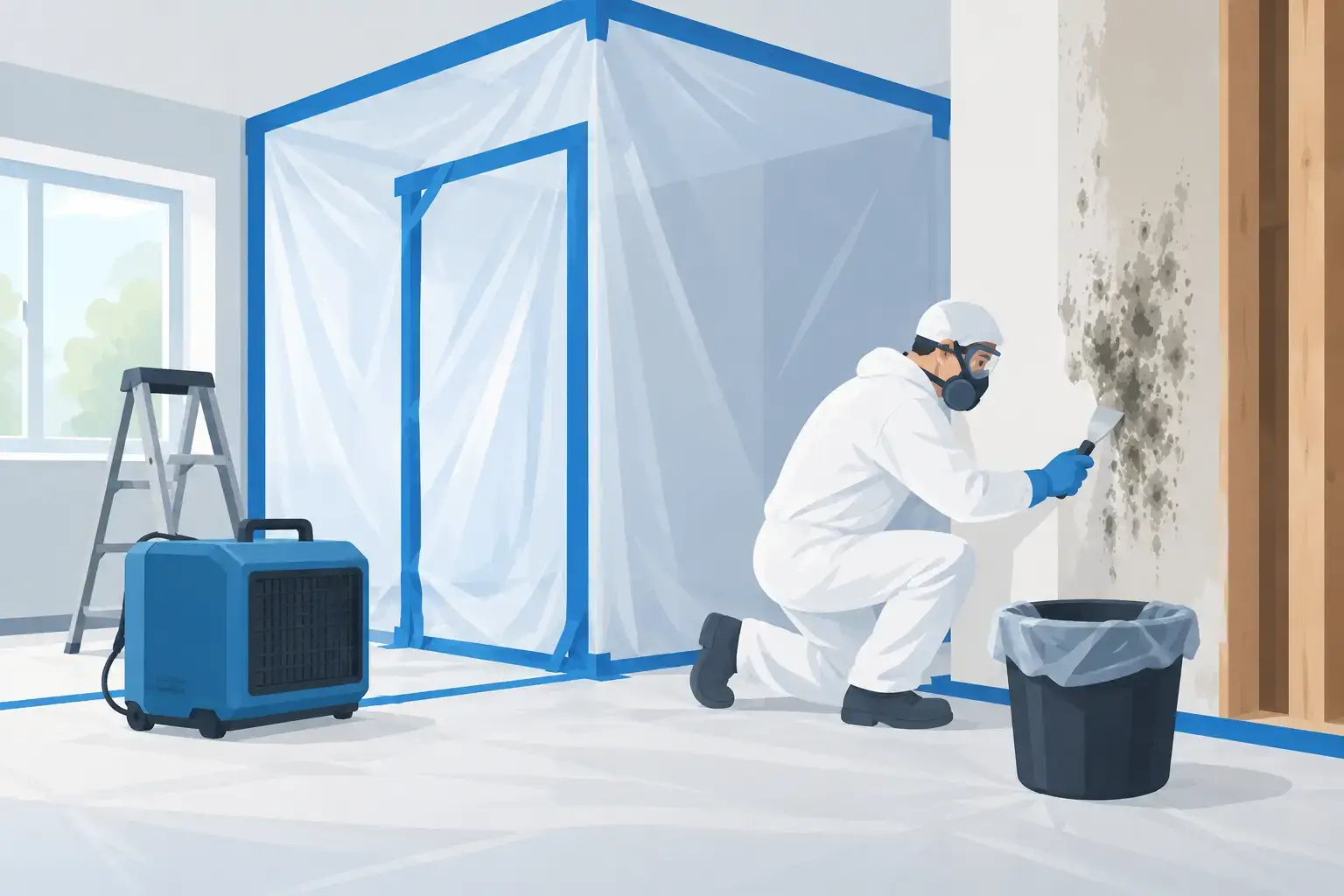
A qualified inspection can identify hidden moisture using tools such as thermal imaging and moisture meters. When mold remediation is needed, the work should include containment of affected areas, HEPA filtration, safe removal of contaminated materials, detailed cleaning, and correction of the moisture source. For larger contamination areas, commercial properties, rental units, or situations involving vulnerable occupants, this process protects both people and property.
Mold Removal Remediation provides inspection and remediation services designed to address the full chain of the problem: moisture detection, containment, removal, cleaning, and post-work air quality considerations. For property owners in Toronto and the Greater Toronto Area, a timely professional evaluation can prevent a localized basement issue from spreading into finished living areas or neighboring units.
Keep humidity from returning
Basement humidity control works best as a routine, not a one-time project. Check humidity readings weekly during humid seasons, inspect plumbing and appliance connections monthly, and test the sump pump before periods of heavy rain. After any water event, dry the area quickly and investigate the cause rather than assuming the issue will resolve on its own.
A dry basement protects more than stored belongings. It protects framing, finishes, indoor air quality, and the long-term value of the property. If the air still feels damp or smells musty after the obvious fixes, treat that as a signal to investigate further while the problem is still manageable.