

A musty odor in a tenant suite, staining above a drop ceiling, or recurring condensation on windows can point to a larger building moisture issue. When property managers search for the “top causes commercial mold growth,” they are usually dealing with more than a cleaning problem. Mold develops where moisture, suitable materials, and time meet – often behind finishes, above ceilings, or inside mechanical systems long before it becomes visible.
Commercial properties have more plumbing, larger HVAC systems, varied occupancy patterns, and more concealed building cavities than most homes. That complexity makes early investigation critical. Removing visible growth without correcting the source can lead to repeat contamination, tenant complaints, property damage, and indoor air quality concerns.
Top Causes of Commercial Mold Growth
Mold spores are naturally present indoors and outdoors. They become a problem when sustained moisture allows them to colonize porous materials such as drywall, ceiling tiles, insulation, carpeting, wood, and paper-backed finishes. The following conditions are the most common drivers in offices, retail locations, restaurants, warehouses, schools, and multifamily buildings.
Roof leaks and exterior water intrusion
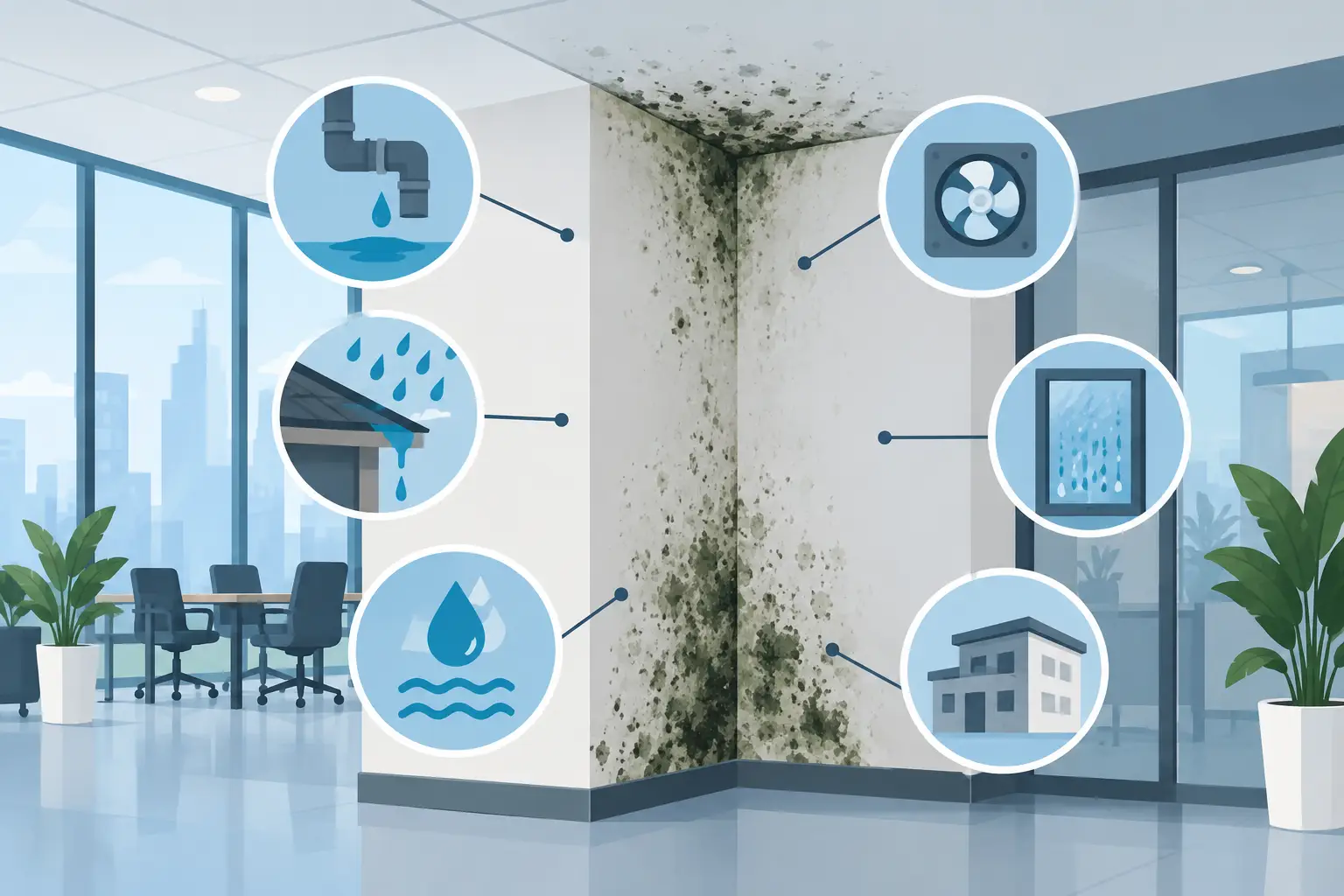
A small roof leak can affect a much larger area than the ceiling stain below it suggests. Water can travel along roof decking, structural members, electrical conduits, and insulation before reaching a visible surface. Flat roofs, damaged flashing, aging sealants, clogged drains, and penetrations around rooftop equipment are frequent entry points.
Exterior water intrusion also occurs around windows, doors, masonry joints, balconies, and foundation walls. Wind-driven rain can enter cracks that appear minor from the outside. In colder climates, freeze-thaw cycles can widen those openings over time. If wall cavities remain damp, mold may grow behind drywall with little outward evidence until odor, discoloration, or elevated moisture readings reveal the problem.
Plumbing leaks and drain failures
Commercial plumbing systems operate continuously and often serve multiple floors or tenant spaces. A slow leak under a sink, behind a restroom wall, around a dishwasher line, or above a suspended ceiling can go unnoticed for weeks. Supply-line leaks tend to introduce clean water at first, while drain or sewer backups can create a more serious contamination condition requiring specialized cleaning and removal.
The trade-off is that quick cosmetic repairs may restore the use of a space, but they do not confirm whether adjacent materials are dry. Moisture meters and thermal imaging help identify damp drywall, flooring, and insulation beyond the immediate leak location. Materials that cannot be dried effectively may need controlled removal rather than surface treatment.
HVAC condensation and poor ventilation
Heating, ventilation, and air conditioning systems can either control moisture or create it. Cooling coils naturally produce condensation. When drain pans are dirty, condensate lines clog, insulation around ductwork fails, or equipment is improperly maintained, that moisture can enter ceiling cavities and mechanical rooms.
Poor ventilation makes the issue worse. Bathrooms, locker rooms, kitchens, laundry areas, and crowded workspaces generate humidity that must be exhausted or conditioned properly. An HVAC system that is oversized may cool a space quickly without running long enough to remove sufficient humidity. A system that is undersized, poorly balanced, or operating with blocked filters can also leave areas damp and stagnant.
Duct contamination should not be assumed simply because a building has mold. The right response depends on inspection findings. A qualified assessment can determine whether the concern is localized condensation, a drain issue, contaminated insulation, or a broader air distribution problem.
High indoor humidity and condensation
Relative humidity that stays elevated creates favorable conditions for mold, especially in areas with limited air movement. Condensation appears when warm, humid air meets cold surfaces such as windows, exterior walls, metal framing, chilled water lines, or uninsulated ducts. Repeated condensation can soak window sills, wall finishes, carpeting, and stored materials.
Basements, storage rooms, loading areas, and perimeter offices are common trouble spots. A building may feel comfortable to occupants while hidden areas remain humid enough to support mold. Seasonal changes can also expose weaknesses in insulation and ventilation. Monitoring humidity and checking known cold surfaces can catch these issues before materials become damaged.
Flooding and delayed water-damage response
Burst pipes, sprinkler discharges, appliance failures, stormwater entry, and sewer backups demand immediate action. Mold can begin growing on wet building materials within 24 to 48 hours under favorable conditions. The outcome depends heavily on how quickly water is extracted, materials are opened where necessary, and drying equipment is deployed.
A common mistake is reopening the affected space after floors appear dry. Water can remain under baseboards, beneath flooring, inside wall cavities, and in insulation. Professional drying should be guided by moisture measurements, not appearance alone. Where contamination is extensive, containment and negative air pressure may be needed to prevent spores and dust from spreading to occupied areas during removal.
Maintenance gaps and deferred repairs
Commercial mold issues rarely begin with one dramatic failure. More often, several smaller maintenance concerns accumulate: a stained ceiling tile is replaced but the roof is not repaired, a leaking toilet is caulked rather than investigated, or a condensate line is cleared without addressing recurring drain-pan overflow.
Deferred repairs can turn manageable moisture conditions into a costly remediation project. Routine inspections of roofs, plumbing rooms, ceilings, exterior seals, HVAC drain systems, and low-traffic areas provide an early warning. Property managers should also treat repeated odors and recurring stains as investigation triggers, not cosmetic concerns.
Occupancy changes and building-use conditions
Changes in how a space is used can alter its moisture load. A former office converted to a fitness studio, daycare, salon, food-service operation, or high-density workspace may generate more humidity than the original ventilation design can manage. Vacant suites create a different risk: reduced HVAC operation, unnoticed leaks, and limited air circulation can allow dampness to persist.
Warehouses and storage areas require special attention when cardboard, paper goods, textiles, or inventory are stored against exterior walls or directly on concrete floors. These materials can absorb moisture from leaks, condensation, or slab moisture and support hidden mold growth. Moving stored items away from walls and elevating them off the floor makes inspections easier and reduces exposure to moisture.
Why Visible Mold Is Not the Full Picture
Visible growth is a clear reason to act, but it is not a reliable measure of the total affected area. Mold can be hidden behind baseboards, under flooring, inside wall cavities, above acoustic ceilings, and around mechanical equipment. Musty odors, unexplained humidity, peeling paint, warped materials, and repeated tenant respiratory complaints may justify a professional inspection even when no mold is visible.
A proper commercial assessment identifies the moisture source, maps affected materials, and determines whether containment is required. Depending on the situation, this may include moisture readings, thermal imaging, air quality testing, and targeted sampling. Testing has a role, but it does not replace a detailed visual and moisture investigation. The results must be interpreted alongside building conditions.
Preventing Mold Without Disrupting Operations
Prevention works best when it is built into maintenance and response procedures. Establish clear reporting for leaks, odors, condensation, and water stains so staff and tenants know whom to contact. Repair active water entry promptly, then verify that affected materials are dry. Keep indoor humidity controlled, maintain HVAC drains and filters, and inspect concealed areas after storms, plumbing incidents, or major construction.
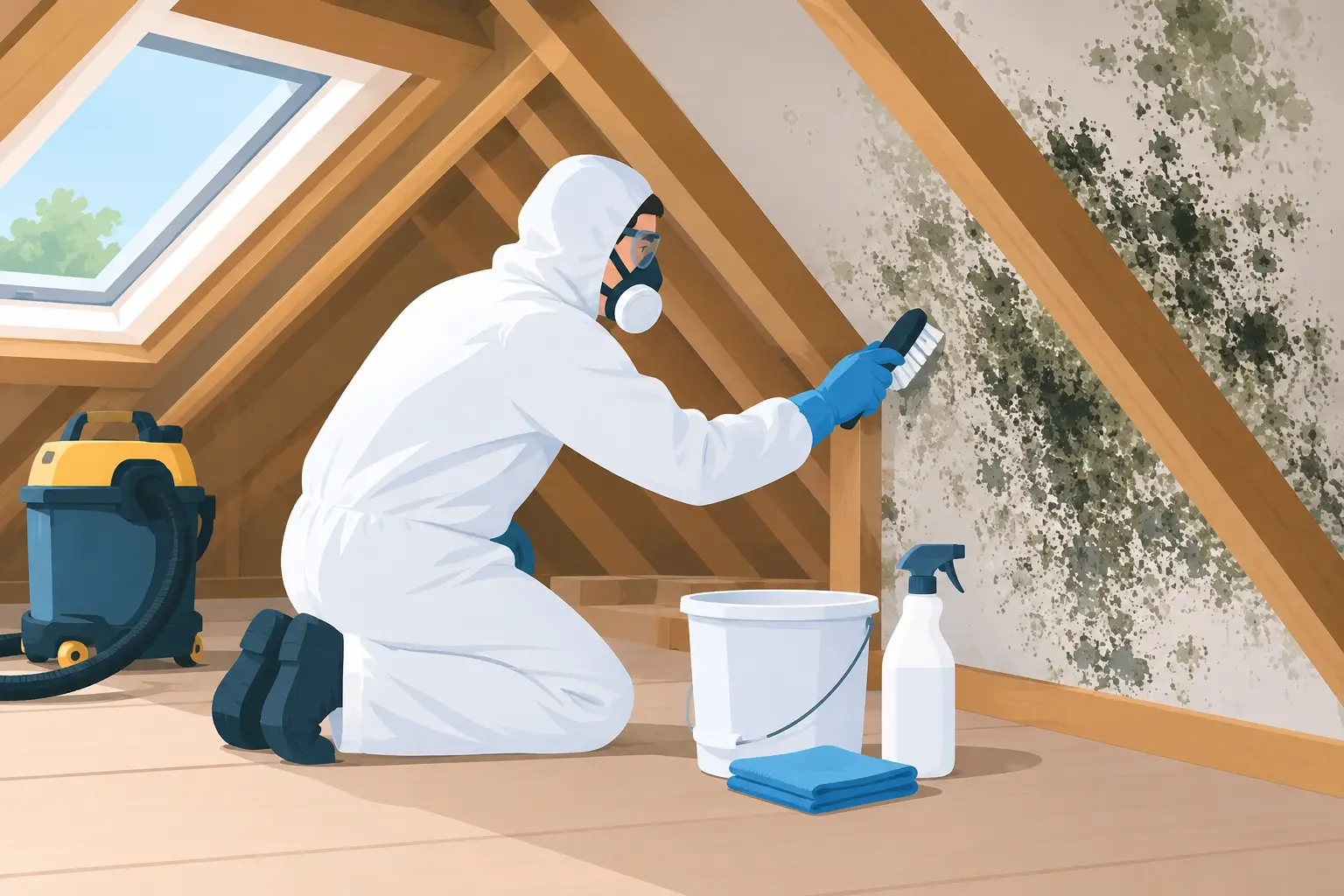
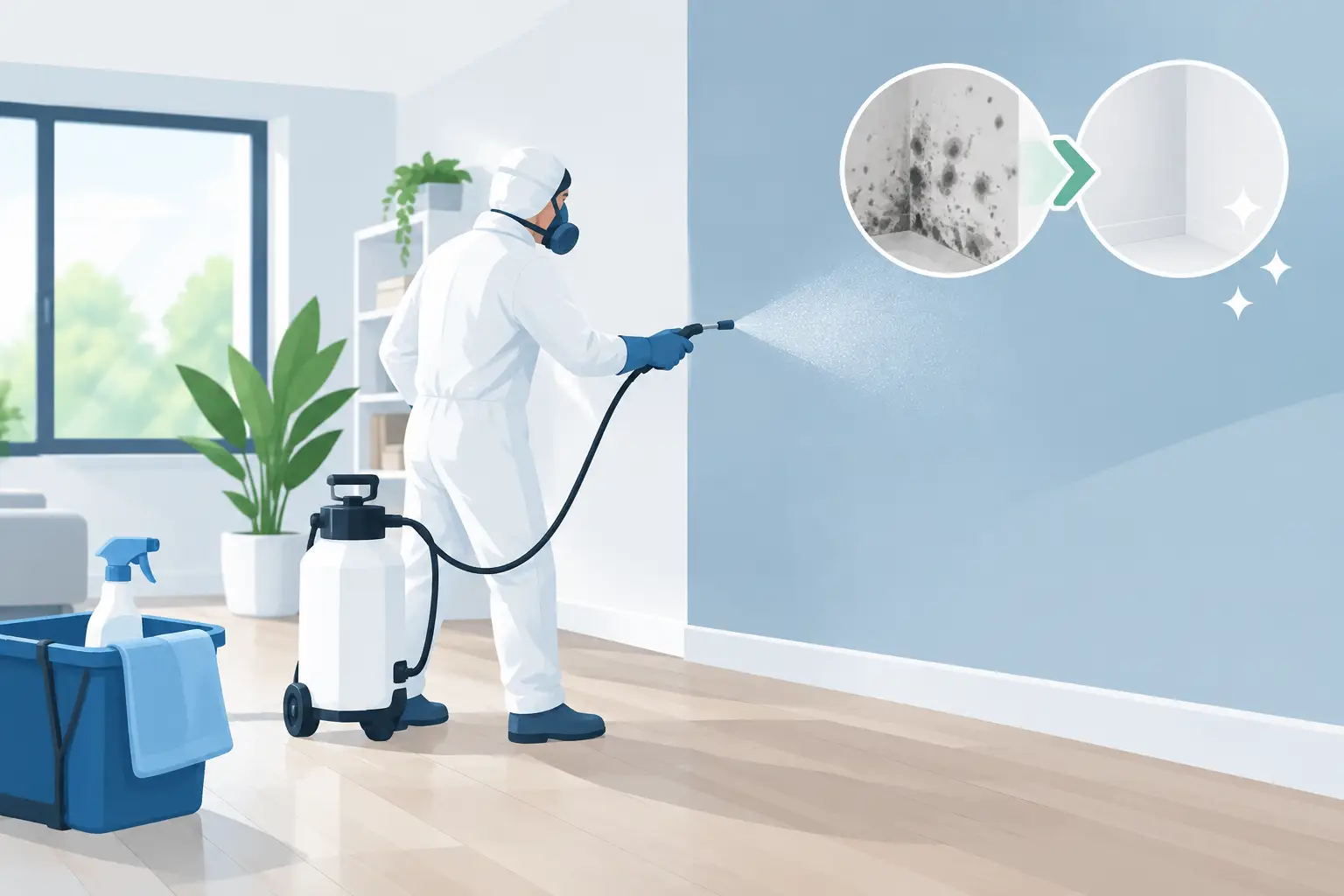
When mold is suspected, avoid disturbing large areas of visible growth or running fans across contaminated materials. That can spread spores into clean portions of the building. Isolate the area when practical, protect occupants, and arrange an assessment from certified remediation professionals who can address both the contamination and the moisture source.
A commercial building does not need a major flood to develop a serious mold problem. The most protective decision is often the earliest one: investigate persistent moisture while the issue is still contained, and give the building a verified path back to dry, healthy conditions.