


A wet windowsill may look like a minor winter nuisance, but repeated condensation can soak trim, damage drywall, and create the moisture mold needs to grow. Knowing how to fix window condensation starts with identifying whether the water is forming on the room side of the glass, between panes, or outside the window. Each points to a different problem, and the right response protects both your indoor air quality and your property.
Why Window Condensation Happens
Condensation occurs when warm, moisture-heavy indoor air contacts a cold surface. The air cools quickly at the window, cannot hold as much water vapor, and releases that moisture as droplets. In colder climates, it is common to see a small amount of fogging or moisture on windows during sharp temperature changes. Persistent droplets, pooling water, peeling paint, or dark staining are not normal conditions to ignore.
Windows are often the first place excessive indoor humidity becomes visible because glass is colder than insulated walls. The issue may be caused by everyday activities, such as cooking, showering, drying clothes indoors, or running a humidifier too high. It can also indicate poor ventilation, air leakage, inadequate insulation, failed window seals, or a hidden water intrusion problem.
The key is not to treat condensation as a cleaning issue alone. Wiping water away helps limit immediate damage, but it does not correct the moisture imbalance that keeps bringing it back.
How to Fix Window Condensation on the Inside of Glass
When moisture forms on the interior side of the window, begin by lowering indoor humidity and improving airflow. For most homes, indoor relative humidity should generally stay around 30% to 50%. During very cold weather, the appropriate level may need to be lower because windows become colder and condensation forms more easily.
Use exhaust fans during showers and while cooking, and leave them running long enough to remove humid air after the activity ends. Make sure bathroom and kitchen fans vent outdoors rather than into an attic, crawlspace, or another enclosed area. A fan that does not move air outside can relocate the moisture instead of solving the problem.
A dehumidifier can be useful in damp basements, bedrooms, laundry rooms, and other areas where condensation is frequent. Select a properly sized unit and empty or drain it consistently. If you use a humidifier for comfort, monitor humidity with a hygrometer rather than guessing. Over-humidifying a home in winter is one of the most common causes of wet windows.
Air circulation matters as well. Open curtains and blinds during the day, especially near problem windows, so warm room air can circulate across the glass. Avoid placing large furniture directly in front of supply vents or against exterior walls where air movement is limited. In some cases, insulated cellular shades help reduce heat loss, but tightly closed coverings can also trap moisture against cold glass. Check behind them regularly.
Check the Window, Frame, and Surrounding Wall
If reducing humidity does not improve the condition, inspect the window assembly carefully. Look for deteriorated caulking, cracked glazing, gaps around the frame, damaged weatherstripping, or signs of drafts. Cold air leaking around a window lowers the surface temperature and makes condensation more likely.
Repairing small gaps with appropriate caulk or weatherstripping can improve comfort and reduce moisture formation. Storm windows or interior window film may also help older windows retain heat during winter. These measures can be cost-effective, but they will not correct a damaged frame, missing insulation, or water entering from outside.
Pay close attention to the wall below and beside the window. Bubbling paint, soft drywall, warped trim, musty odors, or discoloration may mean moisture has moved beyond the glass surface. Water can travel behind finishes and support hidden mold growth long before it becomes visible.
Condensation Between Window Panes Is Different
Fogging between double- or triple-pane glass usually means the insulated glass seal has failed. The gas or dry air space between the panes has been compromised, allowing moisture to enter. You cannot resolve this by lowering indoor humidity or cleaning the glass because the moisture is sealed inside the unit.
Depending on the window design and condition, the solution may be to replace the insulated glass unit or the entire window. A qualified window professional can assess the most practical option. If the surrounding frame is rotted or there is evidence of water damage in the wall, address those conditions at the same time.
Exterior Condensation Usually Is Not a Defect
Condensation on the outside of a window is generally less concerning. It often occurs when outdoor air is warm and humid while the glass remains cool due to efficient insulation or air conditioning. Unlike interior condensation, it does not usually expose interior finishes to moisture.
Still, inspect any window that repeatedly collects water around the exterior frame, especially after rain. That could be a drainage, flashing, siding, or caulking problem rather than ordinary condensation.
Prevent Condensation From Turning Into Mold
Mold does not need a major flood to develop. Repeated window moisture can dampen wood trim, window sills, drywall paper, dust, and insulation. Once materials remain wet or consistently humid, mold can begin growing in as little as 24 to 48 hours under favorable conditions.
Dry visible moisture promptly with a clean, absorbent cloth, then inspect the sill, frame, and nearby wall for staining or odor. Do not paint over peeling paint, dark spots, or water damage without correcting the source. Paint can hide evidence temporarily while moisture and microbial growth continue underneath.
Take these preventive measures seriously when condensation is recurring:
- Keep indoor humidity within a seasonally appropriate range using ventilation and dehumidification.
- Run bathroom and kitchen exhaust fans and confirm they discharge outdoors.
- Repair drafts, failed caulking, damaged weatherstripping, and obvious exterior water-entry points.
- Keep window tracks, sills, and surrounding trim dry and free of dust buildup.
- Investigate stains, soft materials, musty odors, or recurring dark growth around the window.
For a small amount of surface moisture with no damage, these steps are often enough. For ongoing wetness or suspected mold, the trade-off is different: a do-it-yourself cleanup may remove what you can see, but it cannot confirm whether contamination has spread behind trim or into the wall cavity.
When to Call a Mold and Moisture Professional
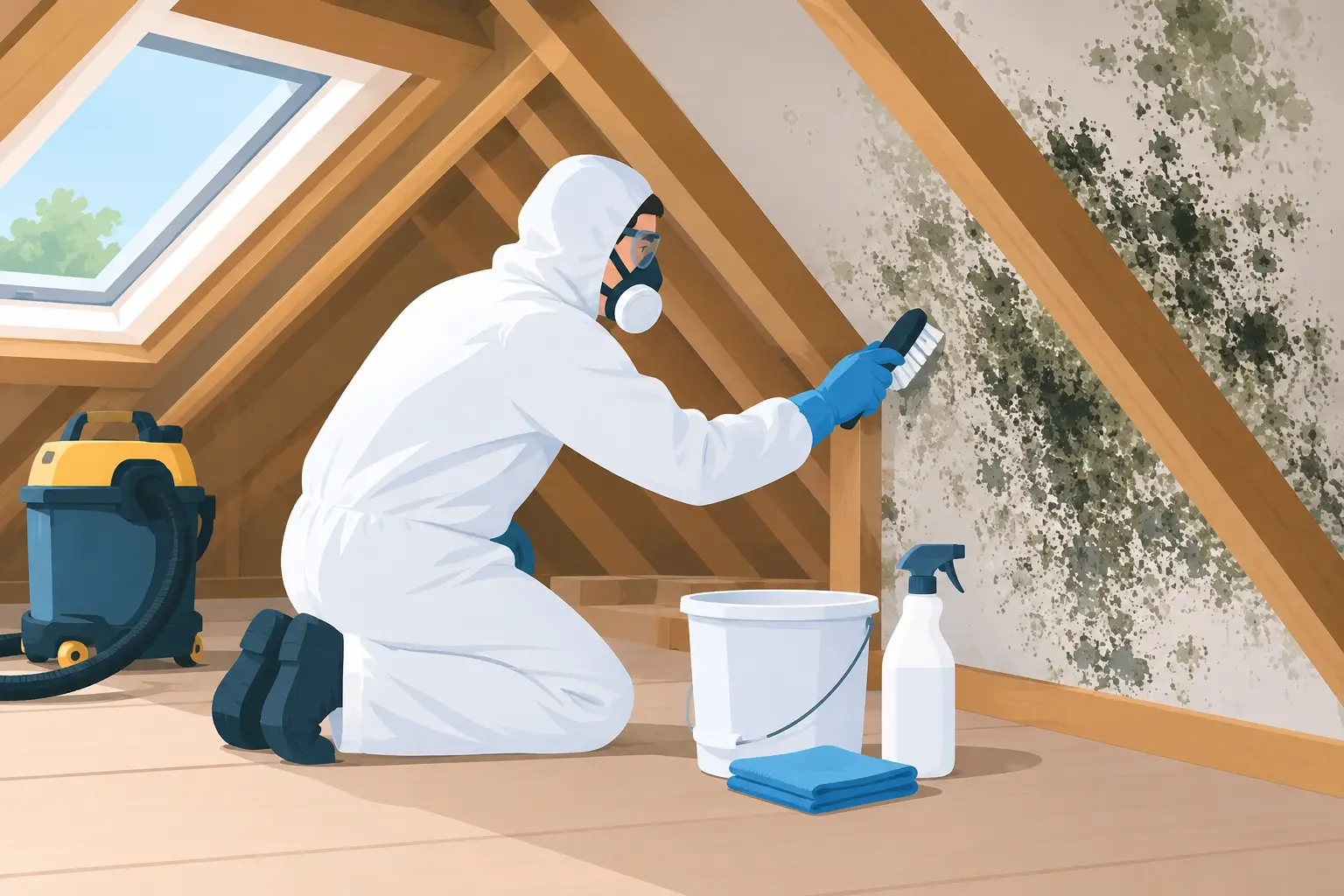
Professional assessment is warranted when condensation has caused visible mold, recurring stains, water-damaged drywall, strong musty odors, or symptoms that improve when people leave the building. It is also wise to seek help after a window leak, roof issue, plumbing problem, or flood, since the moisture source may not be limited to the window itself.
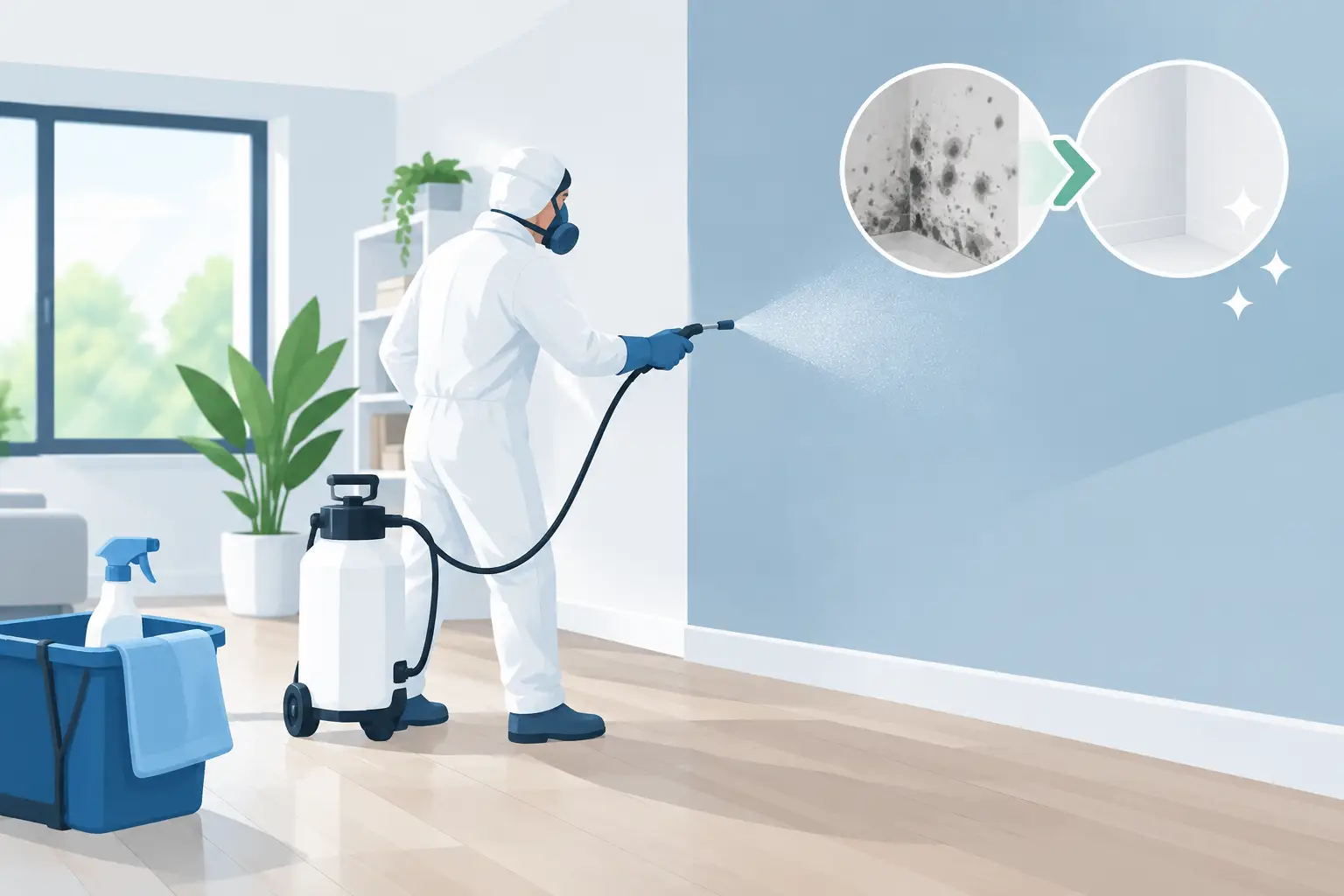
A proper inspection goes beyond looking at the glass. Certified remediation professionals use moisture meters and thermal imaging to locate damp materials and identify patterns that may point to insulation gaps, leaks, or concealed water damage. If mold is found, containment and HEPA filtration may be necessary to prevent spores from spreading during removal. Air quality testing can help evaluate conditions when contamination is suspected but not obvious.
For landlords and property managers, timely action is especially important. Repeated tenant complaints about wet windows, musty odors, or visible spotting should be documented and investigated. Addressing the moisture source early can prevent larger remediation costs, tenant disruption, and damage to the building envelope.
A Better Long-Term Approach to Window Moisture
The most reliable fix is rarely one product or one quick wipe. It is a combination of balanced indoor humidity, effective ventilation, sound window installation, and fast attention to leaks or damaged materials. A newer window may reduce condensation, but even high-performance glass can sweat if indoor moisture levels are too high. Conversely, lowering humidity alone may not solve a failed seal or an improperly flashed window.
If water keeps returning to the same window, trust the pattern. Dry the area, reduce humidity, and arrange a professional moisture inspection before a small seasonal problem becomes hidden mold damage.