

Floodwater can leave behind more than mud, odor, and visible staining. It can carry bacteria, sewage, chemicals, and moisture into cracks, wall cavities, flooring, and furnishings. Knowing how to disinfect flood surfaces is an essential first step after water damage, but disinfection only works when the area is cleaned, dried, and assessed properly.
A wiped-down surface may look clean while moisture remains trapped behind baseboards or under flooring. That moisture can support mold growth within 24 to 48 hours. The goal is not simply to make the room look normal again. It is to remove contamination, control moisture, and determine whether the affected materials can be safely restored.
Start by Identifying the Type of Floodwater
The cleanup method depends heavily on where the water came from and how long it remained in the property. Clean water from a broken supply line is generally less hazardous than water from a sewer backup, overflowing toilet, river, or storm drain. However, even initially clean water becomes increasingly contaminated after standing on floors, soaking building materials, or mixing with household debris.
Water from outside flooding or a sewage backup should be treated as potentially hazardous. It may contain bacteria, viruses, parasites, fuel, pesticides, and other contaminants. In these cases, do not assume that ordinary household cleaning is enough. Porous materials such as saturated carpet, carpet padding, insulation, ceiling tiles, mattresses, upholstered furniture, and particleboard may need to be removed rather than disinfected.
If floodwater has affected a commercial property, rental unit, daycare, healthcare setting, or food-service area, the stakes are higher. Occupant safety, sanitation standards, documentation, and business interruption all need to be considered before reopening the space.
Protect Yourself Before You Clean
Do not enter a flooded area until electrical hazards have been addressed. If water has reached outlets, appliances, electrical panels, or wiring, have a qualified professional assess the area first. Never stand in water while attempting to shut off electrical power unless you know it is safe to do so.
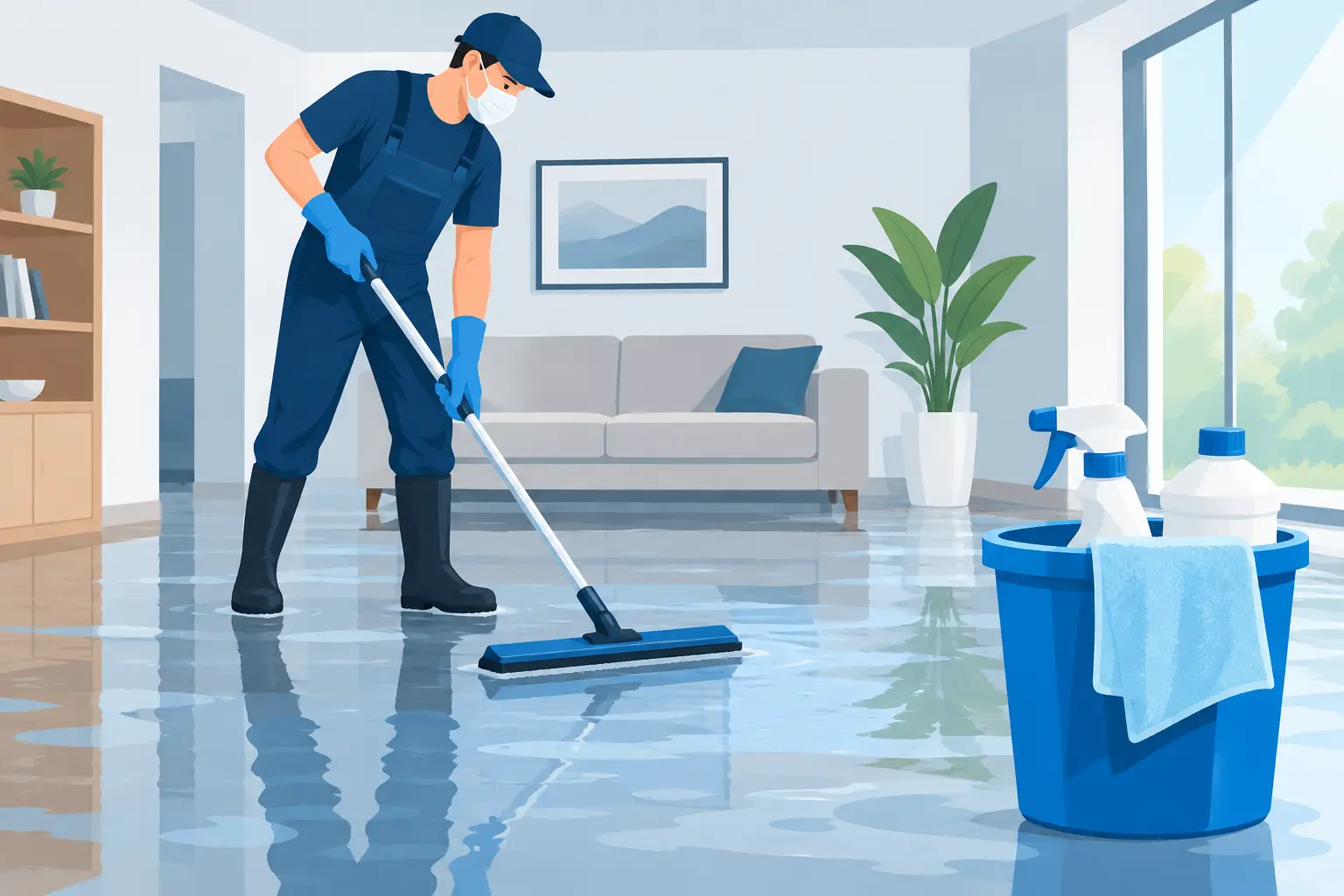
Wear waterproof boots, chemical-resistant gloves, eye protection, and an N95 respirator at minimum when cleaning minor flood damage. For sewage-contaminated water or extensive damage, stronger respiratory protection and professional containment may be necessary. Keep children, pets, and people with respiratory conditions away from the affected area until cleanup is complete.
Open windows when conditions allow, but do not rely on fresh air alone to dry a property. Use fans, dehumidifiers, and commercial air-moving equipment to reduce moisture. If outdoor humidity is high, open windows can sometimes add moisture instead of removing it.
How to Disinfect Flood Surfaces Safely
Disinfection is a two-stage process: first remove soil and residue, then apply a disinfectant according to its label instructions. Applying disinfectant directly over mud, grease, or organic debris is less effective because contaminants can shield germs from the product.
Begin by removing standing water and loose debris. Use appropriate extraction equipment, wet vacuums designed for water recovery, or a professional restoration service for larger losses. Do not use a standard household vacuum on wet materials.
Next, wash hard, nonporous surfaces with detergent and clean water. This includes tile, sealed concrete, metal, glass, plastic, and properly sealed countertops. Scrub crevices, grout lines, corners, and the undersides of fixtures where contaminated water may have settled. Rinse away the cleaning solution before moving to the disinfection stage.
Use an EPA-registered disinfectant suitable for the surface and the type of contamination involved. Follow the product label exactly, especially its required contact time. A disinfectant must remain visibly wet for the stated period to work as intended. Spraying and immediately wiping it dry may not provide adequate disinfection.
Bleach solutions are sometimes used on compatible hard surfaces, but bleach is not appropriate for every material. It can discolor finishes, damage metals, weaken fabrics, and create hazardous fumes if misused. Never mix bleach with ammonia, vinegar, acids, or any other cleaning product. When there is uncertainty about the correct product or dilution, choose a labeled disinfectant and follow its directions rather than improvising.
After the required contact time, rinse food-contact surfaces with clean water if the product label requires it. Allow all cleaned areas to dry thoroughly. Drying is not a cosmetic step. It is what stops remaining moisture from feeding mold behind walls, beneath flooring, and inside cabinets.
Surfaces That Can Often Be Cleaned and Disinfected
Nonporous materials are generally the best candidates for restoration when they are structurally sound. These include sealed ceramic tile, vinyl, stainless steel, glass, hard plastic, and sealed stone. Solid wood may sometimes be saved if it was exposed briefly, cleaned quickly, and dried completely, though swelling, staining, and hidden moisture must be evaluated.
Hardwood flooring deserves caution. Water can migrate between boards and beneath the subfloor, even if the top surface appears dry. Cupping, buckling, persistent odor, or elevated moisture readings are signs that a deeper inspection is needed.
Materials That Often Need Removal
Drywall, insulation, carpet padding, unsealed wood, fabric-covered furniture, paper products, and acoustic ceiling tiles are difficult to disinfect after contaminated flooding. These porous materials can absorb sewage, bacteria, and moisture beyond the reach of surface cleaners.
Carpet is especially deceptive. It may feel dry on top while the backing, padding, and subfloor remain wet. If floodwater was contaminated, replacing the carpet and padding is commonly the safer decision. Saving materials at all costs can leave behind odor, microbial growth, and a recurring indoor air quality problem.
Dry the Structure, Not Just the Visible Floor
A flood cleanup is incomplete until moisture has been measured and controlled. Water can travel upward into drywall, behind baseboards, into cabinetry, and under laminate or vinyl flooring. A musty smell, peeling paint, warped trim, or recurring stains can all indicate hidden moisture.
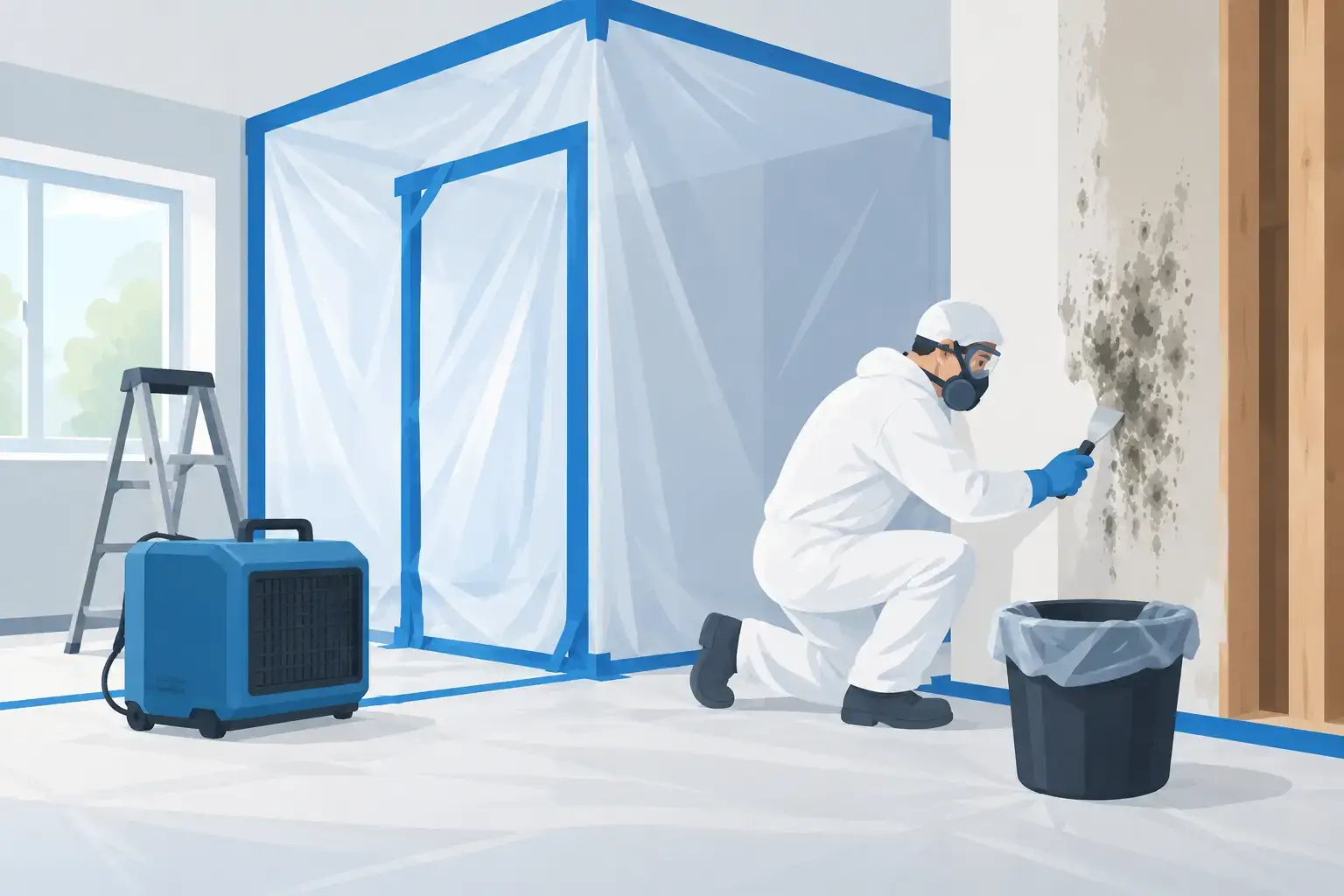
Professional restoration teams use moisture meters and thermal imaging to identify affected materials without guessing. They may remove baseboards, create controlled access points, set up containment, and use HEPA-filtered air scrubbers or negative air pressure where contamination is present. These measures help prevent dust, mold spores, and contaminated particles from spreading into unaffected rooms.
Do not paint over water stains or reinstall flooring until materials have reached acceptable moisture levels. Covering a damp surface may hide the damage temporarily, but it can create conditions for mold growth and more expensive repairs later.
When DIY Cleanup Is Not Enough
Small spills involving clean water on a washable surface may be manageable with prompt cleaning and drying. Flooding is different when it involves sewage, outdoor water, extensive saturation, visible mold, structural materials, or an area larger than a small isolated section.
Call a certified remediation professional when water has entered walls, ceilings, flooring systems, HVAC components, electrical areas, or multiple rooms. Professional help is also appropriate when occupants report persistent odors, respiratory irritation, or moisture returning after cleanup. Landlords and business owners should act quickly when tenants, employees, or customers may have been exposed to contaminated conditions.
A qualified assessment should identify the water source, classify contamination, measure moisture, determine which materials are salvageable, and establish a documented cleanup plan. Post-remediation air quality testing may also be appropriate where mold growth or widespread contamination is suspected.
Prevent Mold After Flood Disinfection
Once surfaces are cleaned, keep indoor humidity low and continue checking the affected area over the next several days. Look behind furniture, inside lower cabinets, around baseboards, and along wall-to-floor joints. Mold does not always appear as a dramatic black patch. It may begin as a faint discoloration, a musty odor, or unexplained dampness.
Remove wet materials promptly, maintain ventilation, and repair the source of water intrusion before rebuilding. If the flood resulted from a foundation leak, plumbing failure, roof leak, or sewer backup, the underlying cause needs correction. Sanitizing without stopping the moisture source only delays the next problem.
When floodwater has touched your property, quick action protects more than the finish on a floor. A careful cleanup, verified drying, and timely professional assessment can protect the people inside the building and preserve the condition of the structure long after the water is gone.