


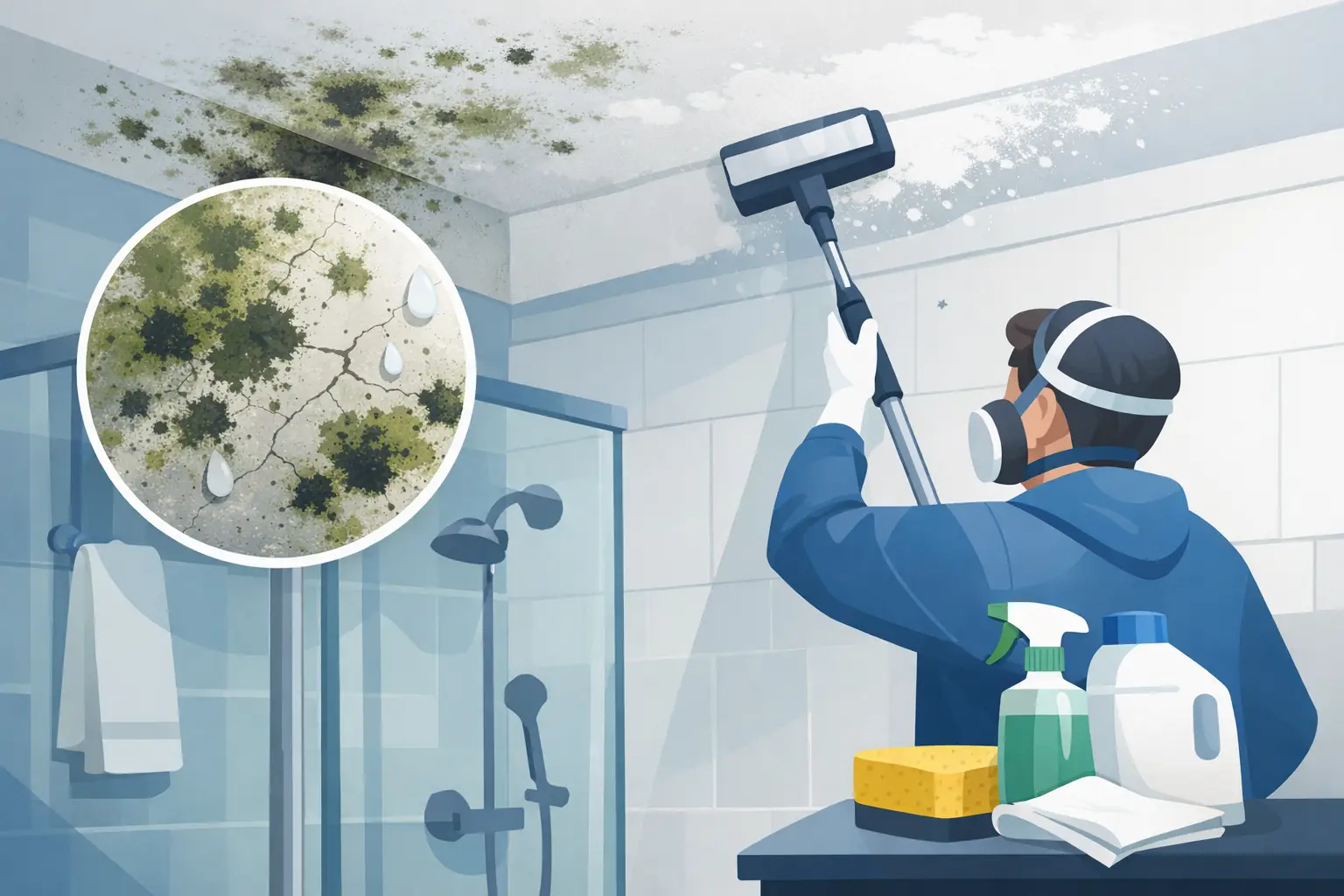
A dark spot above the shower is rarely just a cleaning issue. Bathroom ceiling mold removal starts with one critical question: why is moisture staying on the ceiling long enough for mold to grow? If that cause is not corrected, even a ceiling that looks clean can develop new growth within weeks.
Bathrooms create ideal mold conditions: warm air, frequent steam, limited airflow, and surfaces that may stay damp after every shower. For homeowners, landlords, and property managers, a fast, informed response protects indoor air quality, finishes, and the people using the space.
Why Mold Grows on Bathroom Ceilings
Ceiling mold often appears as small black, green, gray, or brown specks near the shower, above a bathtub, around an exhaust fan, or along the outside wall. Condensation is a common cause. Hot shower air rises, cools when it reaches the ceiling, and leaves moisture behind. If the fan is weak, undersized, dirty, disconnected, or turned off too soon, that moisture has nowhere to go.
However, condensation is not the only possibility. A plumbing leak from an upstairs bathroom, a leaking roof, failed caulking around a vent penetration, or moisture entering through an exterior wall can wet ceiling materials from above. A water stain, bubbling paint, soft drywall, or mold that returns quickly after cleaning should be treated as a potential hidden moisture problem, not routine bathroom mildew.
The distinction matters. Surface growth caused by occasional condensation may be limited to the paint film. Growth fed by an active leak can extend into drywall, insulation, framing, and adjacent rooms. Removing what is visible without investigating the source risks leaving contaminated material and elevated moisture behind.
Bathroom Ceiling Mold Removal: When DIY Is Reasonable
A homeowner may be able to address a very small area of surface mold on a hard, intact ceiling when there is no sign of a leak, water damage, or recurring growth. The area should be limited, the person cleaning should not have respiratory sensitivity, and the bathroom should be well ventilated. Renters should notify the landlord or property manager before cleaning, especially if the issue appears related to building ventilation or a leak.
Before cleaning, run the exhaust fan, open the door or window if conditions allow, and keep children, pets, and anyone with asthma or a weakened immune system out of the room. Wear gloves, eye protection, and a properly fitted respirator rated for fine particles. Do not dry-brush or sand the mold. Those actions can spread spores and contaminated dust into the bathroom and beyond.
Use a suitable mold-cleaning product according to its label and gently wipe the affected surface with disposable towels or a nonabrasive sponge. The goal is to remove growth without soaking the ceiling or damaging paint and drywall. Never mix bleach with ammonia, vinegar, or other cleaners. Chemical mixing can create dangerous fumes, and bleach is not a reliable solution for mold embedded in porous materials.
Once cleaned, dry the ceiling completely. Dispose of used towels in a sealed bag, then wash reusable protective items as appropriate. Watch the spot closely over the following days and weeks. If discoloration returns, the underlying moisture condition has not been resolved.
When Professional Remediation Is the Safer Choice
Professional assessment is warranted when mold covers more than a small isolated area, keeps returning, has spread beyond the bathroom, or is accompanied by a persistent musty odor. It is also the right call when drywall is soft, stained, swollen, or damaged, or when a leak is suspected above the ceiling.
Do not assume the visible patch shows the full extent of the problem. Mold can grow on the back of drywall, above suspended ceilings, inside insulation, and around exhaust ducting. A ceiling that looks lightly affected from below may conceal a much larger moisture event above it.
For multifamily properties and commercial spaces, a professional response can be particularly important. Shared plumbing, roof systems, mechanical ventilation, and tenant exposure create responsibilities that go beyond cosmetic repair. Property managers need a documented process that identifies the source, controls affected areas, and supports a safe return to normal use.
A certified remediation team can inspect the area with moisture meters and thermal imaging, identify water pathways, and determine whether materials can be cleaned or should be removed. When removal is necessary, containment, HEPA filtration, and negative air pressure help limit the movement of dust and spores into clean areas. After cleaning and drying, verification and, where appropriate, indoor air quality testing provide a clearer basis for confirming the work was completed properly.
What a Thorough Ceiling Mold Assessment Looks For
The first priority is moisture. A proper inspection examines the ceiling surface, the room above it when accessible, plumbing fixtures, roof or exterior-wall conditions, attic spaces, and the bathroom exhaust system. The inspector should look for evidence that the fan is venting outdoors rather than dumping humid air into an attic or ceiling cavity.
Ventilation performance is often overlooked. An exhaust fan may turn on and still fail to move enough air because of a blocked grille, crushed duct, long duct run, backdraft damper issue, or motor failure. A fan should continue running during a shower and for a period afterward to remove residual humidity. In bathrooms without windows, reliable mechanical exhaust is especially important.
The assessment should also distinguish mold from dirt, soot, and staining. Laboratory testing is not required for every visible patch, but it can be useful in complex cases, after significant water damage, or when occupants are concerned about indoor air conditions. The key is not simply naming a mold type. The key is finding and correcting the moisture source that allows any mold to grow.
Preventing Mold From Returning
The most effective prevention plan is simple: reduce humidity, remove moisture quickly, and repair water intrusion without delay. Turn on the bathroom fan before showering, keep it running afterward, and clean the fan cover periodically so airflow is not restricted. If steam lingers on mirrors and walls long after a shower, ventilation may need attention.
Use the bathroom door strategically. Leaving it slightly open after showering can help moisture escape if the home has adequate airflow, but avoid sending excess humidity into a poorly ventilated hallway or bedroom. Wipe down shower walls and glass when practical, repair dripping faucets and toilet leaks, and address peeling ceiling paint before exposed drywall absorbs repeated moisture.
Paint can help, but it is not a cure. After a ceiling has been properly cleaned, dried, repaired, and primed as needed, a quality bathroom-rated paint can make the surface more resistant to moisture. Painting over active mold or a damp ceiling only hides the evidence temporarily and can trap the underlying issue.
For older homes, apartments, and frequently used bathrooms, consider whether the fan capacity matches the room size and shower use. A high-traffic bathroom with a weak fan may need an upgrade, professional duct correction, or a timer switch that keeps ventilation running long enough after each use.
Common Mistakes That Make the Problem Worse
The biggest mistake is treating every dark ceiling mark with a quick spray and assuming the job is done. Mold is a symptom of excess moisture. If a fan does not work, a pipe is leaking, or condensation is recurring, cleaning alone will not deliver a lasting result.
Another mistake is aggressively scrubbing a water-damaged ceiling. Damaged drywall is porous and can crumble, spreading debris while revealing that the material is no longer structurally sound. Likewise, attempting to remove large areas without containment can contaminate nearby rooms and expose occupants unnecessarily.
Waiting is risky as well. A small patch does not always become a major remediation project, but delay gives moisture more time to damage paint, drywall, insulation, and wood. Early inspection is generally less disruptive than responding after staining, odors, and material deterioration have spread.
Protect the Ceiling and the Air You Breathe
Bathroom mold should be handled with urgency, but not panic. A small, clearly surface-level area may be manageable with careful cleaning and better ventilation. Recurring mold, water damage, odors, or suspected hidden growth calls for a more complete investigation.
Mold Removal Remediation helps property owners identify moisture conditions, contain affected areas, remove contaminated materials when required, and verify that the space is properly cleaned and dried. The most useful next step is to act while the evidence is still visible: document the area, stop the moisture source if possible, and arrange a professional assessment before a ceiling problem becomes a broader indoor air quality concern.