

A musty basement, a spreading stain under a window, or a tenant reporting persistent coughing can create pressure to act fast. Asking the best mold inspection questions before work begins helps you separate a thorough investigation from a quick look at a visible patch. The right inspector should identify where moisture is coming from, determine how far contamination may extend, and explain what must happen to restore a safe indoor environment.
For homeowners, landlords, property managers, and business owners, an inspection is the decision point. It affects the scope of work, the cost, occupant safety, insurance documentation, and whether the problem is likely to return.
Why Mold Inspection Questions Matter
Visible mold is not always the full problem. Mold can grow behind drywall after a plumbing leak, below flooring after a flood, inside HVAC components, or under insulation in an attic with condensation. Cleaning the surface without locating the moisture source can leave hidden growth active and allow the issue to return.
A qualified inspection should be more than a visual walk-through. Depending on the situation, it may involve moisture mapping, thermal imaging, humidity readings, cavity checks, air or surface sampling, and a review of water-damage history. Not every property needs every test. The inspector should explain why a particular method is useful for your conditions instead of selling testing as a one-size-fits-all add-on.
12 Best Mold Inspection Questions to Ask
1. Are you certified and insured for mold inspection and remediation?
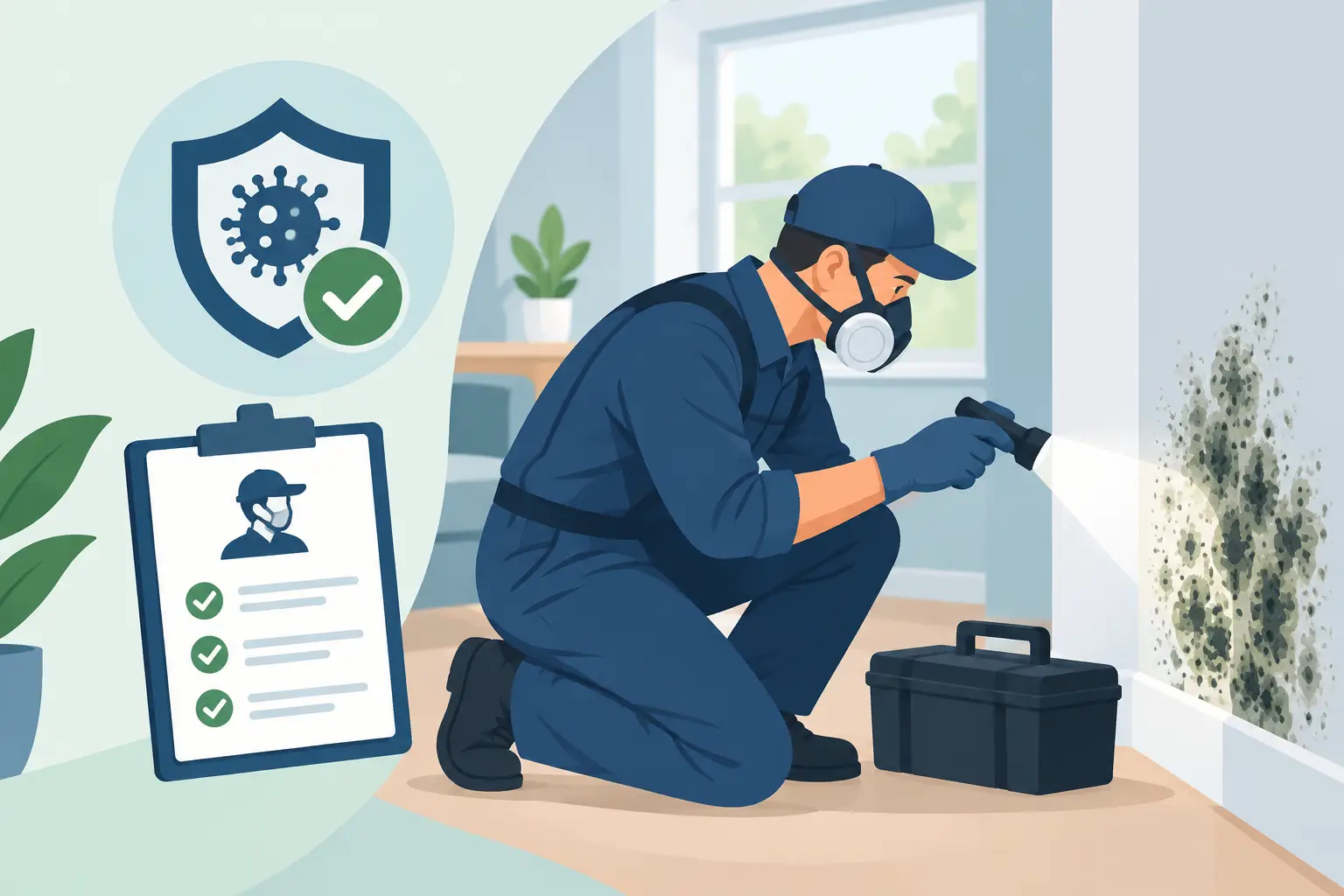
Ask about current training, industry certifications, insurance coverage, and worker safety requirements. Certifications such as IICRC, IAC2, MICRO, and CMRC can indicate relevant training, while workers’ compensation coverage helps protect property owners when work is underway.
Credentials alone do not guarantee quality, but they are a meaningful starting point. A professional should answer clearly, provide documentation when requested, and describe the standards or procedures that guide their work.
2. Will you look for the moisture source, not just visible mold?
Mold needs moisture. If the source is a roof leak, foundation seepage, plumbing failure, condensation, poor ventilation, or high indoor humidity, that condition must be addressed for remediation to last.
Ask how the inspector plans to trace the source. Moisture meters can identify elevated moisture in building materials, while thermal imaging can help reveal temperature differences associated with hidden moisture. These tools support an investigation, but they must be interpreted by a trained professional and confirmed where necessary.
3. What areas will the inspection include?
Get specific about the inspection boundaries. A bathroom issue may require an examination of the wall shared with a bedroom. A basement odor may warrant checking finished walls, floor edges, storage areas, drains, and the HVAC system. In a commercial property, the affected area may extend across suites, utility rooms, ceiling cavities, or ventilation pathways.
A clear scope prevents assumptions. If access is limited by furniture, locked rooms, finished walls, or tenant scheduling, ask how those limitations will be documented and whether additional investigation could be needed.
4. Do you use moisture meters and thermal imaging?
Professional diagnostic tools can make an inspection more accurate and less destructive. Moisture meters measure the moisture content of materials or compare readings across surfaces. Thermal cameras can reveal patterns that suggest a leak, missing insulation, or condensation risk.
Neither tool can identify mold by itself. Thermal imaging shows temperature variation, not contamination, and moisture readings can be influenced by material type. The key question is how the inspector will use the findings to decide whether further investigation, drying, containment, or sampling is appropriate.
5. Is mold testing necessary in my situation?
Testing is useful when visible evidence is limited, occupants have unexplained symptoms, a dispute requires documentation, or post-remediation verification is needed. Air samples, surface samples, and bulk samples can provide different information, so ask what type is recommended and what question it is intended to answer.
Testing may not be necessary when there is obvious active mold growth and the correct response is already clear: correct the moisture problem and remove contaminated materials safely. A reliable professional will explain the trade-off rather than imply that every inspection requires laboratory analysis.
6. Who collects and interprets the samples?
Ask whether samples are collected according to a documented process and analyzed by a qualified laboratory. You should also know how results will be interpreted. Mold spores are naturally present in outdoor and indoor air, so a lab report is not a simple pass-or-fail document.
The interpretation should consider the building’s history, visible conditions, moisture findings, sampling locations, and the types and relative levels of spores detected. Results without context can cause unnecessary alarm or false reassurance.
7. Can you explain the likely scope of remediation before work starts?
An initial inspection may not reveal every hidden condition, especially behind finished materials. Still, the contractor should provide a reasoned preliminary scope that identifies affected areas, suspected moisture sources, proposed containment, materials likely requiring removal, cleaning methods, and any expected limitations.
Ask what could change the price or scope after demolition begins. This is especially important in older buildings, where concealed leaks, damaged insulation, or previously repaired water intrusion may only become visible once materials are opened.
8. How will you protect occupants and unaffected areas?
Containment is central to safe mold remediation. Ask whether the work area will be isolated with plastic barriers, whether negative air pressure will be used, and how workers will prevent dust and spores from spreading through the property.
For occupied homes and businesses, discuss practical details as well. Can people remain in the building? Will certain rooms be unavailable? How will entry routes, furniture, electronics, and HVAC systems be protected? The answer depends on the size and location of contamination, but there should be a clear plan before removal begins.
9. What equipment and cleaning methods will be used?
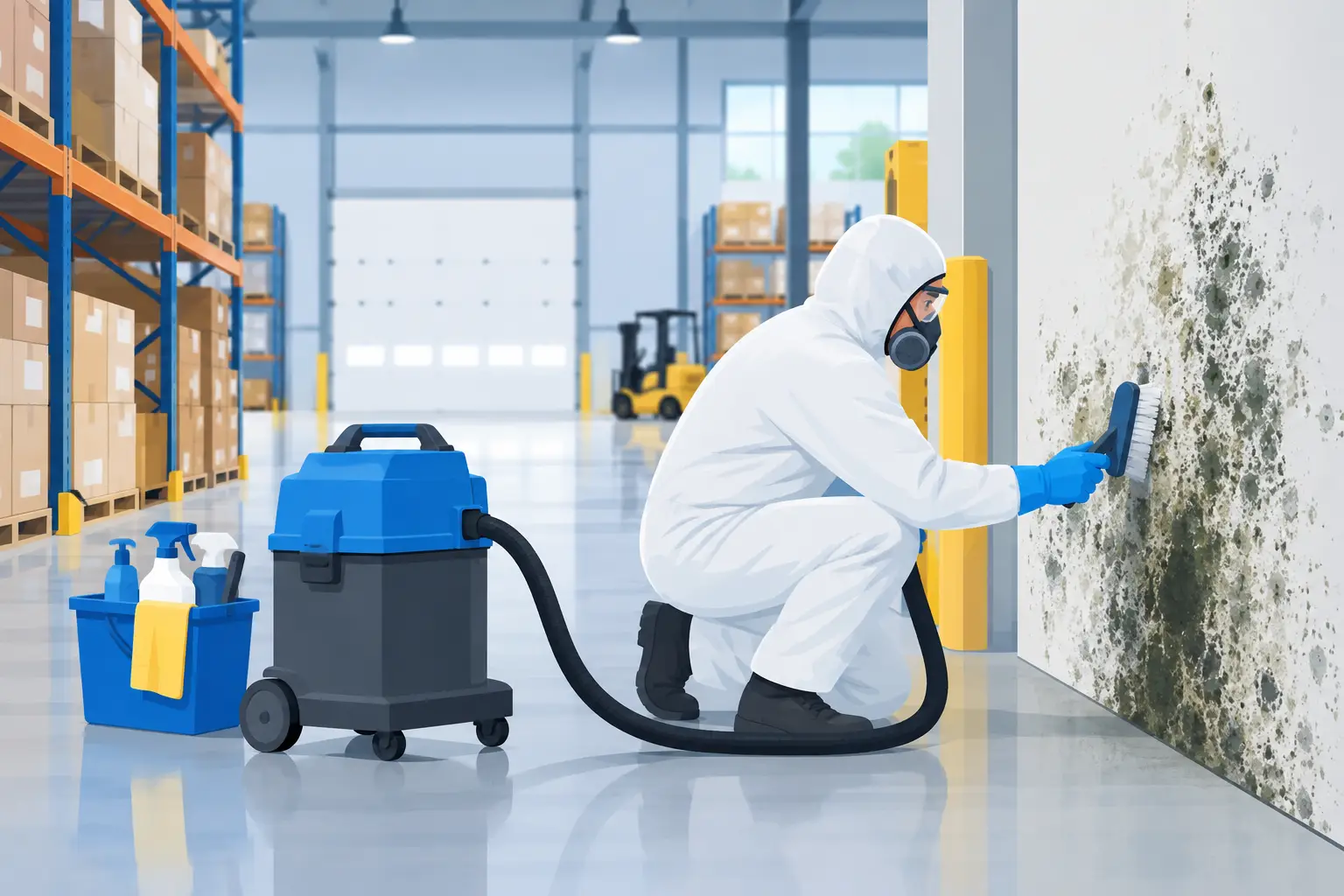
Professional remediation commonly involves HEPA-filtered vacuums, air scrubbers, negative-air equipment, controlled demolition, and detailed cleaning of affected surfaces. Porous materials with significant mold growth, such as wet drywall, insulation, carpeting, or ceiling tile, often need removal because they cannot always be cleaned reliably.
Be cautious if the proposed solution is simply spraying a chemical over visible mold. Antimicrobial products may have a role in certain circumstances, but they do not replace source correction, physical removal of damaged materials, containment, and HEPA cleaning.
10. Will the estimate separate inspection, testing, and remediation costs?
A transparent estimate should distinguish diagnostic work from removal work whenever possible. Ask what is included in the inspection fee, whether laboratory testing is billed separately, how many samples are included, and whether any follow-up visits are anticipated.
Price matters, but the lowest quote can become expensive if it excludes containment, disposal, repairs, or post-remediation verification. Compare scopes, not just totals. Two estimates can look similar while proposing very different levels of protection and cleanup.
11. Do you provide written findings and photo documentation?
Written documentation is valuable for owners, property managers, insurers, and tenants. Request a report or detailed findings that identify observed conditions, moisture readings, sampled locations if applicable, recommended corrective actions, and photographs of affected areas.
For rental and commercial properties, documentation can also establish that a complaint was investigated promptly and professionally. It creates a record of the condition before work, the work completed, and any repairs that still need to be handled by another trade.
12. How will you confirm the area is safe after remediation?
The work should not be considered complete simply because the visible mold is gone. Ask what post-remediation process will be used. A final visual inspection, moisture confirmation, dust-free cleaning verification, and clearance testing may be appropriate depending on the project and the original level of contamination.
Independent clearance testing can provide added confidence when health concerns, insurance claims, tenant disputes, large affected areas, or sensitive commercial environments are involved. For smaller, straightforward projects, a documented final inspection may be sufficient. The right level of verification depends on risk, scope, and the expectations of everyone involved.
Red Flags During a Mold Inspection
Be cautious when a contractor guarantees a diagnosis without examining the property, dismisses moisture control, refuses to explain testing, or cannot provide a written scope. Another concern is a recommendation to fog, paint, or spray over mold without removing damaged material. These approaches may cover staining or odor temporarily while leaving the underlying issue unresolved.
You should also be wary of high-pressure tactics. Mold can be a legitimate health and property concern, especially for people with asthma, allergies, or compromised immune systems. But a professional assessment should replace fear with clear facts, practical options, and a defined plan.
What to Have Ready Before the Appointment
Help the inspector work efficiently by noting when the odor, staining, leak, or symptoms first appeared. Share details about past flooding, plumbing repairs, roof work, basement moisture, recurring condensation, and previous mold cleanup. If you have photos from before a repair or a water event, keep them available.
For landlords and property managers, record tenant reports and identify affected units or common areas. For business owners, explain occupancy patterns, any sensitive operations, and whether the issue may affect customers, employees, inventory, or regulatory obligations.
Mold Removal Remediation approaches inspections as the first step in a complete solution: identify the moisture, assess hidden contamination, contain the affected area, remove damaged materials safely, and verify conditions when appropriate. A careful conversation at the beginning can prevent an incomplete cleanup later. Ask direct questions, expect direct answers, and choose a provider that treats your property and the people inside it with the urgency they deserve.