

When the air conditioner turns on and a damp, earthy odor follows, the problem may be deeper than a dirty filter. The four HVAC mold warning signs below can point to hidden moisture and contamination in your air handling equipment, ductwork, or the areas surrounding it. Because HVAC systems circulate air throughout a property, a small moisture issue can affect more than one room.
Mold does not automatically mean the entire system is contaminated, and not every musty smell comes from mold. Dust, pests, clogged drains, and aging insulation can create similar clues. Still, these signs deserve prompt attention, particularly after water damage, a leak, high indoor humidity, or a period when the system was shut down.
Why HVAC Systems Can Develop Mold
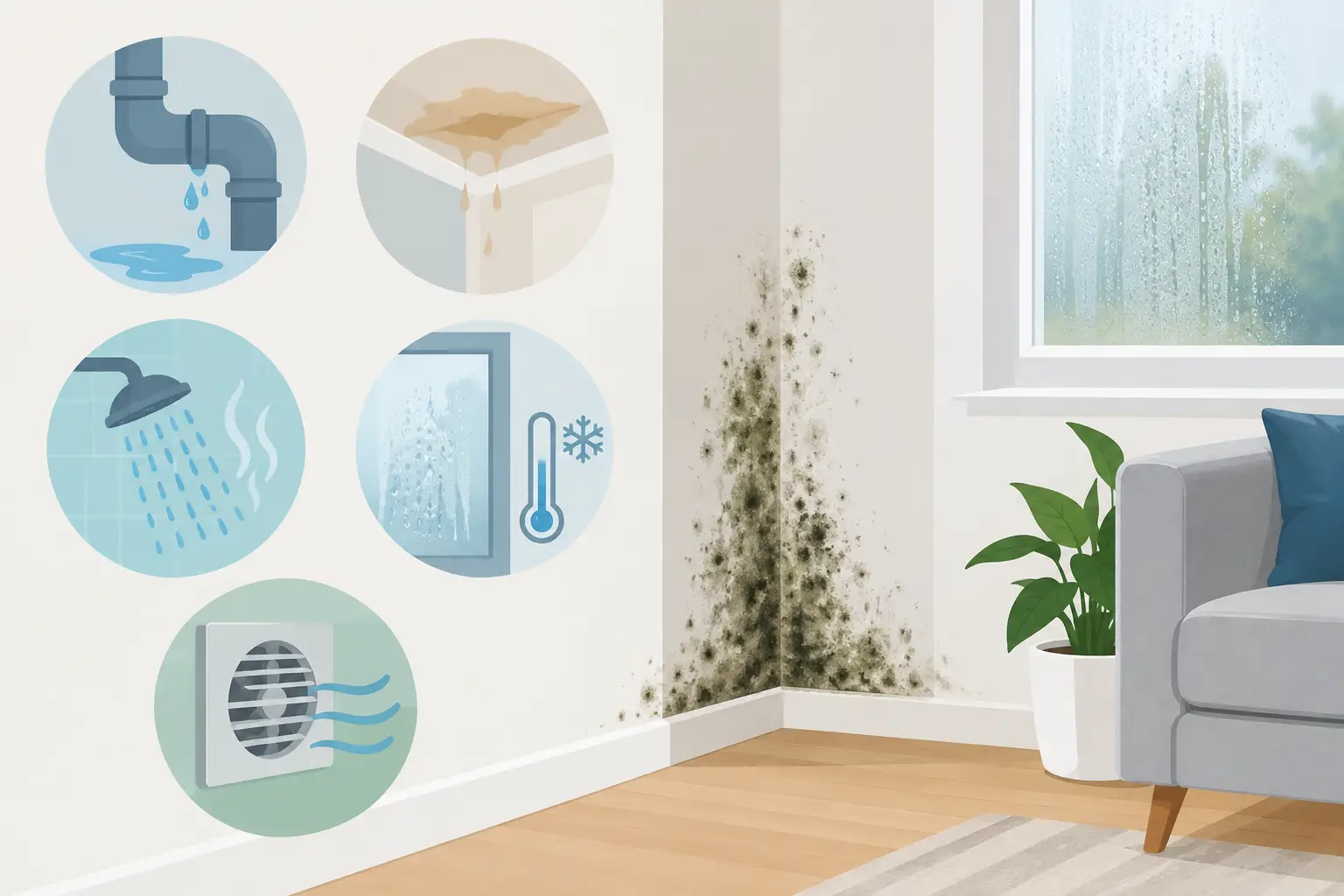
Your heating and cooling system naturally creates conditions mold can use: moving air, temperature changes, and condensation. Air conditioning coils pull moisture from the air, and that moisture should drain safely through a condensate line. If the drain pan overflows, the line clogs, insulation gets wet, or air leaks introduce humid outdoor air, moisture can remain in places that are hard to see.
Mold needs moisture and an organic food source, not necessarily standing water. Dust inside an air handler, debris around a drain pan, damp drywall near a vent, and wet insulation can all support growth. The concern is not simply what is visible. It is whether a moisture source is active and whether the HVAC system is distributing particles or odors to occupied spaces.
Four HVAC Mold Warning Signs Inside Your System
1. A persistent musty odor when the system runs
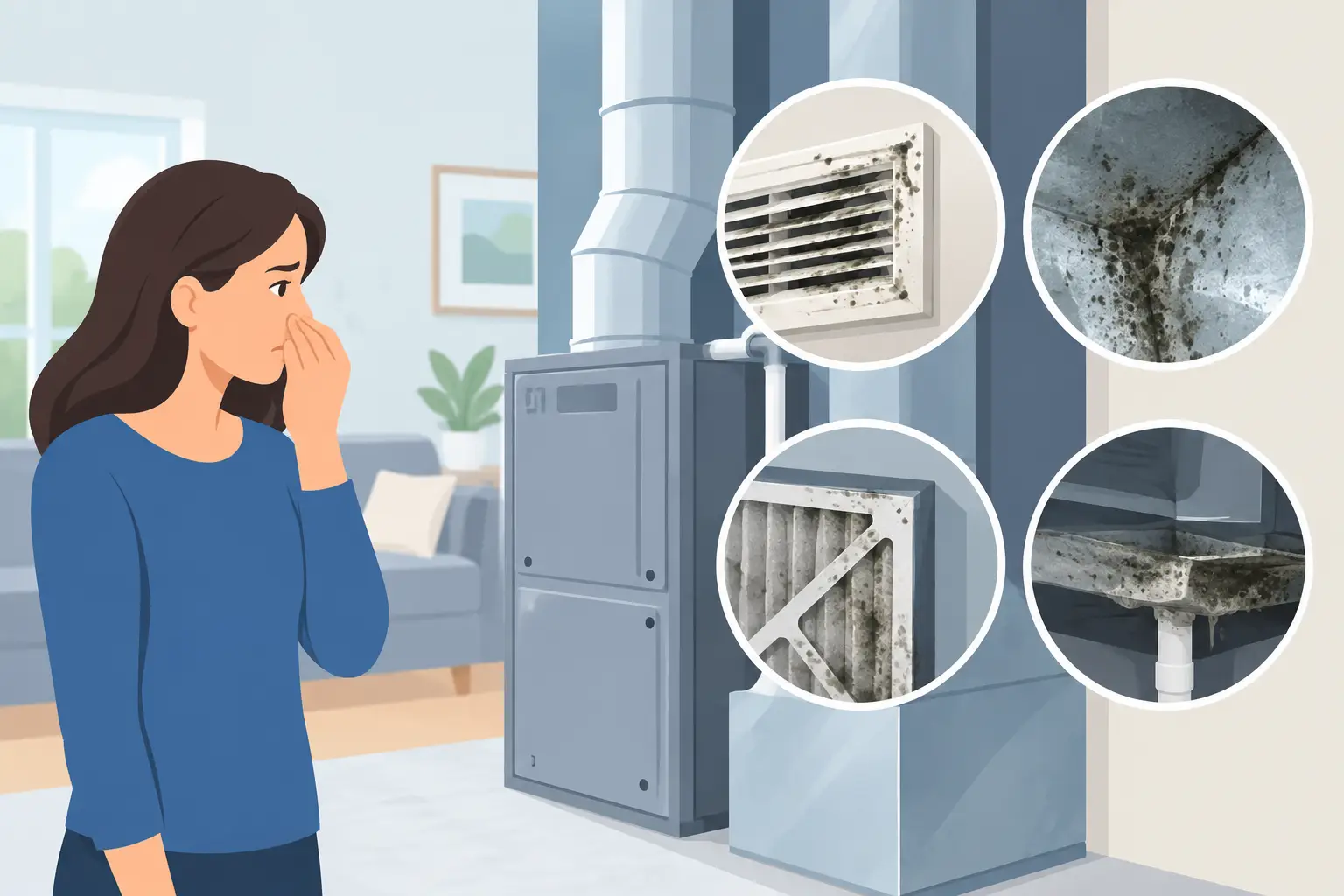
A musty smell that appears or gets stronger when heating or cooling starts is one of the most common warning signs. You may notice it first near supply vents, return vents, the indoor air handler, a utility closet, or a basement mechanical room. The odor may fade after the system runs for a while, then return the next time it cycles on.
This pattern can indicate microbial growth on or near the evaporator coil, drain pan, blower compartment, wet insulation, or duct materials. It can also result from stagnant water in a clogged condensate line. Replacing the filter may reduce dust odors, but it will not resolve mold growth or the moisture condition that allowed it to develop.
Odor alone is not a complete diagnosis. A qualified inspection should identify where the smell originates before anyone recommends duct cleaning, component cleaning, or mold remediation.
2. Visible spotting around vents, registers, or the air handler
Dark, green, gray, white, or fuzzy-looking material around supply registers and return vents should never be ignored. The same applies to staining or growth around the air handler cabinet, condensate drain pan, insulation, or nearby ceiling and wall surfaces.
Visible material around a vent is not always mold inside the duct. In some homes, airborne dust sticks to condensation around cold registers and creates dark rings. However, discoloration that returns after cleaning, spreads, feels damp, or has a musty odor requires a closer look. Surface staining can be the first visible evidence of a larger moisture issue behind a wall, above a ceiling, or inside mechanical equipment.
Avoid scraping, brushing, or spraying suspected mold inside a vent. Disturbing contaminated material without proper containment and HEPA filtration can release particles into the room and, potentially, the HVAC system.
3. Recurring moisture, condensation, or water damage near equipment
Water around HVAC equipment is not normal, even if it seems minor. Puddles near the air handler, a rusty drain pan, dripping refrigerant lines, ceiling stains below attic ductwork, or damp drywall near a return vent all signal that moisture needs to be traced to its source.
A clogged condensate drain is a common cause during cooling season. Poor insulation on ductwork can also lead to condensation, especially in humid spaces such as attics, crawl spaces, basements, and utility rooms. In some cases, an oversized system short-cycles and does not remove humidity effectively. In others, a roof leak, plumbing leak, or foundation moisture problem is reaching nearby HVAC components.
The trade-off is simple: cleaning visible mold before fixing the water source may improve appearances temporarily, but growth can return. Effective remediation begins with moisture control. That may involve HVAC repair, drainage correction, insulation replacement, leak repair, humidity management, or a combination of these measures.
4. Health complaints that improve away from the building
Mold-related symptoms vary widely, and respiratory symptoms do not prove that mold is present. Allergies, viruses, dust, pet dander, chemical irritants, and poor ventilation can cause similar reactions. Still, repeated complaints that worsen in a particular building or room should be taken seriously.
Residents, tenants, or employees may report nasal congestion, coughing, throat irritation, watery eyes, headaches, or worsening asthma symptoms. The timing matters. If symptoms become more noticeable when the HVAC system runs or improve after leaving the property, the indoor environment deserves evaluation.
Do not use symptoms as the only basis for a mold decision. A professional assessment should combine occupant concerns with visual inspection, moisture readings, thermal imaging where appropriate, and targeted air or surface testing when it will help answer a specific question. This approach identifies conditions that need correction instead of relying on assumptions.
What to Do If You Notice These Signs
Start by limiting additional moisture. If the air handler is leaking, the drain pan is overflowing, or water is entering a mechanical room, arrange for the source to be addressed quickly. If you can safely do so, document odors, water stains, visible growth, and the dates when the problem occurs. This information helps identify whether the issue is tied to cooling cycles, rainfall, a plumbing event, or a specific area of the property.
Change a heavily soiled HVAC filter according to the equipment manufacturer’s recommendations, but do not assume this solves the problem. Filters capture some airborne particles; they do not remove contamination already growing on wet materials. Likewise, scented sprays and household disinfectants may mask odors while leaving moisture and mold untouched.
For a small, clearly visible spot on a nonporous surface, cleaning may be appropriate if the underlying moisture issue has been fully resolved. HVAC systems are different because internal components and ducts are difficult to inspect safely. If there is widespread growth, recurring odor, water damage, occupant health concerns, or contamination in a commercial or multi-unit property, professional evaluation is the safer choice.
What a Professional HVAC Mold Inspection Should Include
A thorough inspection goes beyond looking into a vent with a flashlight. The assessor should examine the air handler, evaporator coil area, blower compartment, filter housing, drain pan, condensate line, accessible ductwork, insulation, and nearby building materials. Moisture meters can identify damp drywall or framing, while thermal imaging may reveal temperature patterns consistent with hidden moisture.
If mold removal is required, the work should protect unaffected areas. Depending on the scope, this can include source containment, negative air pressure, HEPA air filtration, removal of contaminated porous materials, detailed cleaning of salvageable components, and correction of the moisture source. Air quality testing or post-remediation verification can provide added confidence when the situation is extensive, sensitive occupants are involved, or a property manager needs documented results.
Duct cleaning can be useful when ducts contain confirmed debris or contamination, but it is not a substitute for remediation. The right scope depends on where mold is found, what materials are affected, whether the system was operating during the moisture event, and whether contamination has spread beyond the HVAC equipment.
Protect the Air People Breathe Every Day
An HVAC system should support comfort, not circulate persistent odors and moisture problems. If you recognize one or more of these warning signs, act before a small drainage or humidity issue becomes a larger restoration project. A timely, certified inspection can identify the source, define the appropriate cleanup, and help restore a healthier indoor environment for everyone using the property.