

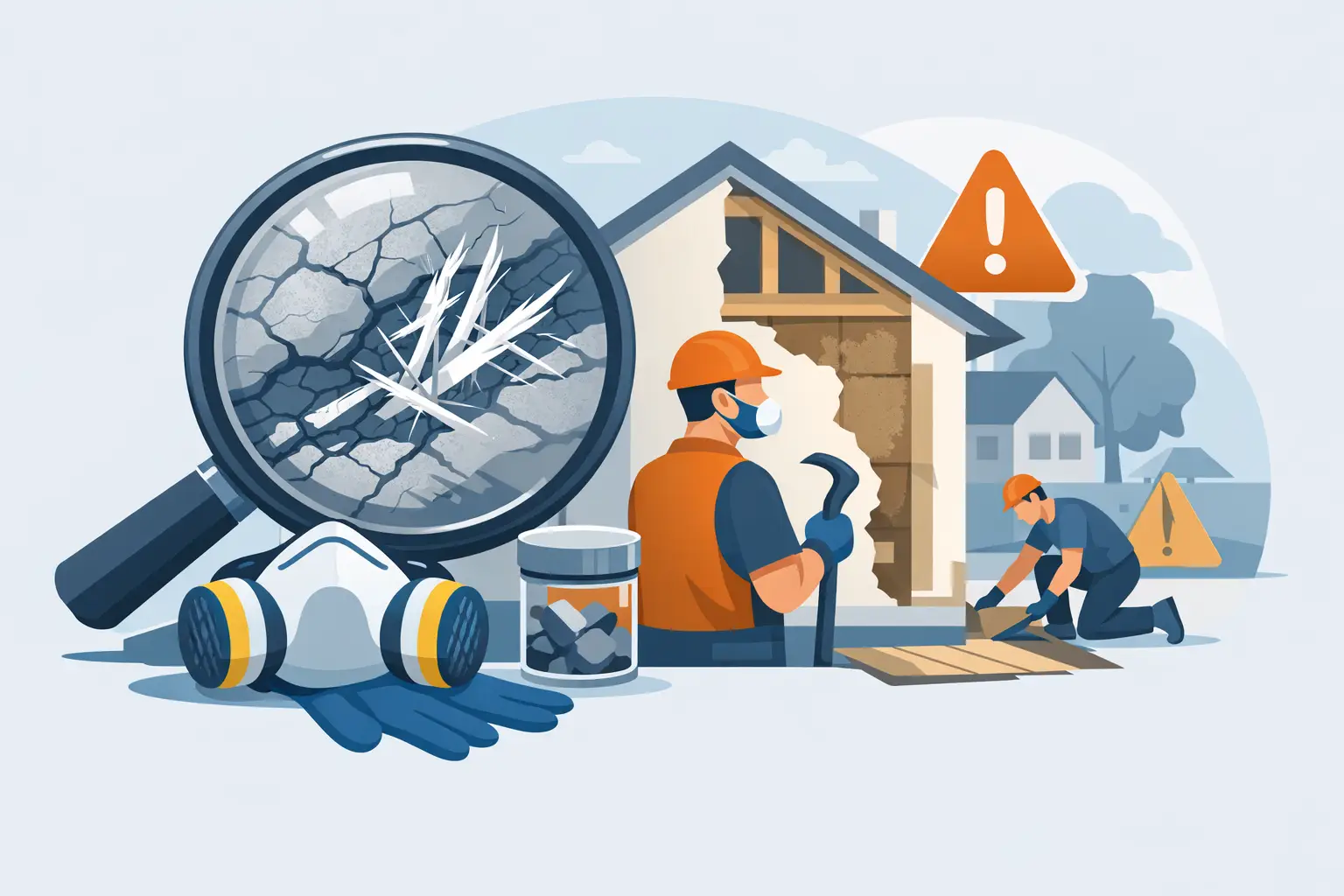
A renovation can turn a quiet asbestos issue into an airborne exposure problem in minutes. Cutting into an old ceiling texture, removing vinyl flooring, opening pipe insulation, or drilling through drywall can disturb fibers that were previously contained. That is why learning how to check asbestos risk starts with one rule: do not disturb suspicious materials to find out what they contain.
Asbestos cannot be identified by sight alone. A professional assessment and laboratory analysis are the only reliable ways to confirm it. Still, homeowners, landlords, property managers, and business owners can recognize warning signs, secure the area, and make informed decisions before work begins.
How to Check Asbestos Risk in a Building
The first question is not, “Does this look like asbestos?” It is, “Could this material contain asbestos, and will it be disturbed?” Risk depends on both the likelihood that asbestos is present and the condition of the material.
Asbestos was widely used in residential and commercial construction for insulation, fire resistance, strength, and heat protection. It may be found in many older buildings, particularly those built before the 1980s. However, age alone does not confirm asbestos. Some materials continued to be sold or installed later, and a newer property may contain older replacement materials.
Start by reviewing the building’s age, renovation history, maintenance records, and any previous environmental reports. If an asbestos survey was completed before, it may identify known asbestos-containing materials and their locations. Do not assume an old report covers every area, especially if the property has been renovated or if the upcoming project involves spaces that were not previously inspected.
Next, consider what work is planned. Asbestos-containing material that is intact and left undisturbed may present far less immediate risk than damaged material that will be sanded, cut, scraped, drilled, demolished, or removed. Renovation, water damage, aging materials, and HVAC repairs are common moments when hidden asbestos becomes a serious concern.
Materials That Deserve Professional Attention
A visual review can help identify materials that should be assessed, but it cannot confirm asbestos content. Avoid touching, peeling, scraping, or breaking pieces off for inspection.
Common materials that may require testing include:
- Pipe, boiler, furnace, and duct insulation
- Sprayed-on ceiling or fireproofing materials
- Textured ceilings and wall coatings
- Vinyl sheet flooring, vinyl tiles, and the adhesive beneath them
- Cement siding, roofing materials, and corrugated panels
- Drywall joint compound, plaster, and patching materials
- Older acoustic ceiling tiles and insulation around recessed lighting
- Fire doors, gaskets, electrical insulation, and certain window compounds
Friable materials deserve particular caution. “Friable” means a material can be crumbled or reduced to powder by hand pressure when dry. Damaged pipe wrap, deteriorating thermal insulation, and crumbling sprayed coatings can release fibers more easily than solid materials such as intact vinyl tile or cement board.
Non-friable material is not automatically safe to remove. Cutting, grinding, sanding, or breaking it can turn a lower-risk product into a fiber-release hazard. The planned activity matters as much as the material itself.
Know the Warning Signs of a Higher-Risk Situation
Certain conditions call for fast professional guidance. A damaged ceiling texture after a leak, broken pipe insulation in a mechanical room, crumbling insulation around an old boiler, or debris created during an unplanned demolition should not be treated as an ordinary cleanup job.
The risk is also higher when contamination may spread beyond the original location. For example, asbestos debris near return-air vents, in occupied hallways, inside rental units, or around shared commercial spaces can affect more people and make containment more complex.
If you see dust or debris from a potentially asbestos-containing material, stop work. Keep people and pets away from the area, avoid sweeping or vacuuming with a standard household vacuum, and do not use fans that could move particles through the building. Close the area off if you can do so without disturbing the material further.
Why DIY Sampling Can Create the Problem
It is tempting to collect a small sample and send it to a lab. But sampling can release fibers if it is performed without proper controls. A piece may need to be cut from an inaccessible location, and a poor sampling method can contaminate nearby surfaces, clothing, or air pathways.
Professional asbestos inspectors use controlled sampling procedures designed to minimize disturbance. They identify representative materials, collect samples carefully, package them properly, and send them for laboratory analysis. Just as important, they document where the samples came from and explain what the results mean for the planned work.
A lab result only answers whether the specific sample contains asbestos. A proper assessment also considers material condition, accessibility, quantity, potential for disturbance, and occupancy. Those details determine whether the best next step is management in place, repair, enclosure, or removal.
What a Professional Asbestos Assessment Should Include
A thorough inspection is more than a walk-through with a flashlight. The inspector should review accessible areas related to your project or concern, including utility rooms, basements, attics, ceiling cavities, flooring transitions, and areas affected by water damage when appropriate.
The process generally begins with a discussion of the property’s age, planned renovation scope, known damage, and occupant concerns. The inspector then identifies suspect materials and determines where sampling is warranted. Samples are analyzed by an accredited laboratory, and the findings are used to guide a safe work plan.
For larger properties or commercial projects, an asbestos survey may need to be more extensive. The scope depends on whether the work is limited maintenance, a targeted repair, a full renovation, or demolition. Testing only one material in one room may not be enough when contractors will disturb multiple building systems.
A clear report should identify the material tested, its location, the laboratory result, and recommended precautions. If asbestos is confirmed, the report should help you decide whether to leave the material undisturbed, repair it, enclose it, or arrange certified abatement before other work starts.
What to Do While You Wait for Results
If the material is intact and there is no planned disturbance, the safest short-term option is often to leave it alone. Mark the area in your maintenance records so future contractors know it requires caution. Do not cover a suspected issue with a quick renovation fix if that means workers may later drill or cut into it without knowing what is behind the surface.
If the material is damaged, restrict access and postpone nonessential work. Tell contractors, tenants, maintenance personnel, and anyone else who could enter the area that testing is underway. Clear communication prevents accidental disturbance.
For a commercial property, document the condition and access restrictions. This protects occupants and gives your maintenance team a clear process to follow. For rental properties, prompt action also helps address tenant concerns responsibly while maintaining a safe environment.
When Removal Is Needed
Asbestos does not always need to be removed. Intact material in good condition may sometimes be managed safely in place, especially when it is unlikely to be disturbed. Removal becomes more likely when the material is deteriorating, accessible to occupants, affected by water damage, or located in an area scheduled for renovation or demolition.
The right approach depends on the type and amount of material, its condition, the building layout, and the work required. Professional abatement typically involves isolating the work zone, using containment barriers and negative air pressure, wearing appropriate protective equipment, and using HEPA-filtered cleanup methods. These controls are designed to prevent fibers from spreading into occupied areas.
After removal or disturbance work, clearance procedures may be appropriate before the area is returned to normal use. This can include a detailed visual inspection and, where required or appropriate, air testing. A clean-looking room is not the same as a properly controlled and verified work area.
Avoid These Common Mistakes
The most costly mistake is beginning renovation before testing suspect materials. Stopping a project after demolition has already started can increase cleanup costs, delay schedules, and expose workers or occupants unnecessarily.
Another mistake is relying on appearance, online photos, or a contractor’s guess. Many asbestos-containing materials resemble ordinary products, while some non-asbestos materials look suspicious. Only laboratory analysis can confirm the presence of asbestos.
Finally, do not treat asbestos debris like normal construction waste. Bagging, disposal, transport, and work practices may be subject to local requirements. Certified asbestos professionals understand the containment and disposal steps needed to protect the property and the people in it.
If you are planning work in an older home, rental building, office, retail space, or industrial property, schedule an assessment before the first wall is opened or floor is removed. A careful inspection is a practical way to protect occupants, avoid project disruption, and move forward with confidence.