


A musty odor is rarely just a cleaning problem. In a basement, bathroom, rental unit, office, or storage area, that stale, earthy smell often signals lingering moisture and possible microbial growth behind finishes, under flooring, or inside HVAC components. Knowing how to eliminate musty odors means removing the conditions causing the smell, not masking it with air fresheners.
For property owners, acting early can limit material damage, prevent a small moisture issue from becoming a mold remediation project, and help protect indoor air quality. If the odor returns after cleaning or becomes stronger when windows are closed, treat it as a warning that deserves a closer look.
Why a Musty Odor Develops
Musty odors commonly develop when moisture stays trapped long enough for mold, mildew, bacteria, or organic material to break down. Mold spores are naturally present indoors and outdoors, but they need moisture and a food source – such as drywall paper, wood framing, carpet backing, dust, or fabric – to grow.
The source is not always visible. A slow plumbing leak behind a vanity, condensation around a window, a damp concrete wall, a roof leak, or a flood that was not fully dried can create odor without producing obvious surface mold. In commercial settings, the same issue can occur above suspended ceilings, around mechanical rooms, beneath carpeting, or in poorly ventilated washrooms.
Humidity also plays a role. Relative humidity that remains above about 60% can encourage mold growth, especially in basements and other cool areas. The smell may become more noticeable after rain, during humid weather, or when heating and air conditioning systems begin circulating air.
How to Eliminate Musty Odors Without Covering Them Up
Start by locating the moisture source. Cleaning the room before solving a leak, drainage problem, or humidity issue may improve the smell briefly, but it will not deliver a lasting result. Check for recent water events, plumbing drips, wet insulation, staining, peeling paint, warped flooring, condensation, and damp materials.
Pay attention to where the odor is strongest. A smell concentrated near a floor drain may point to a dry or dirty drain trap. Odor around a window can indicate condensation or water intrusion. A persistent smell from one wall, closet, or section of carpet can suggest moisture concealed behind or beneath the finished surface.
Once you identify the cause, stop the water or humidity problem first. Repair leaks, clear blocked drainage where appropriate, improve exterior water management, and address poor ventilation. In a bathroom, use an exhaust fan during showers and allow it to run afterward. In a basement, a properly sized dehumidifier may be needed during humid months. The goal is to dry the area thoroughly, not simply make it feel less damp.
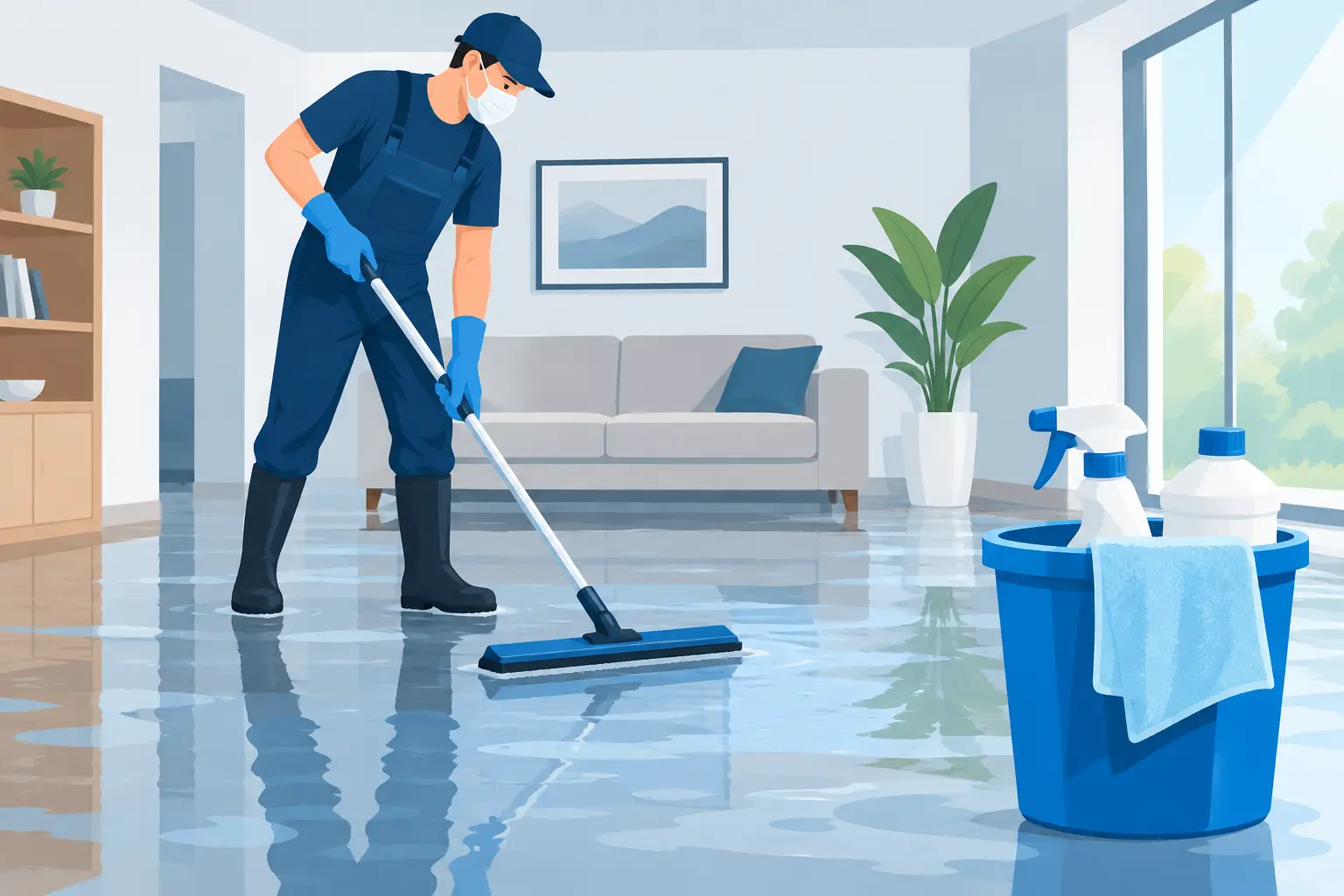
Dry wet materials quickly
Time matters after a spill, leak, or flooding event. Porous materials such as drywall, insulation, particleboard, carpet padding, and upholstered furniture can retain moisture long after their surface feels dry. If these materials cannot be dried promptly and completely, they may need to be removed.
Use fans and dehumidification only after the active water source is controlled. If visible mold is present, avoid directing strong airflow across contaminated materials because it can disturb spores and spread them to other areas. A moisture meter and thermal imaging can help determine whether walls, floors, and cavities are truly dry rather than merely dry to the touch.
Clean hard surfaces properly
For a small area of light surface growth on a nonporous material, cleaning may be appropriate. Wear gloves, eye protection, and a properly fitted respiratory mask. Clean the surface using a suitable detergent or mold-cleaning product, then dry it fully. Do not rely on fragrance sprays, scented candles, or odor absorbers as a substitute for cleaning and moisture control.
Bleach is often misunderstood. It may discolor or sanitize some hard, nonporous surfaces, but it does not correct hidden moisture, and it is not a reliable solution for porous materials. It can also create irritating fumes when used improperly. Never mix bleach with ammonia or other cleaners.
Remove materials that cannot be restored
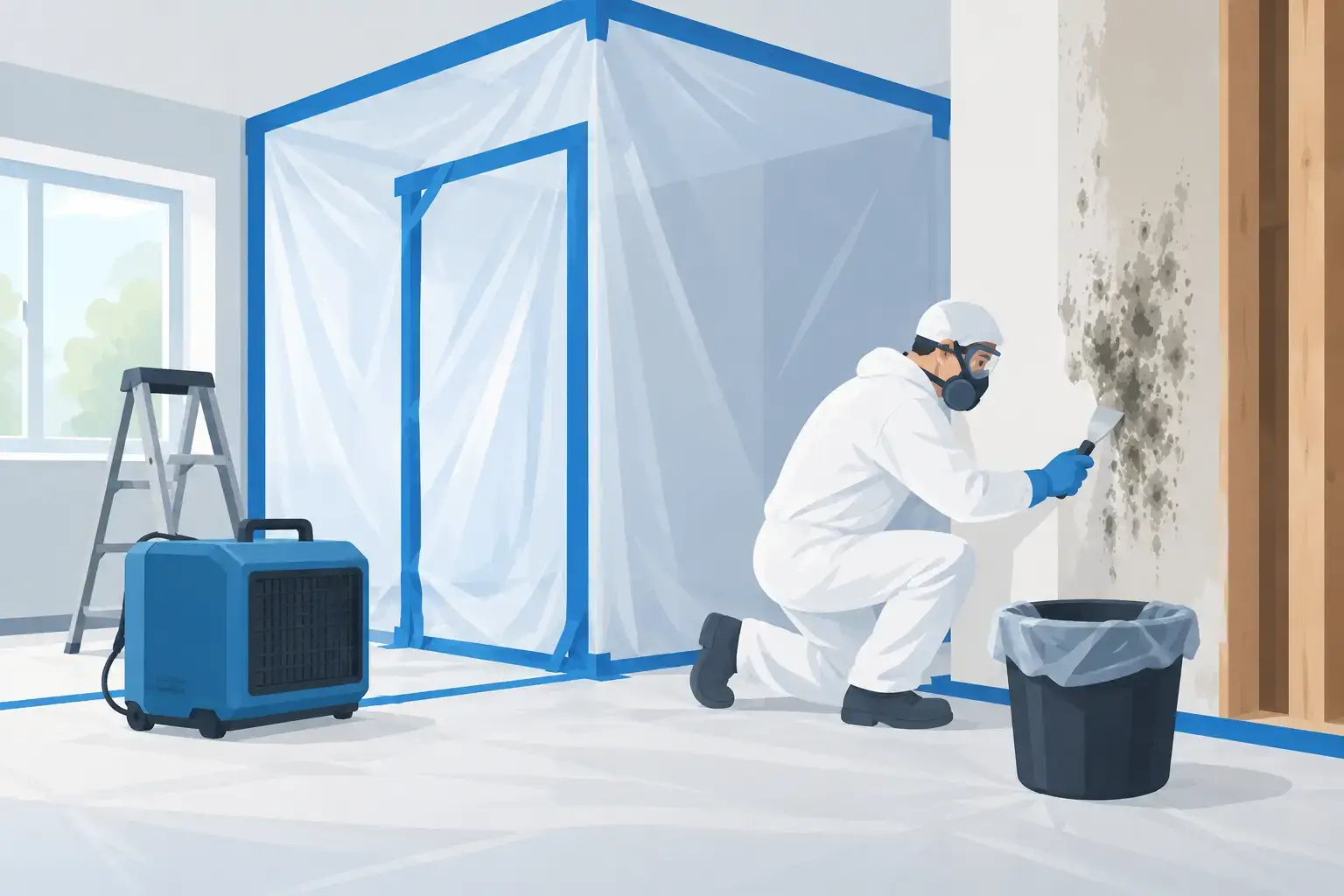
Some materials hold contamination too deeply to clean effectively. Mold-affected carpet padding, wet insulation, heavily damaged drywall, ceiling tiles, and particleboard may need controlled removal. The decision depends on the amount of contamination, the material involved, the duration of moisture exposure, and whether the area has dried.
This is where do-it-yourself work has limits. Removing damaged building materials can release spores and dust into adjacent rooms if the area is not contained. Professional remediation teams use containment barriers, negative air pressure, HEPA air filtration, and detailed cleaning procedures to prevent cross-contamination during removal.
Check the Overlooked Sources of Musty Smells
Not every musty smell is caused by a large mold problem, but every persistent odor should be investigated. A few common sources are easy to miss.
HVAC systems can circulate odors from a damp filter, dirty evaporator coil, condensate drain issue, or mold growth near ductwork. Replace filters on schedule and have a qualified HVAC professional inspect components when the odor appears only while the system is running.
Floor drains can release sewer-like or musty smells when the trap dries out. In an infrequently used basement drain, adding water may restore the trap seal. If the odor continues, the drain may require cleaning or plumbing assessment.
Stored belongings can also hold odors after a flood or chronic humidity exposure. Cardboard boxes, books, clothing, and upholstered items may need cleaning, laundering, or disposal depending on the extent of contamination. Do not move damp belongings into a clean room until they have been evaluated and dried.
When a Musty Odor Requires a Mold Inspection
A professional inspection is the prudent next step when the odor persists despite cleaning and drying, returns repeatedly, or has no clear source. It is especially important after flooding, a sewage backup, a roof or plumbing leak, or long-term basement dampness.
Property owners should also seek help when they see visible mold over a significant area, notice soft or swollen drywall, find water staining, or receive recurring tenant or employee complaints. Individuals with asthma, allergies, respiratory sensitivities, or weakened immune systems may be more affected by poor indoor air conditions, although odor alone cannot determine a specific health risk.
A thorough inspection goes beyond a visual walk-through. Certified professionals may use moisture meters, thermal imaging, borescopes, and indoor air quality testing when appropriate to identify concealed moisture and assess the affected environment. The findings should guide a targeted remediation plan rather than a guess based on odor alone.
Prevent Musty Odors From Returning
Long-term prevention depends on controlling water and humidity. Keep indoor humidity in a reasonable range, maintain bathroom and kitchen ventilation, inspect plumbing connections, and address roof or foundation water entry promptly. After a major water event, document the damage and begin drying as soon as it is safe to do so.
For landlords and property managers, recurring odor complaints should be documented and investigated promptly. A musty smell can affect tenant confidence, lead to disputes, and signal a maintenance issue that will become more expensive if ignored. For business owners, the same concern applies to employee comfort, customer perception, and continuity of operations.
Mold Removal Remediation approaches musty odor concerns by identifying the moisture source, containing affected areas when necessary, removing contaminated materials safely, and verifying that the environment is dry and clean. That process is more dependable than treating the symptom with a fragrance or a surface wipe.
A clean-smelling property should not depend on perfumes or constant deodorizing. When the source of moisture is corrected and affected materials are properly addressed, the air should smell neutral again – and the space can return to being a safer, more comfortable place to live or work.