

A mold smell after cleanup is frustrating for a simple reason: you have already done the work, removed what you could see, and expected the room to feel normal again. When the musty odor stays behind, it can mean the affected material was not completely dry, the moisture source is still active, or mold growth remains somewhere out of sight. For homeowners, landlords, and business owners, that smell is a signal worth investigating rather than covering with air freshener.
What a Musty Smell After Mold Cleanup Usually Means
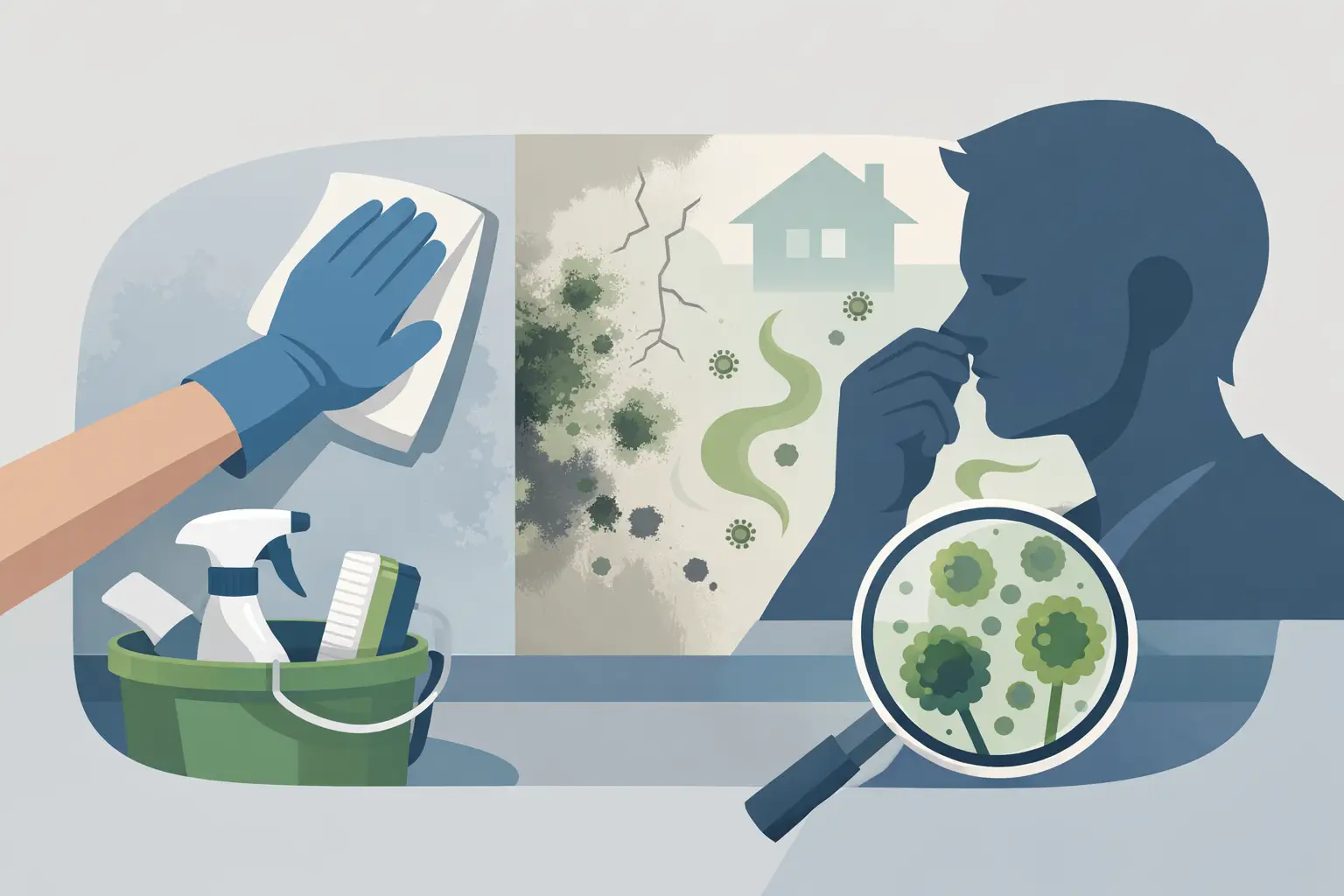
Mold produces microbial volatile organic compounds, often called MVOCs. These gases can create the familiar earthy, damp, or musty odor associated with mold growth. Cleaning visible mold may reduce the smell, but odors can linger if spores, mold fragments, or contaminated porous materials remain in the area.
The odor does not always prove that active mold is growing. A recently cleaned basement, bathroom, or crawl space may continue to smell damp while building materials dry. However, an odor that remains for more than a few days, returns after rain or humidity, or becomes stronger when the HVAC system runs should be treated as a potential moisture or hidden-contamination problem.
A surface can look clean while the material behind it remains wet. Drywall, insulation, carpet padding, wood framing, ceiling cavities, and HVAC components can all retain moisture and odor. This is why wiping, spraying, or painting over the visible area is not the same as complete mold remediation.
Why the Smell May Return After Cleanup
The most common reason is that the original water source was never fully corrected. A slow plumbing leak, foundation seepage, roof leak, condensation on cold pipes, poor bathroom ventilation, or elevated basement humidity can keep feeding mold growth after the initial cleanup.
Hidden mold is another frequent cause. Mold often develops behind baseboards, under flooring, inside wall cavities, above ceiling tiles, or around window frames where condensation collects. If only the visible portion was cleaned, the concealed area can continue releasing odor.
Porous materials may also be the issue. Carpet, padding, insulation, particleboard, untreated drywall, and upholstered items can absorb contaminated water and mold-related odors. Depending on the extent of damage and the material involved, cleaning may not be enough. Removal and replacement can be the safer long-term option.
Finally, the odor may be circulating from another location. A contaminated air handler, evaporator coil, drain pan, return vent, or poorly maintained filter can distribute a musty smell far beyond the original problem area. This is especially common in commercial properties and multi-unit buildings, where the source may not be in the room where occupants notice the odor.
When a Mold Smell After Cleanup Needs Professional Attention
A brief residual odor after a small, promptly dried spill is different from a persistent odor after water damage or visible growth. The following signs support arranging a professional inspection:
- The smell remains longer than several days after cleaning and drying.
- The odor returns during humid weather, after rainfall, or when heating or cooling starts.
- Drywall feels soft, paint is bubbling, floors are warped, or stains are spreading.
- There has been a flood, sewage backup, roof leak, plumbing failure, or repeated condensation.
- Occupants report recurring coughing, eye irritation, nasal symptoms, headaches, or asthma flare-ups in the affected area.
- The property is a rental, office, school, retail space, or other environment where indoor air concerns can affect multiple people.
These symptoms do not identify mold on their own, and not every musty odor creates the same health risk. Still, they justify finding the source quickly. Delays can allow moisture damage to spread into structural materials and increase the scope and cost of remediation.
What a Proper Inspection Should Look For
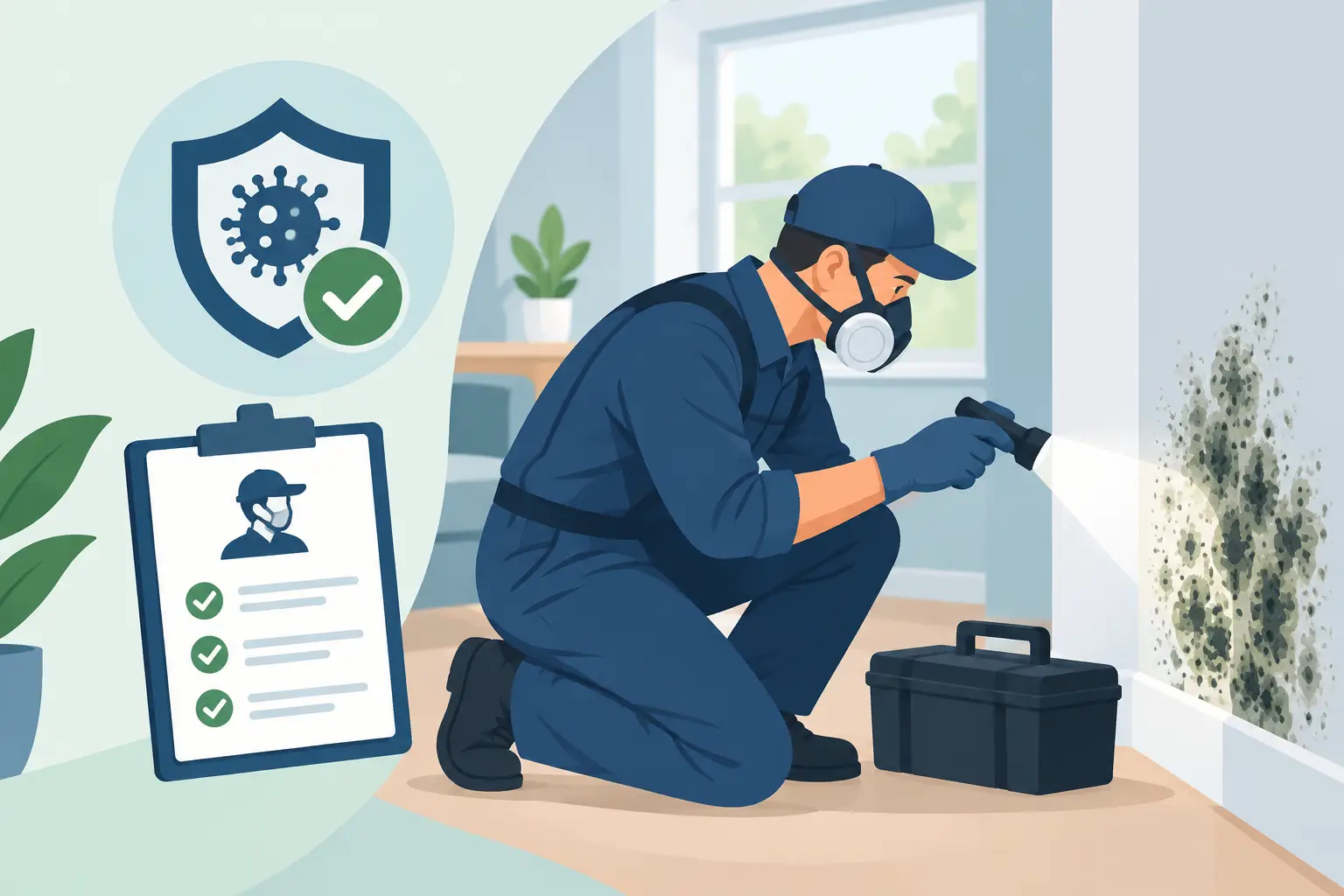
A reliable mold assessment begins with the building conditions, not just the smell. An experienced inspector should ask about recent leaks, flooding, repair history, ventilation, humidity patterns, and when the odor is strongest. That information helps narrow down where moisture is likely entering or being trapped.
Moisture meters can identify elevated moisture in drywall, wood, and flooring. Thermal imaging may reveal temperature differences that suggest wet insulation, plumbing leaks, or condensation behind finished surfaces. These tools do not replace direct investigation, but they help avoid unnecessary demolition and focus the inspection on the most likely areas.
When conditions warrant it, air quality testing or surface sampling can provide another layer of information. Testing is particularly useful when contamination is suspected in concealed areas, when occupants have concerns about air quality, or when a property owner needs documentation after remediation. Results should be interpreted alongside the inspection findings, because no single air sample can tell the complete story of a building.
For Toronto and GTA properties, seasonal temperature shifts can make these issues more noticeable. Cold exterior surfaces, humid summer weather, basement dampness, and winter condensation can all create conditions that allow odors and microbial growth to return.
Why Deodorizers and Bleach Often Do Not Solve the Problem
Air fresheners, odor absorbers, and scented cleaners may make a room more tolerable for a few hours, but they do not remove moisture or contamination. They can also make it harder to notice whether the problem is getting worse.
Bleach is often used with good intentions, yet it has limits. It may clean some nonporous surfaces when used correctly, but it does not reliably penetrate porous materials such as drywall, unfinished wood, or carpet padding. It can also leave moisture behind if surfaces are not dried properly. Mixing bleach with other cleaners is dangerous and should never be done.
Painting over odor-stained walls is another temporary fix that can fail. If the wall cavity is still damp or mold remains behind the drywall, paint may peel, stains can reappear, and the musty smell can return. The underlying source must be corrected before repairs and finishing work begin.
The Remediation Steps That Stop Odors at the Source
Effective remediation follows a controlled process. First, the moisture source must be identified and corrected. That may involve plumbing repair, roof repair, drainage improvements, ventilation changes, or humidity control. Without this step, removal work cannot provide lasting results.
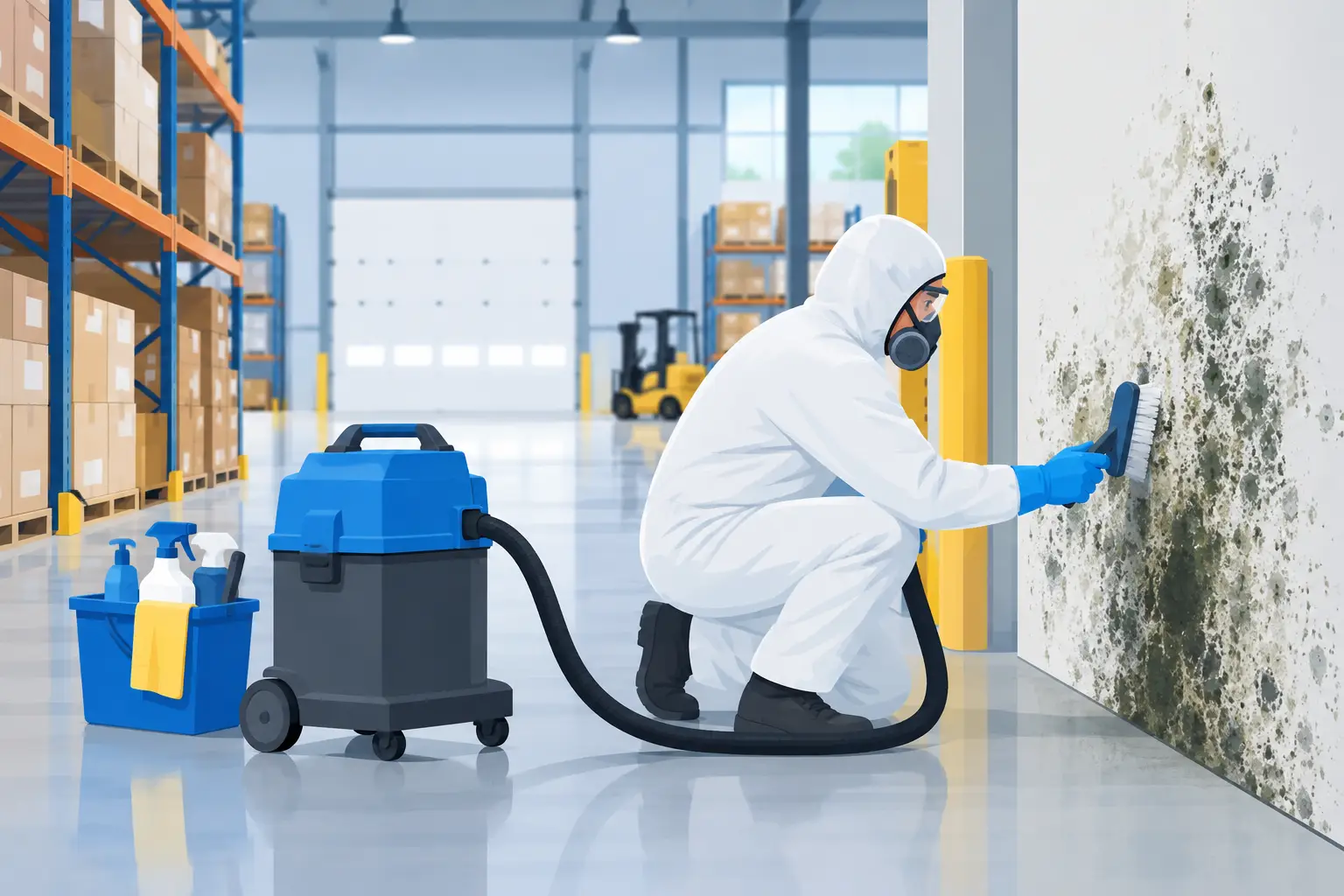
Next, affected areas are contained so mold fragments and dust do not spread into clean parts of the property. Certified remediation teams commonly use physical containment, negative air pressure, and HEPA-filtered air scrubbers when the scope of work requires it. Materials that cannot be safely cleaned are removed under controlled conditions.
Remaining surfaces are detailed cleaned using appropriate methods, then dried to acceptable moisture levels. HEPA vacuuming is used to capture fine particulate that ordinary household vacuums can recirculate. The final step is not simply making the space look clean. It is confirming that the area is dry, the source has been addressed, and the property can be safely restored.
In larger projects, post-remediation verification can add confidence before containment is removed or rebuilding begins. This may include a visual inspection, moisture readings, and, when appropriate, air quality testing. The right approach depends on the size of the affected area, the type of contamination, and the sensitivity of the occupants or facility.
What You Can Do While Waiting for an Inspection
If you notice a musty smell, keep the area as dry as possible. Run bathroom or kitchen exhaust fans, use a properly sized dehumidifier in damp spaces, and avoid storing boxes, fabrics, or furniture directly against a suspected wall. If there is an active leak, shut off water if it is safe to do so and arrange for the repair promptly.
Do not open walls, remove large areas of moldy drywall, or disturb insulation without proper containment and protection. Disturbing contaminated materials can spread particles into other rooms. For a small surface area on a nonporous material, careful cleaning and complete drying may be reasonable. For recurring odors, water-damaged building materials, or contamination beyond a small isolated area, a certified assessment is the safer decision.
A persistent smell is not something you need to guess about. A focused moisture and mold inspection can show whether the issue is residual dampness, an HVAC concern, hidden contamination, or a leak that has not yet become visible. Acting while the odor is still the main warning sign can protect indoor air, limit property damage, and give occupants peace of mind.