

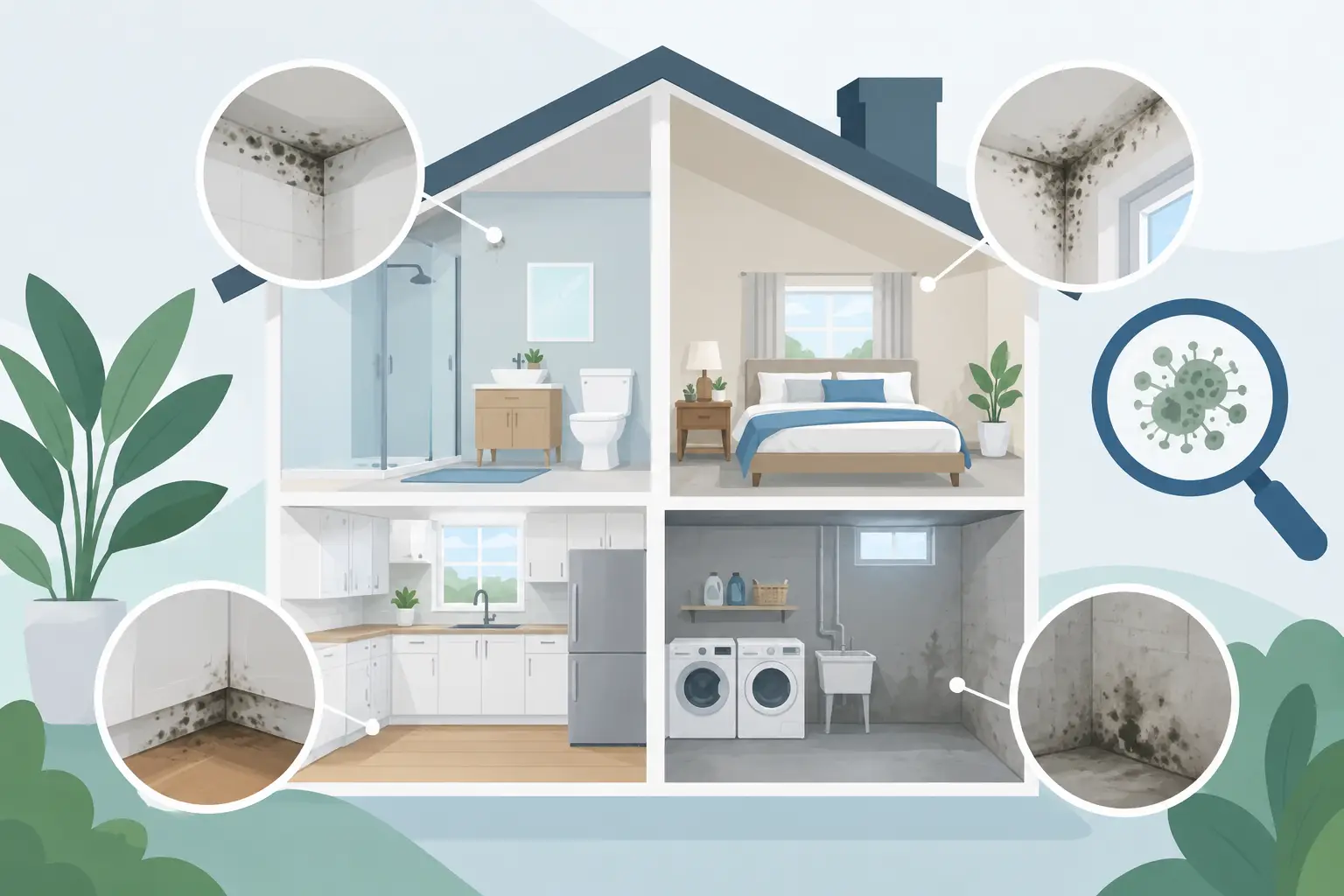
A musty smell after a shower, a dark mark near a basement baseboard, or peeling paint below a window can point to more than a cosmetic problem. The top mold prone home areas are usually the places where moisture enters, lingers, or condenses without being noticed. Because mold can grow behind finishes and inside building cavities, the visible patch is not always the full extent of contamination.
For homeowners, landlords, and property managers, knowing where mold commonly develops makes it easier to act before damage spreads to drywall, flooring, insulation, or indoor air. The goal is not to panic over every spot of discoloration. It is to identify the moisture source, determine how far the affected area extends, and correct the conditions that allowed mold to grow.
The Top Mold-Prone Areas in a Home
Basements and crawl spaces
Basements are among the most common locations for mold because they sit below grade, receive less airflow, and are vulnerable to water intrusion. Foundation cracks, poor exterior drainage, plumbing leaks, sump pump failures, and humid summer air can all raise moisture levels. In colder climates, warm indoor air can also condense on cool foundation walls and pipes.
Look closely along baseboards, behind stored boxes, around finished walls, beneath carpeting, and near floor drains. A finished basement may conceal a significant problem behind drywall or paneling long before mold becomes visible. If a basement smells earthy or musty despite regular cleaning, moisture testing and thermal imaging can help locate hidden damp materials.
Crawl spaces have similar risks, especially when the ground is exposed, vapor barriers are damaged, vents are inadequate, or plumbing lines sweat. Since these spaces are rarely inspected, mold growth can continue for months without attention.
Bathrooms and shower surrounds
Bathrooms produce moisture every day. Steam from showers, wet towels, splashing water, and inadequate exhaust ventilation create the right conditions for mold on caulking, grout, ceilings, drywall, and cabinetry. Small failures around tubs and shower enclosures are especially concerning because water can leak into the wall cavity or subfloor.
Surface mold on grout may be limited to a cleaning and ventilation issue. However, soft drywall, cracked caulk, loose tiles, staining on the ceiling below, or a persistent odor can indicate water damage behind the finished surface. Replacing caulk without investigating an active leak may only hide the problem temporarily.
Run the bathroom fan during bathing and allow it to continue afterward. If the room stays damp for a long time, the fan may be undersized, blocked, or venting improperly. A fan that simply recirculates air will not remove moisture from the home.
Kitchens and areas around appliances
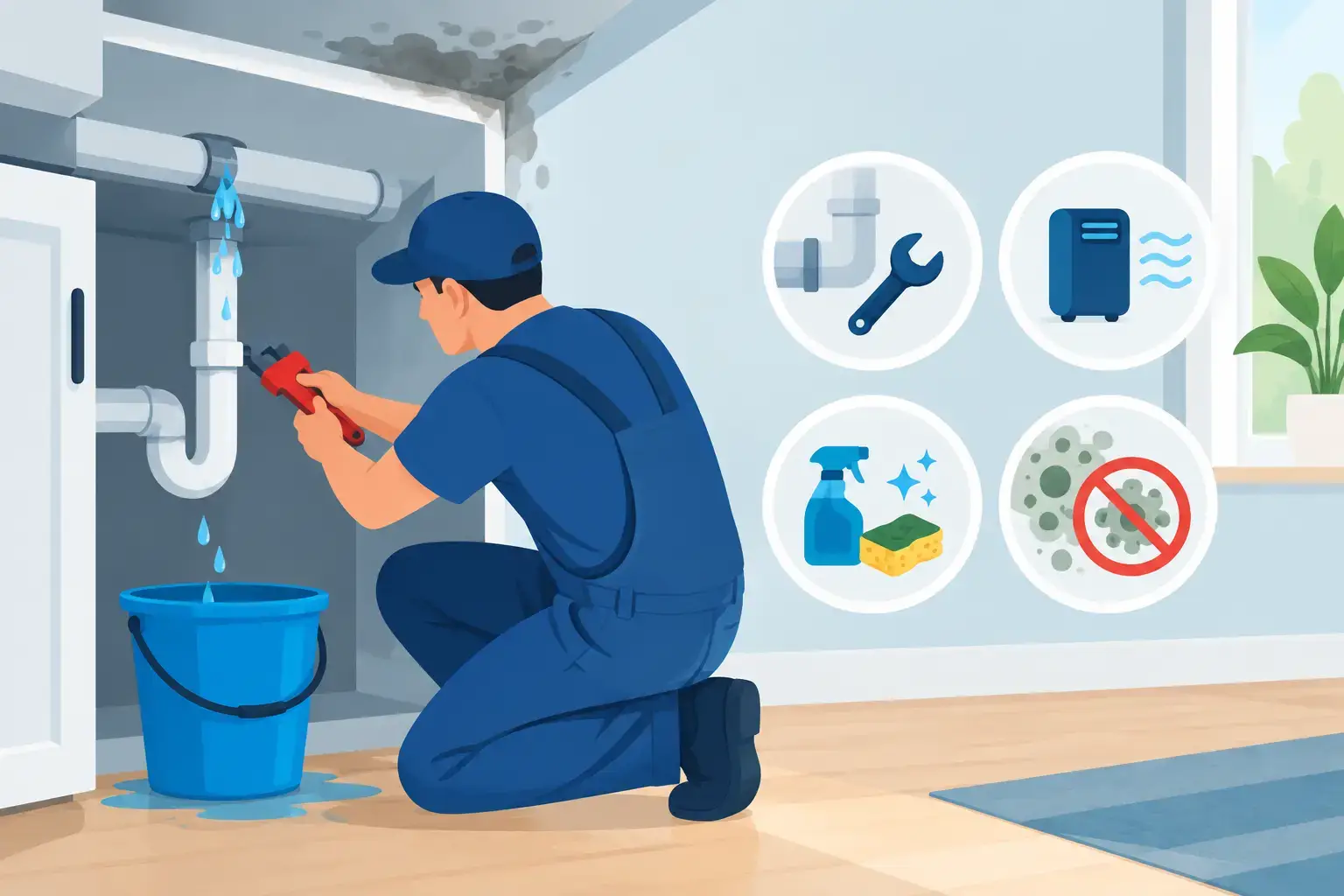
Kitchen mold often begins quietly. A slow leak under the sink, a loose dishwasher connection, a refrigerator water line issue, or moisture behind a range hood can wet cabinets and flooring without creating an immediate puddle. By the time staining or warping appears, the materials underneath may have been damp for an extended period.
Check beneath sinks and around the dishwasher regularly, particularly after plumbing work or appliance replacement. Swollen cabinet bottoms, loose flooring, darkened wood, and a stale odor are all reasons to investigate further. In multi-unit properties, a leak from an upper unit can also affect kitchen ceilings and walls below.
Laundry rooms deserve the same attention. Washing machine supply hoses, drain lines, utility sinks, and dryer vent problems can create high humidity or direct water damage. A dryer that vents indoors or has a disconnected duct adds moisture to the building and can contribute to mold in adjacent spaces.
Attics, roofs, and upper-level ceilings
A roof leak does not always produce a dramatic ceiling stain. Water can travel along framing, insulation, wiring, or vapor barriers before it becomes visible. Attics are also susceptible to condensation when warm, humid air from the home enters through gaps around light fixtures, bathroom fans, attic hatches, or ductwork.
Watch for damp insulation, discolored roof sheathing, rusty nails, mold on rafters, or an attic odor that becomes stronger after rain. Bathroom exhaust ducts that end in the attic rather than outdoors are a common and preventable source of moisture damage.
Attic mold is not always caused by a roof failure. It may result from poor ventilation or air leakage from the living space below. That distinction matters because roof repairs alone will not solve a condensation problem. A proper inspection should identify whether water is entering from outside, accumulating from indoor humidity, or both.
Windows, exterior walls, and closets
Condensation around windows can seem minor, but repeated moisture on frames, sills, and surrounding drywall can support mold growth. This is common when indoor humidity is high, windows are poorly insulated, or airflow is restricted by heavy coverings. Water may also enter through failed caulking, damaged siding, roof flashing, or cracks in exterior finishes.
Exterior-wall mold can remain hidden behind furniture, especially large dressers, sofas, and beds placed tightly against cold walls. Closets are another concern because they often have limited circulation and may hold damp coats, shoes, or stored items. If one area of a wall feels unusually cold or damp, professional moisture readings can help distinguish condensation from a plumbing or exterior water intrusion issue.
HVAC systems and utility rooms
Heating and cooling equipment can spread odors and airborne particles through a property when mold develops in or near the system. Condensate pans, drain lines, humidifiers, poorly insulated ducts, and air handlers are all potential moisture sources. Dirty filters do not cause mold on their own, but restricted airflow and neglected drainage can contribute to conditions that support growth.
Utility rooms may also contain water heaters, furnaces, plumbing manifolds, and drain lines. These areas are often overlooked until a leak becomes serious. Inspect for corrosion, damp flooring, condensation on pipes, and staining around equipment. If occupants experience persistent odors or symptoms that seem worse when the HVAC system is operating, indoor air quality testing may be appropriate.
Warning Signs That Deserve More Than a Wipe-Down
Not every dark spot is mold, and not every mold issue requires major demolition. Still, certain signs should prompt a closer inspection: a recurring musty odor, visible growth that returns after cleaning, bubbling paint, warped flooring, water stains, soft drywall, or symptoms following a leak or flood.
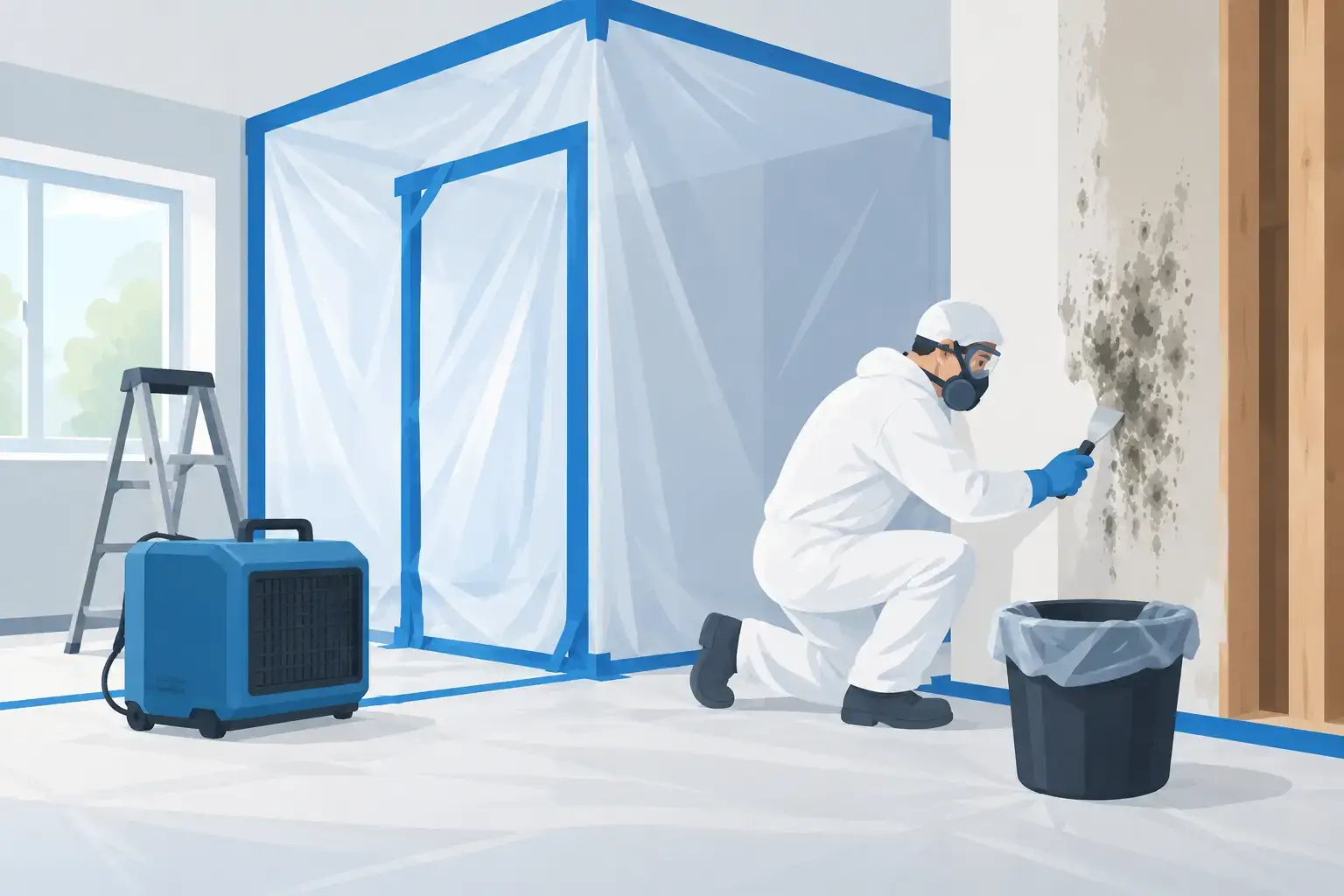
The size and location of the affected area matter. Mold in a small, accessible area with no continuing moisture may be manageable after the source is corrected. Mold following sewage backup, extensive flooding, or long-term water damage requires more controlled handling. Disturbing contaminated drywall or insulation can release particles into other rooms, particularly when no containment or HEPA air filtration is used.
People with asthma, allergies, compromised immune systems, or respiratory sensitivities may be more affected by poor indoor air conditions. A property should be assessed based on its moisture history, materials, occupancy, and contamination level rather than appearance alone.
Why Finding the Moisture Source Comes First
Bleach, paint, deodorizer, and surface cleaning can make mold less visible, but they do not repair a hidden leak or dry saturated building materials. Effective remediation begins with inspection: identifying moisture, determining where contamination has spread, and establishing whether affected materials can be cleaned or must be removed.
A qualified remediation process may include moisture meter readings, thermal imaging, controlled containment, negative air pressure, HEPA filtration, removal of contaminated porous materials, detailed cleaning, and post-remediation air quality testing when appropriate. The exact scope depends on the cause and extent of damage. A small bathroom issue is handled differently from mold behind a finished basement wall after repeated flooding.
For landlords and property managers, documentation is also valuable. It provides a clear record of the reported issue, the source of moisture, the work completed, and the steps taken to return the space to a safe, dry condition.
When to Call a Mold Professional
Professional help is recommended when mold keeps returning, the source of water is unclear, damage is inside walls or ceilings, the affected area is extensive, or occupants report health concerns. Fast action is particularly important after a plumbing leak, roof leak, flood, or sewage-related event.
A certified inspection can prevent unnecessary demolition while ensuring hidden contamination is not missed. The most useful next step is often a focused assessment of the area, not a guess based solely on what can be seen. Addressing moisture early protects the building, improves indoor conditions, and gives everyone in the property a clearer path forward.