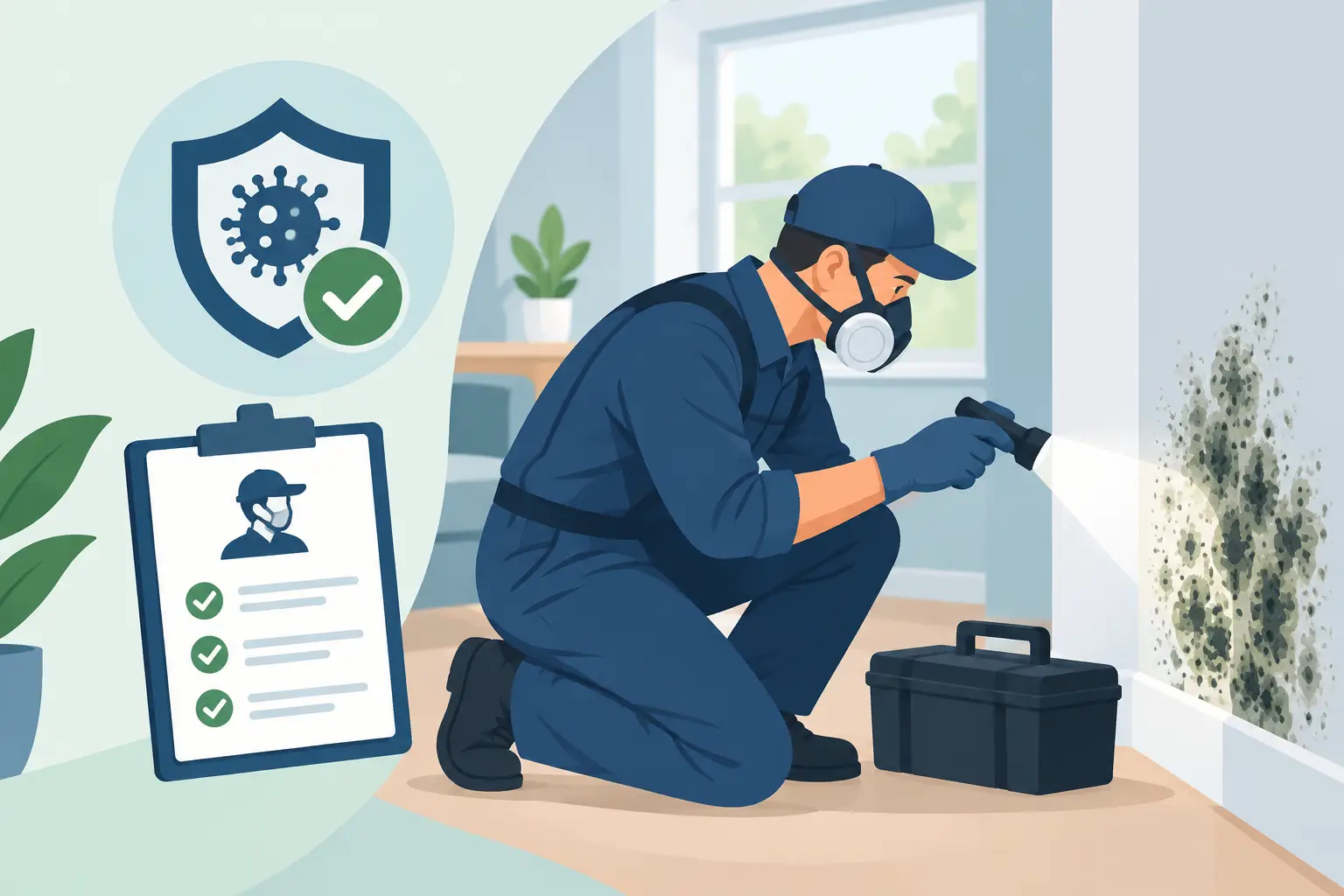



A tenant reports a musty odor after a plumbing leak. An employee develops respiratory symptoms near a water-damaged wall. A buyer’s inspection identifies mold in an attic. In each case, mold regulations can affect what happens next, but there is rarely one simple rule that applies everywhere.
For U.S. property owners, the central challenge is that mold oversight is spread across state landlord-tenant laws, local housing and building codes, workplace safety requirements, insurance conditions, and contract obligations. The absence of a single federal residential mold law does not mean a mold problem can be ignored. It means the correct response depends on the property, the people affected, the extent of damage, and the rules that govern that location.
How Mold Regulations Work in the United States
There is no nationwide federal law that sets a permissible level of mold in homes or establishes one mandatory mold-remediation procedure for every building. Federal agencies provide health information and cleanup guidance, but much of that guidance is not a binding regulation for private residences.
State and local requirements fill much of the gap. Some states regulate mold assessors, remediation contractors, or both. Others require licensing only when projects exceed a defined size or involve specific types of work. Cities and counties may enforce housing standards requiring owners to correct leaks, dampness, visible fungal growth, damaged materials, or conditions that make a dwelling unfit for occupancy.
That distinction matters. A visible patch of mold is not always a code violation by itself, yet the water intrusion behind it may violate plumbing, maintenance, or habitability rules. A professional assessment should therefore focus on the moisture source and concealed impact, not just the surface growth.
For commercial properties, the picture can be more demanding. Employers have a duty to provide a workplace free from recognized serious hazards. If persistent moisture, indoor air concerns, or mold exposure may affect staff, a documented investigation and prompt corrective action are prudent steps. Employers may also need to coordinate with building management, occupational health personnel, and qualified remediation professionals.
Guidance Is Not Always Law, but It Still Matters
Professional standards often guide decisions even when they are not written into local law. The IICRC S520 Standard for Professional Mold Remediation is widely used to establish a methodical scope of work. It addresses source control, containment, removal of affected materials, cleaning, and post-remediation evaluation.
A standard is not automatically a legal requirement. However, it can become highly relevant in an insurance claim, dispute, property transaction, or negligence allegation. When the work is challenged later, documented adherence to recognized industry practices is far stronger than saying the area was simply sprayed or wiped down.
When Property Owners Must Act
The specific legal deadline varies, but delays create risk in nearly every setting. Mold can spread where moisture remains available, and wet building materials may deteriorate quickly. Property owners should respond immediately to active leaks, sewage backups, roof failures, flooding, recurring condensation, and HVAC moisture problems.
In rental housing, owners are generally responsible for maintaining habitable conditions, while tenants are usually responsible for promptly reporting leaks, spills, damaged fixtures, or signs of dampness. Responsibility can become more complicated when a tenant’s conduct contributes to excess moisture, such as failing to report a leak for weeks or blocking ventilation. Even then, the owner should investigate rather than assume the cause.
A thorough response begins with documentation. Record the date of the complaint or loss, the affected rooms, photos of visible conditions, moisture readings where available, repair invoices, communications with tenants or occupants, and the final remediation records. If a dispute develops, this timeline can show that the property was handled promptly and professionally.
Owners should also take care with notices and access. Rental laws often set rules for entering an occupied unit, providing notices, arranging repairs, and offering temporary accommodations when work makes part of the home unusable. Local legal counsel or a housing authority can clarify the rules that apply to a particular lease and jurisdiction.
Disclosure Rules During Sales and Leasing
Mold disclosure requirements are not uniform. Many states require sellers to disclose known material defects, water intrusion, past flooding, or prior mold damage. A seller who knows about a recurring basement leak or previous remediation should not assume that repainting the area ends the obligation to disclose it.
For landlords, lease disclosures may be required for certain environmental hazards in some jurisdictions, while general habitability obligations still apply even when no mold-specific form exists. Property managers should avoid making unsupported statements such as “the mold is gone” or “the air is safe” without evidence from the completed work and, when appropriate, post-remediation verification.
Buyers and tenants should understand the same principle from the other side. A musty odor, staining, bubbling paint, warped flooring, repeated water damage, or a recent fresh coat of paint around a leak-prone area justifies further investigation. Standard property inspections can identify warning signs, but they may not include detailed moisture mapping, air sampling, or invasive inspection behind finishes.
Workplace Mold Rules and Employer Duties
Workplace mold concerns require a different level of coordination because employees, contractors, visitors, and customers may be affected. The Occupational Safety and Health Administration does not set universal exposure limits for mold in ordinary workplaces. Still, employers must address recognized hazards and investigate complaints in good faith.
The right approach depends on the situation. A small, isolated area caused by a minor leak may be corrected with limited disruption. Extensive contamination, strong odors, damaged porous materials, or occupants with health concerns may call for restricted access, containment barriers, HEPA air filtration, negative air pressure, and a written remediation plan.
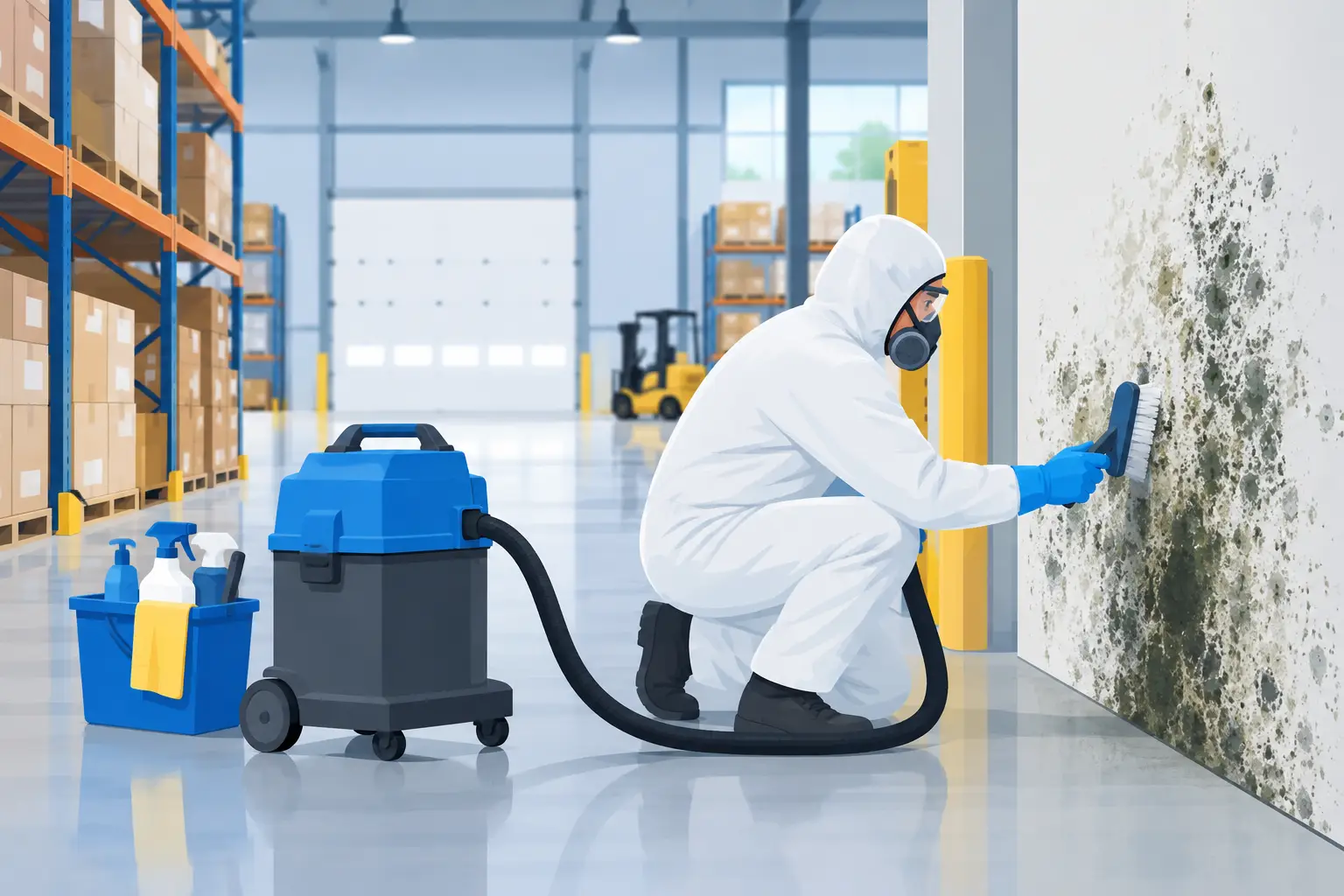
Workers who clean contaminated materials need appropriate training and personal protective equipment for the task. Disturbing mold without containment can release spores and debris into adjacent areas. It can also turn a manageable moisture event into a larger business interruption.
Why Testing Is Sometimes Useful
Mold testing is not a substitute for correcting moisture. If active growth is visible and the source is clear, the priority is usually to stop the water, remove contamination safely, and clean the affected area. Testing alone does not solve a wet wall or a failed drainage system.
Testing can be valuable when contamination is suspected but not visible, when occupants report ongoing symptoms or odors, when a property transaction requires more evidence, or when post-remediation verification is needed. Moisture meters and thermal imaging can help locate hidden water. Air or surface sampling may help establish a baseline or evaluate whether conditions after remediation are consistent with normal indoor environments.
Results should be interpreted in context. There is no single air-sample number that proves every building is safe or unsafe. Outdoor conditions, construction type, sampling location, and the species identified all influence the findings.
What a Defensible Remediation Process Looks Like
A compliant, defensible mold project is more than visible mold removal. First, the moisture source must be identified and corrected. That may involve plumbing repair, roof repair, drainage improvements, HVAC service, vapor control, or changes to ventilation.
Next, the affected area should be assessed to determine the extent of contamination and whether materials can be cleaned or need removal. Porous materials with significant growth, such as drywall, insulation, carpet padding, or ceiling tiles, often require removal. Nonporous and semi-porous surfaces may sometimes be cleaned, depending on their condition and the level of impact.
Containment protects unaffected rooms while work is underway. Certified remediation teams use physical barriers, controlled entry procedures, HEPA-filtered equipment, and negative air systems when the scope requires them. These controls are especially important in occupied homes, multi-unit buildings, healthcare-adjacent spaces, and businesses that need to limit disruption.
After removal and detailed cleaning, the project should be documented. Depending on the project and local requirements, independent post-remediation verification can provide added confidence before containment is removed or occupants return. Keep the report, invoices, photographs, moisture readings, and clearance documentation with the property records.
Common Compliance Mistakes to Avoid
The most expensive mistakes usually happen before remediation begins. Painting over staining, using bleach as a universal fix, or running a fan through an uncontrolled work area may hide the evidence while spreading contamination or leaving moisture trapped in the structure.
Another frequent problem is hiring based only on the lowest quote. A low price may exclude source repair, containment, disposal, cleaning of adjacent contents, or verification after the work. Compare scopes of work, not just totals. A clear scope should explain what will be removed, how the area will be contained, how the moisture issue will be corrected, and what documentation will be provided.
Finally, do not confuse certification with a blanket legal guarantee. Credentials, insurance, and experience are meaningful indicators of professionalism, but the contractor must still follow the rules in the property’s state and municipality. Ask direct questions about licensing, worker safety procedures, project documentation, and whether testing or clearance is appropriate for your situation.
When mold affects a home, rental unit, or workplace, fast action protects more than the building. A careful inspection, documented moisture repair, and properly contained remediation give owners a practical path to protect occupants, preserve property value, and show they handled the problem responsibly.