

A musty odor near loading docks, discoloration behind pallet racks, or recurring condensation on warehouse walls can signal a larger moisture problem. Warehouse mold cleanup is not simply a janitorial task. When mold affects a commercial facility, the response must protect employees, stored inventory, building materials, and day-to-day operations while addressing the water source that allowed contamination to grow.
For property managers, landlords, and business owners, the goal is not to make visible mold disappear for a few days. The goal is to identify the full affected area, safely remove contamination, dry the structure, and confirm that the environment is suitable for normal use.
Why Warehouse Mold Can Spread Quickly
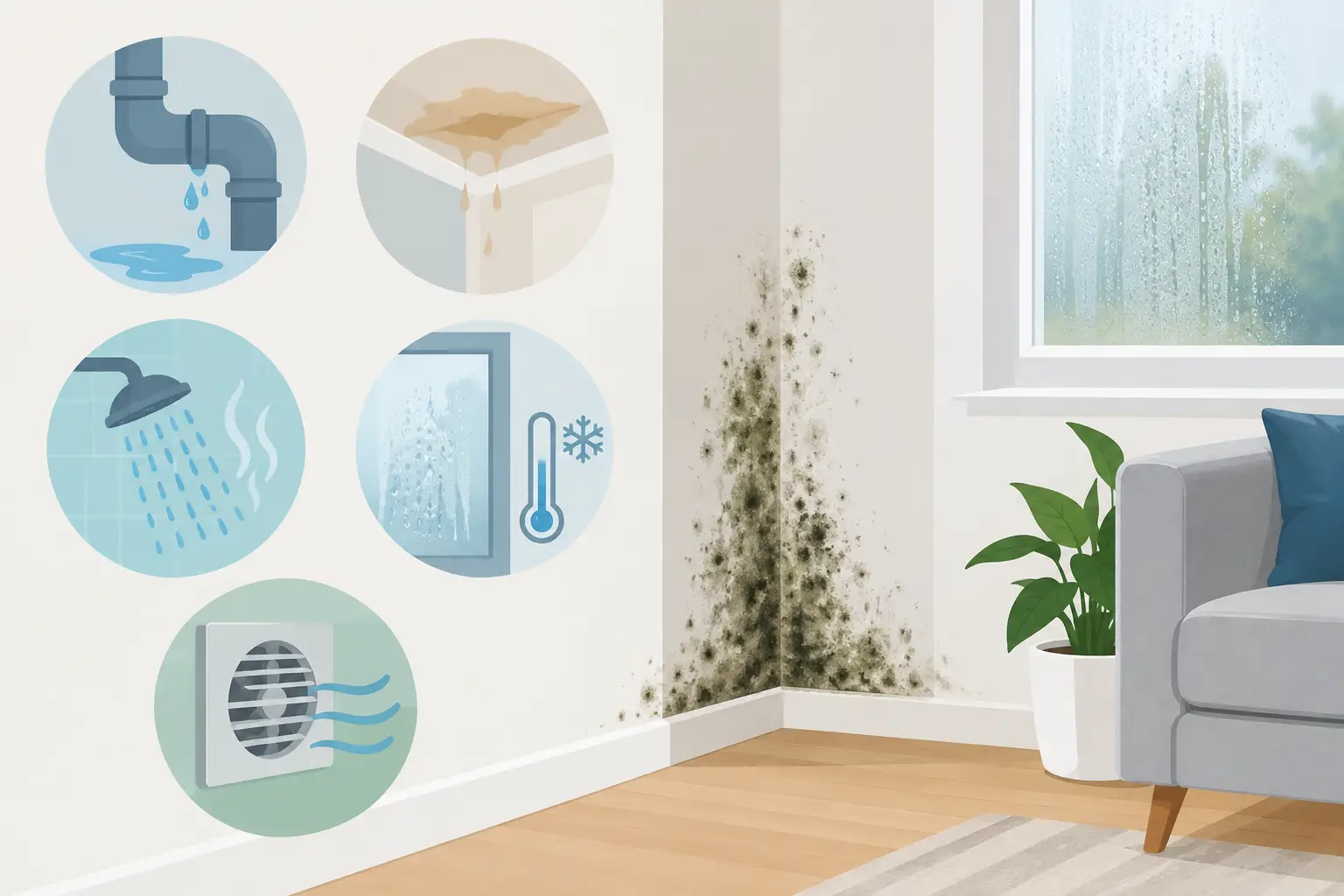
Warehouses often have the conditions mold needs to develop: moisture, organic materials, limited airflow in some zones, and large areas that are not inspected closely every day. A small roof leak can travel through insulation and wall cavities before staining becomes visible. A plumbing issue near a washroom, sprinkler line, or mechanical room may wet drywall, wood framing, packaging, or stored goods without immediate notice.
Condensation is another frequent concern. Temperature differences between loading bays and conditioned storage areas can create moisture on ceilings, exterior walls, pipes, and metal surfaces. In facilities with refrigeration, food storage, manufacturing processes, or frequent truck traffic, humidity control can be especially challenging.
Mold may also develop after a flood, fire-suppression discharge, sewer backup, or storm-related water intrusion. The first 24 to 48 hours after water damage are critical. Materials that remain damp can support mold growth quickly, particularly cardboard, paper products, wood pallets, insulation, drywall, and fabric-based inventory.
The Risks of Delaying Warehouse Mold Cleanup
Visible mold is only part of the concern. Spores can settle on inventory, travel through air movement, and enter adjacent areas through gaps around doors, utility penetrations, or HVAC systems. A warehouse is rarely a sealed environment, which means forklifts, fans, dock doors, and employee traffic can spread contamination beyond the original moisture source.
For employees, mold exposure may worsen respiratory irritation, allergies, or asthma symptoms in sensitive individuals. Musty odors and recurring complaints can also affect morale and raise questions about workplace safety. For tenants and property owners, unresolved mold can lead to damaged materials, interrupted operations, disputes over responsibility, and reduced property value.
There is also a compliance and liability consideration. Commercial property operators have a responsibility to maintain safe conditions for workers, tenants, and visitors. A documented inspection and professional remediation plan provide a clearer record of how the issue was investigated and corrected.
Start With a Professional Assessment
A proper response begins with inspection, not demolition or surface spraying. Certified mold professionals assess the affected areas, identify likely moisture sources, and determine whether the contamination is limited or concealed behind building materials.
This process may include moisture meter readings, thermal imaging, visual inspection of walls and ceilings, and evaluation of HVAC components or nearby plumbing. Thermal imaging can help locate temperature variations that may indicate trapped moisture, while moisture meters help confirm whether materials are still wet even when they appear dry on the surface.
Air quality testing may be appropriate when there is a strong odor, employee health concern, suspected hidden growth, or a need to establish conditions before and after remediation. Testing is not a substitute for a thorough visual and moisture investigation, but it can provide useful information when used as part of a complete assessment.
The scope of work should be based on the source, size, materials involved, and risk of cross-contamination. A small, isolated area on a non-porous surface may require a different approach than extensive growth affecting drywall, insulation, wooden racking, or stored inventory.
The Warehouse Mold Cleanup Process
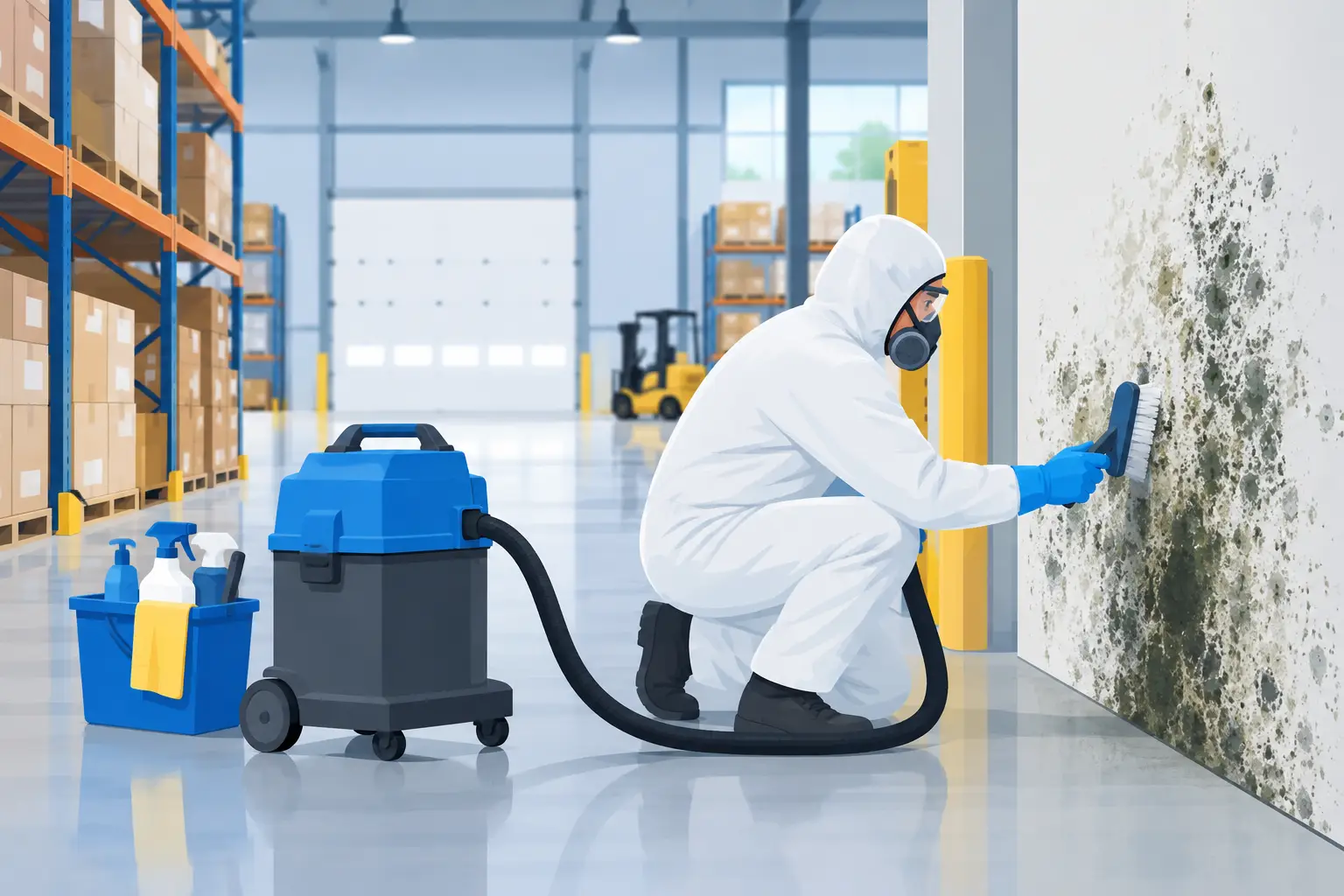
Professional warehouse mold cleanup follows a controlled process designed to prevent the problem from spreading during removal. Every site is different, but a reliable remediation plan generally includes containment, removal, cleaning, drying, and verification.
Containment Protects the Rest of the Facility
Before affected materials are disturbed, the work zone should be isolated. Depending on the size and location of the damage, technicians may use polyethylene barriers, sealed entry points, and negative air pressure systems with HEPA filtration. Negative air machines help direct airborne particles away from clean areas and capture them through high-efficiency filters.
Containment matters in an active warehouse. It helps protect nearby inventory, offices, employee break areas, and operating equipment. It can also allow some business functions to continue safely when a full shutdown is not necessary. However, when contamination is extensive or directly affects critical operations, temporary relocation of inventory or restricted access may be the safer choice.
Remove Damaged Porous Materials
Moldy porous materials often cannot be restored reliably. Wet drywall, insulation, ceiling tiles, cardboard, and heavily affected wood products may need to be removed and disposed of under controlled conditions. Attempting to clean and reuse severely contaminated materials can leave hidden growth behind and create recurring odor or air quality issues.
Non-porous materials such as metal, glass, and some hard plastics can often be cleaned if they are structurally sound. The right method depends on the material, the extent of contamination, and whether the surface can be fully accessed. Inventory requires careful evaluation as well. Sealed goods may be recoverable after exterior cleaning, while absorbent packaging or water-damaged products may need to be discarded.
HEPA Cleaning and Detailed Drying
After removal, affected structural surfaces are cleaned using appropriate methods and HEPA vacuuming. HEPA equipment is designed to capture fine particles that ordinary shop vacuums can release back into the air. Technicians then dry the area thoroughly using commercial-grade dehumidification and air movement equipment as needed.
Drying is not an optional final step. If moisture remains in framing, concrete, subfloors, or wall cavities, mold can return after cleanup. The cause must also be corrected, whether it is a roof defect, leaking pipe, poor drainage, failed sealant, HVAC imbalance, or condensation issue.
When Can Employees Return to the Area?
Access decisions should be based on the condition of the affected space and the remediation scope. Employees should not enter an active containment area unless they are authorized and equipped for the work being performed. Once removal and cleaning are complete, the area should be visually free of contamination, dry, and free of active moisture concerns.
For larger projects, post-remediation verification can provide added confidence before the area is reopened. This may involve a detailed visual inspection, moisture confirmation, and air quality testing where appropriate. The right level of verification depends on the facility, the extent of the contamination, and the needs of the owner, tenant, insurer, or health and safety team.
Preventing Mold From Returning
Long-term prevention depends on moisture management, not repeated cleaning. Warehouse managers should schedule regular inspections of roofs, exterior walls, plumbing lines, sprinkler systems, dock doors, and mechanical rooms. Look for staining, peeling paint, corrosion, warped materials, condensation, and persistent odors.
Humidity control also deserves attention. Maintain ventilation in enclosed storage zones, repair damaged insulation, and make sure HVAC equipment is sized and maintained for the building’s conditions. Keep pallets and inventory away from exterior walls where possible, especially in areas with a history of condensation or water intrusion.
After any leak or flood, document the incident and begin drying immediately. Fast action can often prevent a water event from becoming a full mold remediation project.
When a warehouse has visible growth, a persistent musty odor, or recurring moisture, treating only the surface can create a false sense of security. A certified remediation team can identify the cause, contain the affected area, and provide a clear path back to a safer working environment. The right response protects more than the building – it protects the people and products that keep the facility running.