

A stain on drywall may be the first sign of a leak, but it is rarely the full story. A professional thermal imaging inspection helps identify temperature differences behind walls, ceilings, floors, and building materials that can point to hidden moisture. For homeowners, landlords, and business owners, that early information can prevent a small water issue from becoming an extensive mold remediation project.
Thermal imaging is especially valuable when there is a musty odor, recurring mold growth, a recent leak, water damage, tenant complaints, or unexplained humidity in part of a building. It allows an inspector to investigate beyond what is visible without opening walls unnecessarily.
What a thermal imaging inspection can reveal
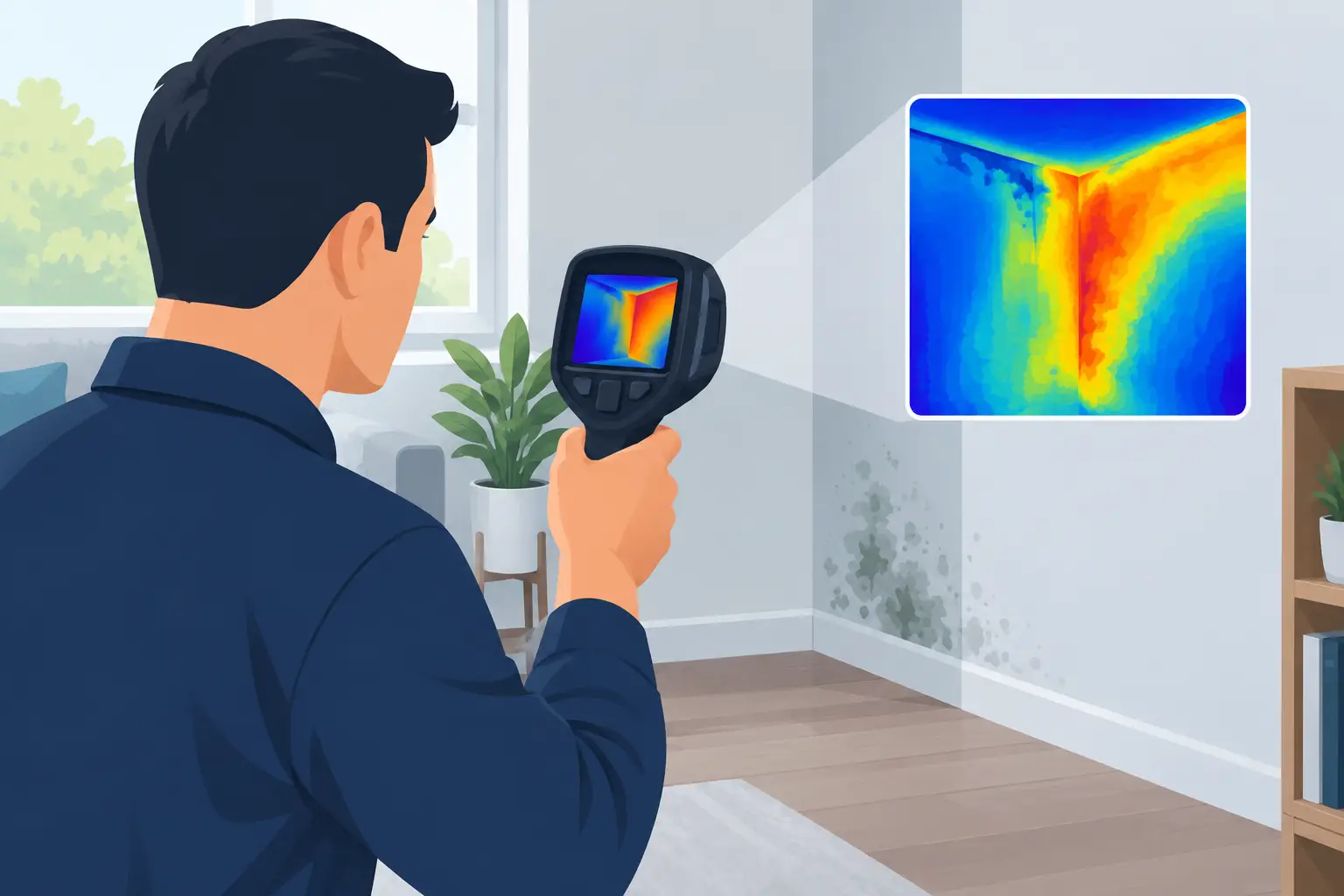
A thermal camera detects infrared energy and displays surface temperature variations as a color image. Cooler or warmer areas may indicate moisture intrusion, missing insulation, air leaks, plumbing issues, or changes in material density. In a mold inspection, those patterns help direct the next step: moisture testing, targeted sampling, or a closer visual examination.
For example, water inside a wall can cool the wall surface as it evaporates. A thermal camera may show that affected zone as different from the surrounding drywall. An experienced inspector can then use a moisture meter to confirm whether the material is actually wet and determine how far the problem extends.
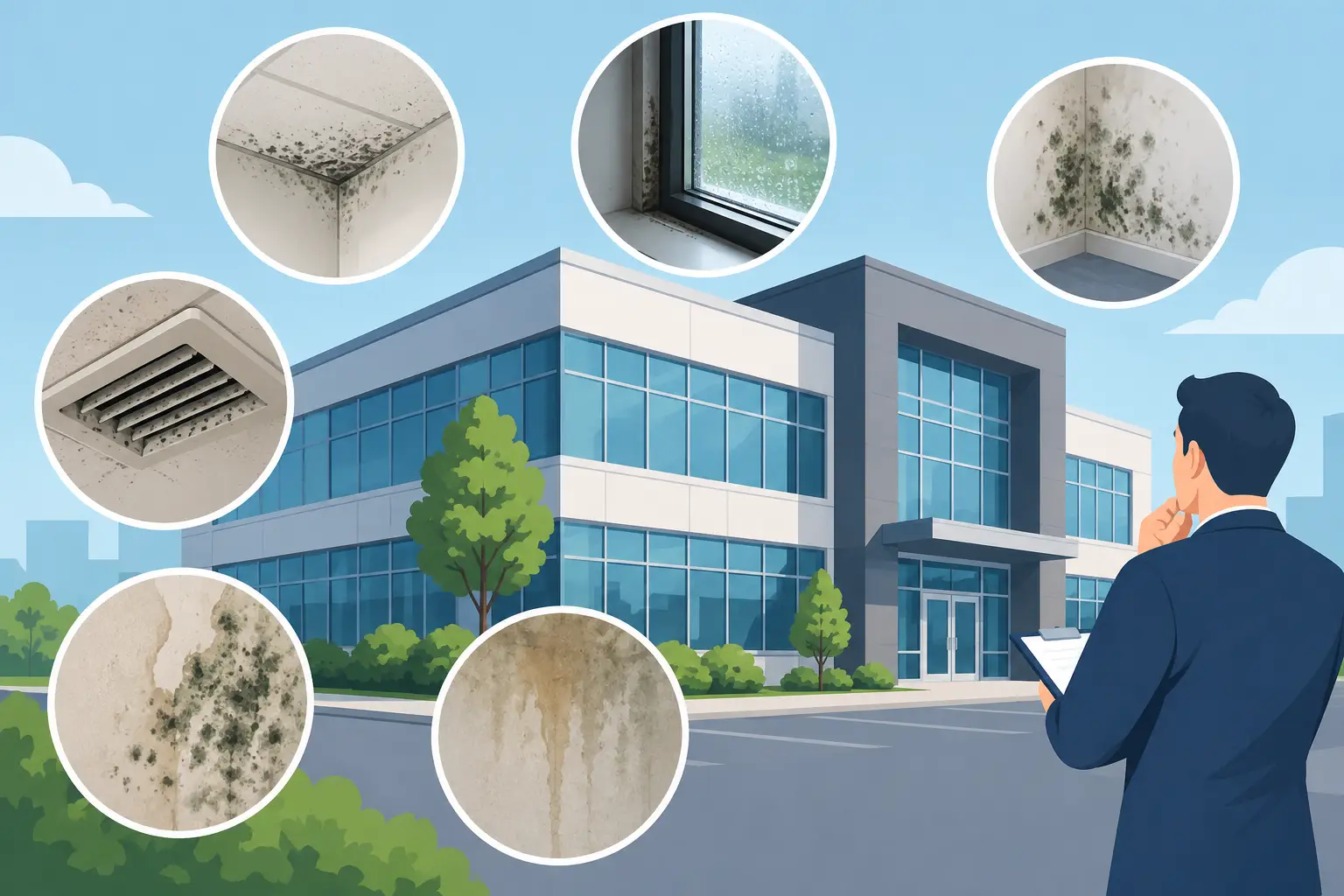
This process is useful in areas where mold commonly develops out of sight, including behind bathroom walls, under kitchen sinks, around windows, beneath finished basements, near roof leaks, and around HVAC components. It can also help locate the moisture source after a flood, burst pipe, appliance leak, or drainage failure.
Thermal imaging does not see mold itself. It identifies patterns that may be associated with moisture, and moisture is the condition mold needs to grow. That distinction matters. A cold spot can be caused by insulation gaps or outside temperatures, while a warm area can relate to electrical equipment or heating lines. Professional interpretation and confirmation testing are essential.
Why hidden moisture creates a mold risk
Mold can begin growing when organic materials such as drywall paper, wood framing, carpet backing, or dust remain damp. The affected area may be concealed behind a wall or beneath flooring long before a visible patch appears. By the time discoloration reaches the surface, moisture may already have damaged materials and allowed contamination to spread.
Hidden mold can affect more than the immediate room. Air movement from HVAC systems, open doors, pressure changes, and occupant activity can distribute spores and particles to other areas. In commercial settings, unresolved moisture can lead to employee concerns, tenant complaints, disruption, and costly repairs. In rental properties, fast documentation and a professional response can also help property owners address habitability concerns responsibly.
A thermal scan is not a substitute for a complete assessment, but it reduces guesswork. Rather than removing large sections of drywall based only on suspicion, a qualified inspector can focus the investigation on areas that show moisture-related anomalies. That can make the remediation plan more precise and reduce unnecessary demolition.
When to schedule thermal imaging inspection services
A thermal assessment is most useful when there is a reason to suspect concealed water or air movement. Visible mold is one reason, but it is not the only one. Musty odors, peeling paint, warped baseboards, bubbling drywall, repeated condensation, and damp carpeting all warrant attention.
Consider a professional inspection after a plumbing leak, roof leak, overflow, sewage backup, foundation seepage, or fire-sprinkler discharge, even if the surface appears dry. Materials can retain moisture in cavities, under flooring, or behind cabinets. A quick visual check may miss the area that needs drying or removal.
Thermal imaging can also be helpful before purchasing a property, after major renovations, or when a basement continues to feel damp. However, conditions matter. Outdoor temperature, indoor heating or cooling, recent rain, sunlight, and furniture placement can affect what the camera detects. A trained inspector accounts for those variables instead of treating a single image as a final diagnosis.
Thermal imaging is one part of a proper inspection
A reliable mold and moisture investigation combines several methods. The thermal camera helps identify where to look, while moisture meters measure material moisture levels. Visual inspection identifies staining, damage, and visible growth. When warranted, air quality testing or surface sampling can provide additional information about indoor contamination.
The order of testing depends on the situation. If a wall is wet after a known leak, the priority is usually finding the source, stopping water intrusion, and determining the extent of damaged material. If occupants report a persistent odor but no visible damage, thermal imaging and moisture testing may help identify hidden conditions before deciding whether sampling is useful.
This approach protects against two common mistakes: assuming every temperature difference is mold and assuming no visible mold means no problem exists. Both can lead to delayed repairs or unnecessary work.
What happens after moisture is found
Finding hidden moisture is only useful if the underlying cause is corrected. The source may be a leaking pipe, failed shower grout, roof penetration, exterior drainage problem, window leak, condensation issue, or inadequate ventilation. Until that source is repaired, cleaning visible mold alone will not provide a long-term result.
The next step is to determine whether materials can be dried safely or should be removed. Nonporous surfaces may sometimes be cleaned and dried when addressed quickly. Porous materials with significant contamination or prolonged water damage, such as drywall, insulation, carpet, or particleboard, may need controlled removal.
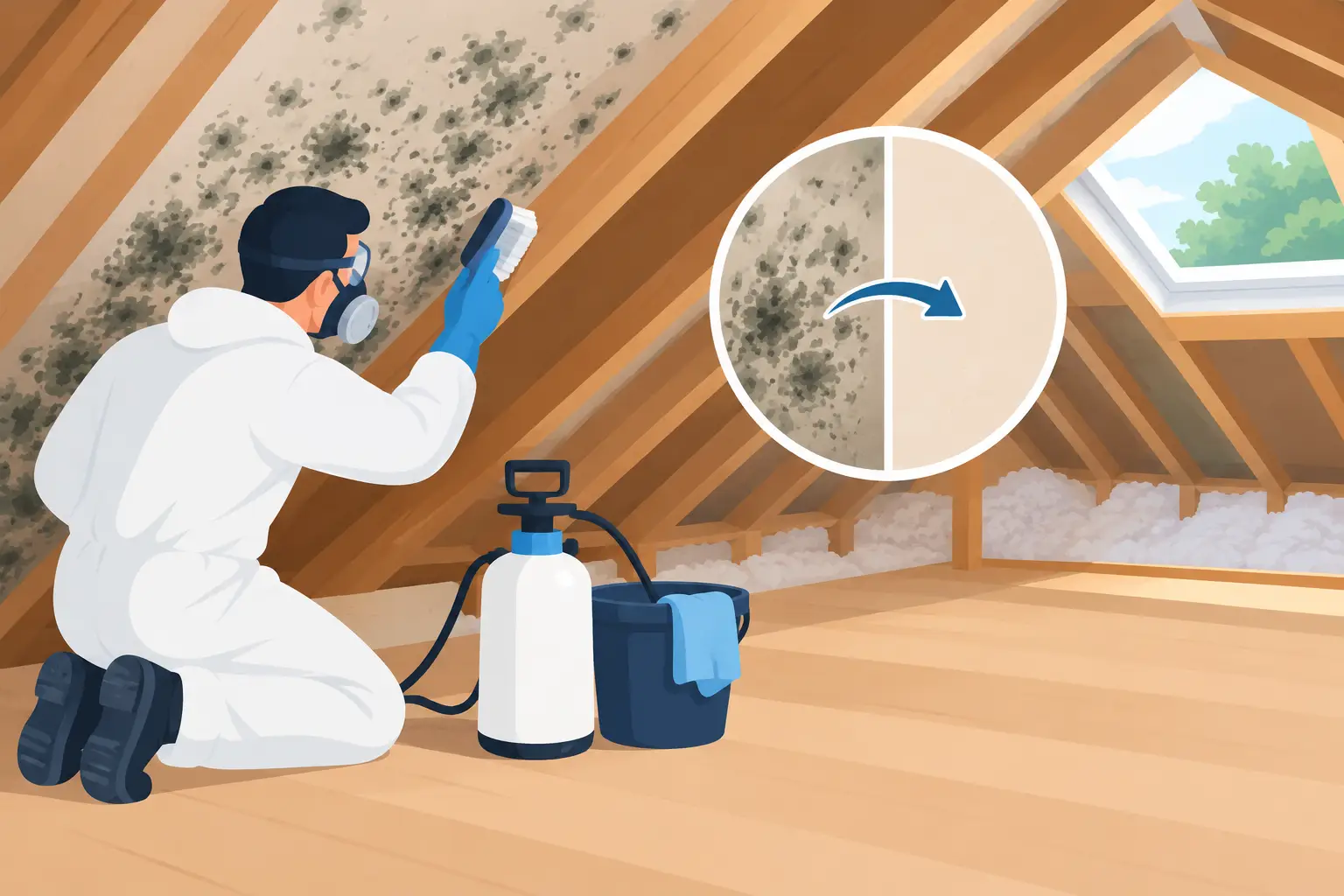
For larger or more serious mold conditions, certified remediation includes containment of the affected area, negative air pressure where appropriate, HEPA air filtration, careful removal of contaminated materials, and detailed cleaning. These controls reduce the chance of spreading particles into unaffected rooms during the work.
After remediation, post-remediation verification or air quality testing may be appropriate, particularly when the affected area was extensive, occupants have health concerns, or the property is commercial or multi-unit. The goal is not merely to make a room look clean. It is to address the moisture source, remove contamination properly, and confirm that the space is suitable for normal use.
The value of professional interpretation
Consumer thermal cameras can be useful for spotting obvious temperature differences, but they do not replace a trained inspection. Camera quality, emissivity settings, surface finishes, reflective materials, and environmental conditions all influence the image. A shiny surface, for instance, can reflect nearby heat and create a misleading reading.
Certified professionals use thermal imaging as part of a broader diagnostic process. They know where moisture is likely to travel, how different building materials react, and when a reading needs confirmation. That experience is particularly important in older Toronto and GTA properties, finished basements, multi-unit buildings, and commercial spaces where water can move between floors or through shared building systems.
Mold Removal Remediation uses professional diagnostic tools alongside established containment and remediation practices to investigate hidden moisture without relying on assumptions. The right scope of work should be based on evidence, the extent of damage, and the conditions inside the property.
Do not wait for visible damage to get worse
A thermal imaging inspection is often most valuable before a hidden moisture issue becomes obvious. It can help identify a targeted area for repair, drying, or further investigation while the affected materials are still limited. It cannot diagnose every concern on its own, but when paired with moisture readings and a professional mold assessment, it provides a clearer path forward.
If your property has a persistent musty smell, signs of water damage, or a history of leaks, acting early can protect indoor air quality, building materials, and the people who use the space. A qualified inspection gives you practical evidence to make the next decision with confidence.