

A recurring musty odor in an office hallway is not just an unpleasant property-management issue. It can be one of the earliest signs a commercial building has mold, particularly when the smell returns after cleaning or becomes stronger after rain, humidity, or HVAC operation. In commercial properties, moisture can travel behind walls, above ceilings, beneath flooring, and through mechanical systems long before mold becomes visible.
For business owners, landlords, and property managers, a fast response protects occupants, limits disruption, and helps prevent a manageable moisture problem from becoming a larger remediation project. The key is recognizing the warning signs, locating the moisture source, and avoiding cosmetic fixes that leave hidden contamination in place.
9 Signs a Commercial Building Has Mold
1. A persistent musty or earthy odor
Mold releases microbial volatile organic compounds that can create a damp, earthy, or stale smell. The odor may be limited to one conference room, washroom, storage area, basement, or suite. It may also seem stronger when the heating or cooling system starts.
Air fresheners, disinfectants, and carpet shampooing may mask the odor briefly, but they do not correct the cause. When a musty smell remains after routine cleaning, the building should be evaluated for hidden moisture and microbial growth.
2. Discoloration on walls, ceilings, or around vents
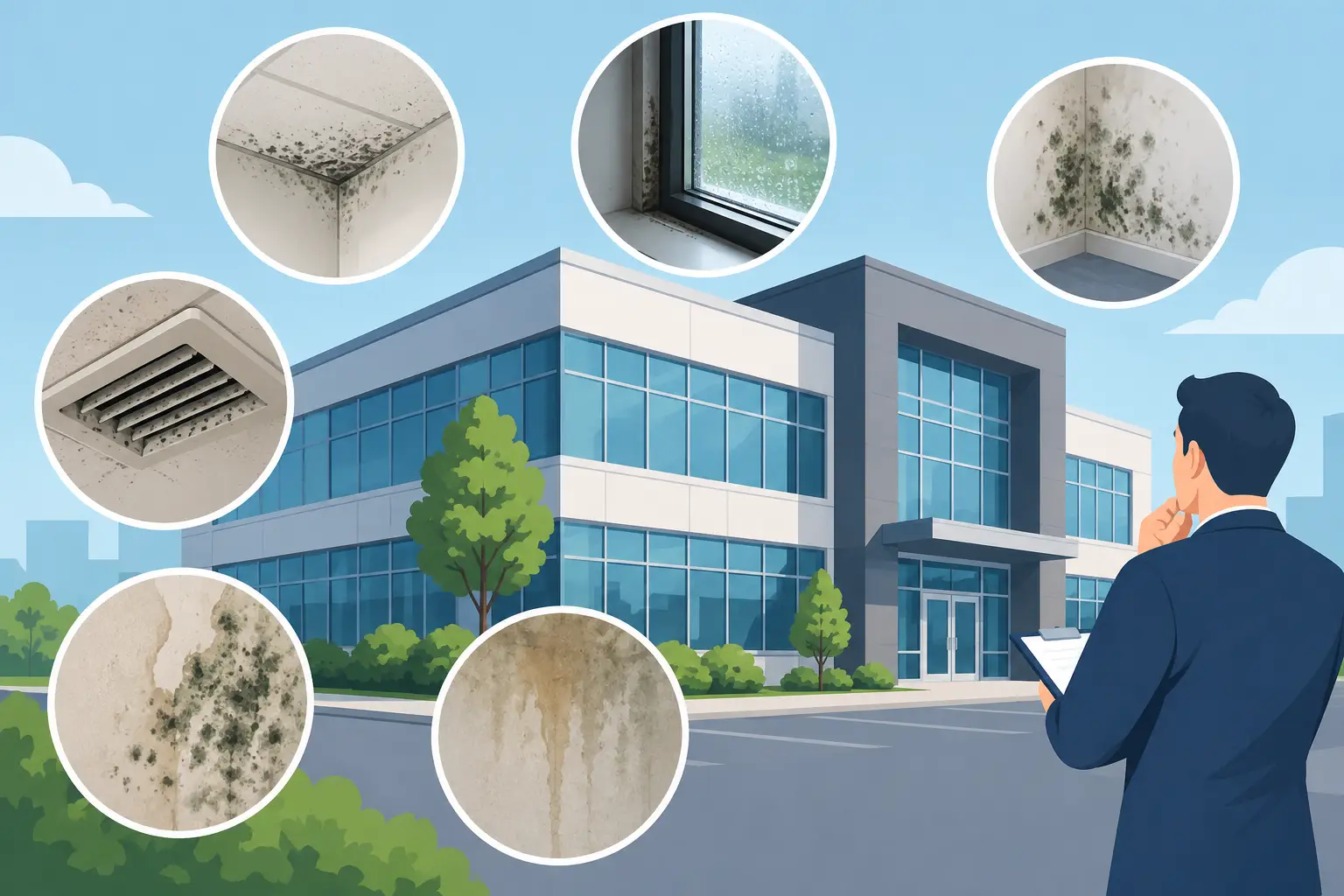
Visible mold does not always look black. It can appear gray, white, green, brown, orange, or nearly transparent. Look for spotting, fuzzy patches, darkened ceiling tiles, streaking near windows, or unusual marks around supply vents and return grilles.
Stains alone do not confirm active mold. A water stain from an old leak may be dry and inactive. However, staining combined with a musty odor, elevated moisture readings, peeling paint, or a soft wall surface warrants professional inspection.
3. Water stains, leaks, or repeated plumbing problems
Mold needs moisture to grow. Roof leaks, pipe failures, overflowing drains, condensation, sprinkler incidents, and window leaks all create conditions that can support growth in drywall, insulation, carpet backing, wood, and ceiling materials.
Even a leak that appears minor can affect concealed building materials. A ceiling stain below a rooftop unit, for example, may indicate water has traveled across framing or insulation before becoming visible. Repeated leaks in the same area are especially concerning because materials may not have had sufficient time to dry.
4. Bubbling paint, warped finishes, or deteriorating materials
Moisture often reveals itself before mold is obvious. Watch for paint that bubbles or peels, warped baseboards, swelling in laminate flooring, curled vinyl, rusted metal fixtures, crumbling drywall, or ceiling tiles that sag.
These conditions do not automatically mean mold is present, but they signal that water has affected the structure or finishes. The longer wet materials remain in place, the greater the chance of contamination spreading beyond the visible damage.
5. Condensation on windows, pipes, or HVAC components
Condensation is common in some commercial spaces during seasonal temperature shifts. It becomes a problem when it is frequent, heavy, or allowed to collect on building surfaces. Cold water pipes, poorly insulated ductwork, exterior windows, and air-handling equipment are common trouble spots.
High indoor humidity can make the issue worse. If windows regularly sweat, occupants report clammy rooms, or condensation forms near vents, the property may have an air balance, insulation, ventilation, or humidity-control problem that needs attention.
6. HVAC odors or complaints from multiple areas
A heating, ventilation, and air conditioning system can distribute odors and mold particles from one affected area to another. Complaints may begin in a single suite but later appear in neighboring offices, hallways, or common areas.
This does not mean the HVAC system is always the source. Mold may be growing near a return vent, above a ceiling, or in a water-damaged area that the system is drawing air across. A trained inspection should assess moisture conditions, ductwork, drain pans, filters, coils, and the areas served by the system.
7. Occupant discomfort that improves away from the building
Some occupants may report nasal irritation, coughing, itchy eyes, headaches, or worsening allergy and asthma symptoms while at work. These symptoms have many possible causes, including dust, cleaning chemicals, poor ventilation, and seasonal allergens. They should not be used as proof of mold on their own.
Still, a pattern matters. When several people report discomfort in the same area or say symptoms improve after leaving the property, it is reasonable to investigate indoor air quality and potential moisture issues. Protecting occupants means taking concerns seriously without jumping to conclusions before the building is assessed.
8. Damp carpet, soft flooring, or recurring stains
Commercial carpeting can hold water beneath the visible surface after a leak, flood, plumbing event, or cleaning incident. A carpet may feel dry on top while its backing, padding, or subfloor remains damp. Persistent stains, a squishing sound underfoot, loose tiles, or a mildew odor near flooring are all warning signs.
Quick extraction can be effective when materials are dried promptly and thoroughly. But if water has been present for an extended period, removing surface moisture is not enough. Hidden layers may need moisture testing and, depending on conditions, controlled removal.
9. Mold returns after cleaning
If discolored patches keep coming back after they have been wiped, painted over, or treated with household products, the underlying issue has not been corrected. The source may be a concealed leak, excessive humidity, wet insulation, condensation inside a wall cavity, or contamination behind the finished surface.
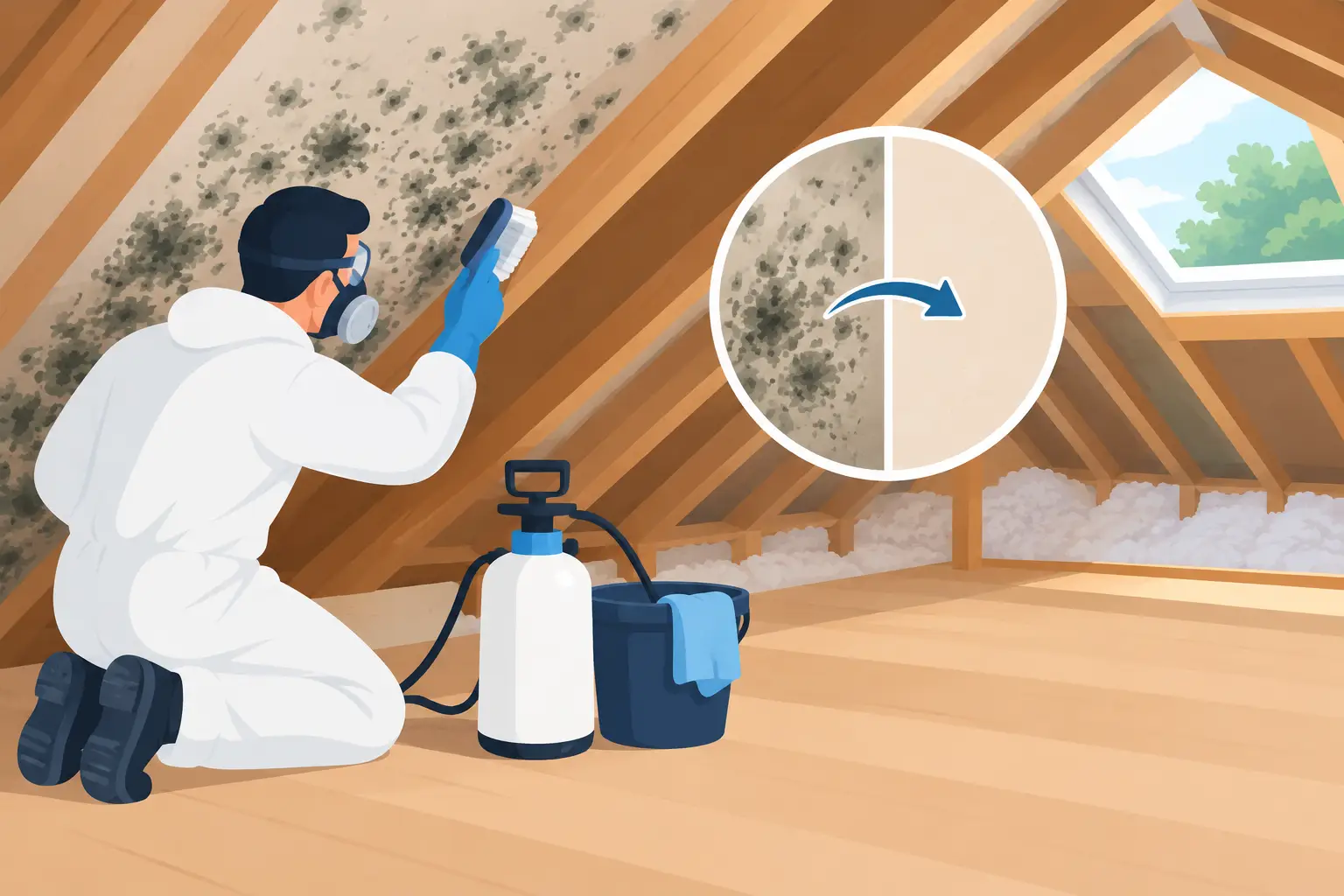
Repeated cleaning can also disturb spores without properly containing the affected area. For a small, isolated surface issue, cleaning may be appropriate when the moisture source is fully resolved. For recurring growth, large areas, porous materials, or commercial spaces with occupants nearby, a professional remediation plan is the safer approach.
Where Hidden Mold Commonly Starts in Commercial Properties
Commercial buildings have more potential moisture pathways than many owners realize. Mold is frequently found above suspended ceilings after roof leaks, behind walls near plumbing lines, under flooring after water events, around windows with failed seals, and inside damp mechanical or storage areas.
Vacant suites can also be vulnerable. A space that is closed off, poorly ventilated, or not routinely checked may develop high humidity or a slow leak that goes unnoticed for weeks. Restaurants, gyms, medical offices, daycares, retail spaces, warehouses, and multi-tenant properties each have different risk points, so the inspection should match the building’s use and layout.
Thermal imaging and moisture meters can help identify suspicious areas without immediately opening walls or removing finishes. These tools do not replace a full assessment, but they help a qualified inspector trace moisture patterns and determine where further investigation is necessary.
What to Do When You Suspect Commercial Mold
First, document what you see and smell. Take dated photos of stains, visible growth, condensation, damaged materials, and active leaks. Record when the problem occurs, which rooms are affected, and whether conditions change after rain or HVAC use. This information can help identify patterns and support communication with maintenance teams, tenants, insurers, or building owners.
Next, stop the moisture source if it is safe to do so. This may mean repairing a plumbing leak, placing a temporary container under a drip, shutting off water to an affected fixture, or arranging emergency roof repair. Avoid simply painting over stains or using fans to blow air across visible mold. Air movement without proper containment can spread particles into unaffected areas.
For a commercial property, professional inspection is particularly valuable when the affected area is extensive, growth returns, water damage involves porous materials, occupants have raised health concerns, or the source cannot be identified. A proper scope should address inspection, moisture-source correction, containment, HEPA air filtration when needed, removal of affected materials, detailed cleaning, and post-remediation verification when appropriate.
Why Surface Cleaning Is Not Always Enough
The trade-off is straightforward: a quick wipe may cost less today, but it can leave moisture and contamination behind walls, under flooring, or above ceilings. On the other hand, not every small spot requires major demolition. The right response depends on the amount of mold, the materials involved, the duration of moisture exposure, the building’s occupancy, and whether hidden growth is suspected.
Certified remediation professionals use containment and negative air pressure to help keep affected particles from migrating through occupied spaces. HEPA filtration, controlled removal methods, and moisture verification are designed to solve the actual problem rather than improve the appearance of the surface alone.
A commercial building should support the people who work, visit, and operate inside it. When warning signs appear, addressing moisture early is one of the most practical ways to protect that environment, preserve the property, and avoid a more disruptive repair later.