

A cracked floor tile, damaged pipe insulation, or crumbling popcorn ceiling can create an immediate question: is this asbestos, and does it need to be removed? The answer starts with understanding asbestos testing versus abatement. Testing determines whether asbestos is present and how serious the risk may be. Abatement is the controlled work used to repair, contain, remove, or encapsulate confirmed asbestos-containing materials.
For homeowners, landlords, property managers, and business owners, treating these as the same service can lead to unnecessary costs or unsafe decisions. A material that looks old is not automatically asbestos, and a confirmed asbestos-containing material does not always require full removal. Condition, location, disturbance risk, and planned renovation work all matter.
Asbestos Testing Versus Abatement: The Core Difference
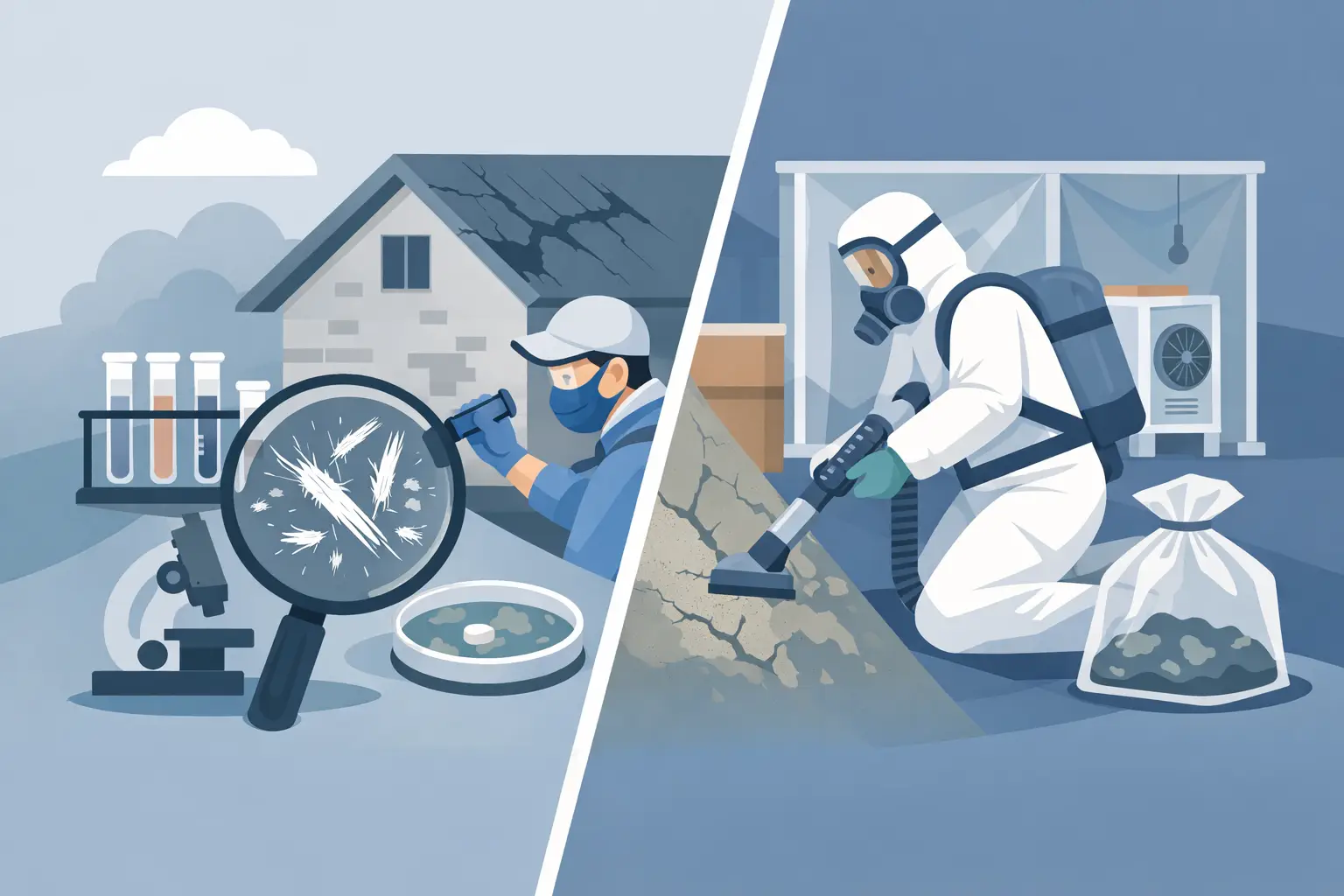
Asbestos testing is a diagnostic service. A trained professional inspects suspect materials, identifies areas of concern, and collects samples safely when sampling is appropriate. Those samples are analyzed by an accredited laboratory to determine whether asbestos fibers are present and, if so, in what concentration.
Abatement is corrective work. It begins after asbestos has been confirmed or when a qualified assessment identifies a material that requires professional control. Depending on the material and project scope, abatement may involve removal, enclosure, encapsulation with a specialized coating, careful repair, HEPA vacuuming, and detailed cleanup.
The distinction matters because asbestos cannot be identified reliably by appearance alone. Many common building materials can resemble asbestos-containing products, including ceiling texture, vinyl flooring, cement sheets, duct wrap, pipe insulation, roofing materials, joint compound, and older fireproofing. Guessing can cause a property owner to disturb a hazardous material unnecessarily or pay for work that was not needed.
When Asbestos Testing Is the Right First Step
Testing is usually the right starting point when a building contains older materials and there is no confirmed asbestos report. It is especially valuable before demolition, remodeling, plumbing access, electrical work, flooring replacement, or repairs that could cut, drill, sand, scrape, or break suspect materials.
A professional assessment also makes sense when materials are damaged. Water intrusion can deteriorate ceiling tiles, insulation, drywall systems, and flooring. Physical damage, age, vibration, and repeated maintenance work can turn a previously undisturbed material into an exposure concern.
Testing may identify that a material is non-asbestos, allowing planned work to proceed without the added cost and controls of an abatement project. If the material does contain asbestos, the report gives the property owner a clearer basis for selecting the correct next step.
What a Professional Inspection May Include
A proper asbestos inspection is more than taking a random sample. The inspector evaluates the building area, material condition, accessibility, signs of deterioration, and the type of work planned. Sampling should be performed carefully to avoid releasing dust, with the sampling point sealed or repaired afterward where appropriate.
The lab result should identify the sampled material and whether asbestos was detected. A qualified professional can then explain what that result means in practical terms. A positive result in an intact, inaccessible material may call for management and monitoring. A positive result in damaged insulation near a work area may require prompt abatement.
When Abatement Is Necessary
Abatement becomes necessary when asbestos-containing material is damaged, friable, likely to be disturbed, or located where occupants and workers could be exposed. Friable materials are those that can be crumbled or reduced to powder by hand pressure when dry. They generally pose a higher risk because fibers can become airborne more easily.
Removal is not the only abatement method. In some cases, enclosure or encapsulation is safer and more practical than removal. For example, an intact asbestos-containing material in a stable location may be sealed or enclosed to prevent damage, provided the solution is suitable for the material and future building use.
Full removal is often preferred when the material is deteriorating, when major renovation is planned, or when it prevents future maintenance risks. The right decision depends on the material type, extent of contamination, building layout, occupancy, and local requirements.
What Safe Abatement Work Looks Like
Professional abatement is designed to keep fibers from moving beyond the work area. The crew establishes a controlled containment zone, posts required warnings, and uses regulated work practices. Critical barriers, negative air pressure equipment, HEPA-filtered air scrubbers, and specialized personal protective equipment may be used depending on the scope.
Materials are handled with methods intended to minimize dust, then sealed and packaged for disposal according to applicable regulations. The work area is cleaned using HEPA vacuuming and damp-wiping methods, not ordinary household vacuums or dry sweeping. After cleanup, clearance testing or visual verification may be recommended to confirm the area is ready for reoccupancy.
This is why do-it-yourself asbestos removal is a poor substitute for professional abatement. Breaking materials apart, using power tools, or sweeping debris can spread microscopic fibers into adjacent rooms, HVAC systems, clothing, and personal belongings. The visible dust may be gone while the risk remains.
Why Testing Does Not Always Lead to Removal
A positive asbestos result can feel alarming, but asbestos-containing material is not automatically an emergency. The primary risk is exposure to airborne fibers. When a material is intact, sealed, and unlikely to be disturbed, a management plan may be appropriate.
For example, asbestos-containing vinyl floor tile in good condition may be safer left in place and covered with a new approved flooring system than removed during a minor update. By contrast, damaged pipe insulation in a mechanical room or deteriorating ceiling texture before renovation may require immediate attention.
This is where professional guidance protects both safety and budget. Testing provides facts. The inspection findings and your intended use of the space determine whether monitoring, repair, enclosure, encapsulation, or removal is the best response.
Costs and Timing: What Property Owners Should Expect
Asbestos testing is generally less costly and less disruptive than abatement because it is focused on inspection, sampling, and laboratory analysis. The price can vary based on the number of suspected materials, number of rooms, accessibility, and whether faster lab turnaround is needed.
Abatement costs vary more widely. A small, contained repair is different from removing damaged insulation throughout a commercial area or preparing a home for extensive renovation. Scope, material type, containment requirements, disposal, clearance testing, and access conditions all affect the final estimate.
The least expensive option is not always the safest one. A vague quote that does not address containment, cleaning, disposal, or clearance can leave a property owner exposed to additional costs later. Ask what materials are included, how the work area will be isolated, what cleanup methods will be used, and whether post-work verification is part of the plan.
Protecting Occupants During a Suspected Asbestos Issue
If you suspect asbestos, avoid disturbing the material. Do not drill, sand, scrape, break, vacuum, or attempt to peel it away. Keep children, tenants, employees, and pets out of the affected area when possible, particularly if the material is visibly damaged.
If a leak, flood, or construction activity has damaged suspected asbestos-containing materials, limit access and arrange a professional assessment promptly. For rental and commercial properties, document the concern, communicate clearly with occupants, and avoid assigning maintenance staff to handle unknown materials without the proper assessment and controls.
Mold Removal Remediation approaches asbestos concerns with the same safety-first process used for indoor contamination work: inspect the condition, identify the hazard, control the affected area, and recommend a practical path forward based on verified findings.
Choosing a Qualified Asbestos Professional
The right provider should be able to explain the difference between testing and abatement without pressuring you into unnecessary work. Look for relevant training, proper insurance, established containment procedures, qualified laboratory analysis, and clear documentation of the proposed scope.
For larger projects, ask how the provider will protect occupied areas, manage HVAC concerns, package waste, and verify cleanup. If the work is connected to renovation or demolition, make sure the assessment covers every material that may be disturbed, not just the most obvious one.
A careful test today can prevent an expensive disruption tomorrow. If a suspect material is intact, leave it alone until it has been assessed. If it is damaged or renovation is approaching, schedule a qualified inspection before anyone starts work.